Best Cat Leashes for Beginners: Safe Starter Sets for Indoor Cats
Affiliate Disclosure: As an Amazon Associate, we earn from qualifying purchases. This post contains affiliate links, which means we may earn a small commission if you buy through our links, at no extra cost to you.
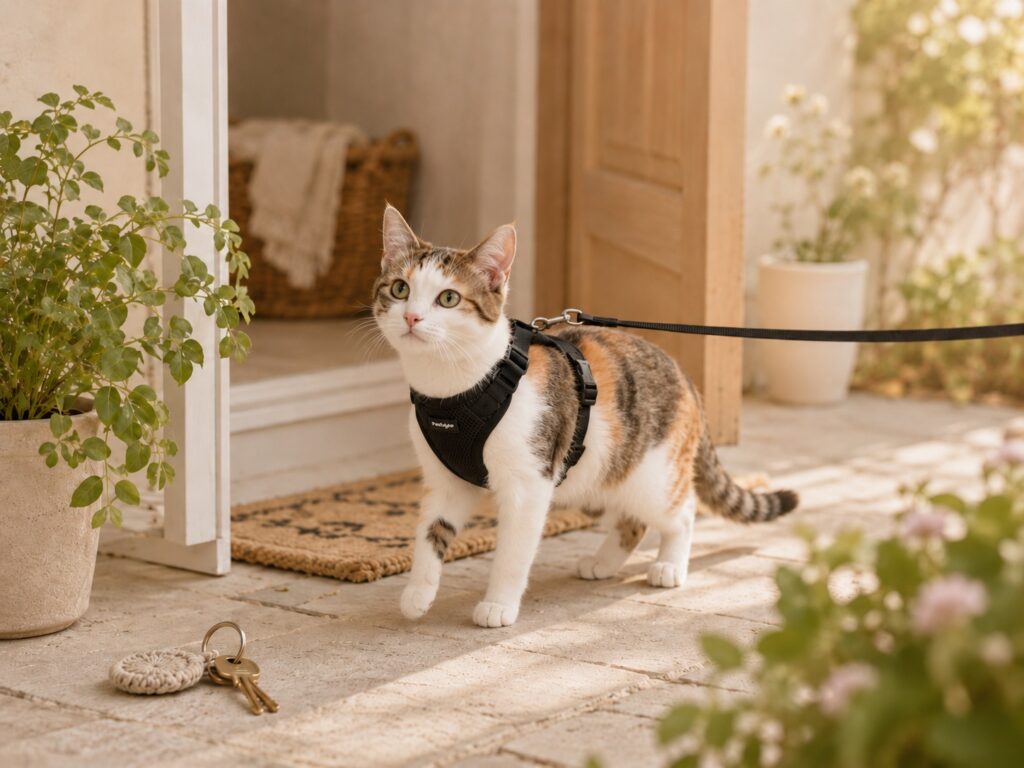
Taking an indoor cat outside can be exciting, but it should always start slowly and safely. Cats are not usually ready for outdoor walking the way dogs are. They need time to get used to wearing a harness, feeling a leash, and exploring new sounds, smells, and spaces.
For beginners, the best cat leash is usually not just a leash by itself. It is a cat harness and leash set. A harness helps distribute pressure across the body, while the leash gives you gentle control during short training sessions.
Many cat harnesses use similar marketing words, such as “soft,” “adjustable,” “lightweight,” or “escape-resistant.” Those features are important, but they are not enough to separate products clearly. Instead, it is better to compare the actual harness style, how it goes on your cat, the fit range, leash length, and where you plan to use it.
In this guide, we’ll look at beginner-friendly cat leash and harness sets by structure and training use, including vest-style harnesses, strap-style harnesses, step-in harnesses, kitten-friendly sets, long-leash training sets, and reflective outdoor options.
Quick Picks
| Category | Product | Best For |
| Best Overall Starter Set | rabbitgoo Escape Proof Cat Harness with Leash Set | Most beginner cats and first-time leash training |
| Best Budget Starter Set | PUPTECK Soft Mesh Cat Vest Harness and Leash Set | Trying leash training at a lower cost |
| Best Vest-Style Harness Set | Walking Escape Proof Breathable Mesh Fabric | Cats that feel safer with more body coverage |
| Best Strap-Style Harness Set | PetThem Cat Harness and Leash Set | Cats that dislike bulky vest harnesses |
| Best Step-In Harness Set | Best Pet Supplies Voyager Step-in Air Harness | Cats that dislike over-the-head designs |
| Best for Kittens or Petite Cats | Fida Cat Harness and Leash Set for Walking Kitten and Puppy | Small cats, kittens, and petite body shapes |
| Best Long Leash Training Set | Extra Long Cat Leash for Yard | Backyard, patio, or quiet outdoor practice |
| Best Reflective Outdoor Set | Supet Cat Harness and Leash with Reflective Trim | Safer outdoor visibility and low-light training |
Why Beginners Need a Harness and Leash Set
What to Look for in a Cat Leash for Beginners
Best Overall Starter Set: rabbitgoo Escape Proof Cat Harness with Leash Set
Best for: Most beginner cats and first-time leash training
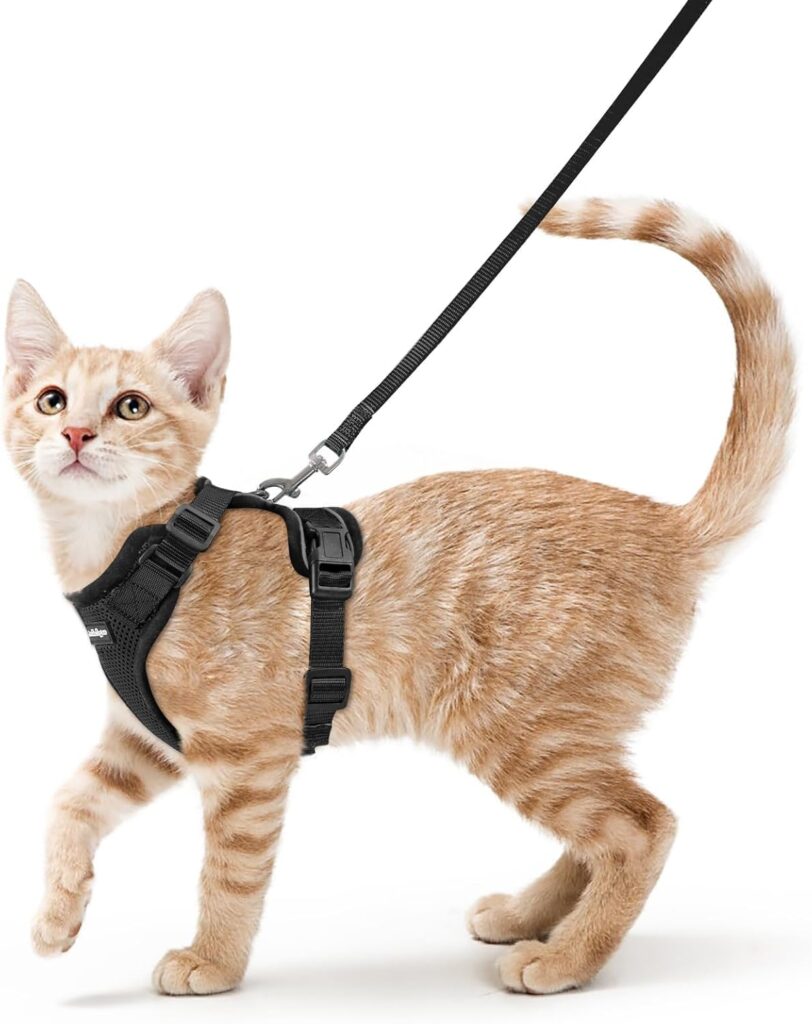
The rabbitgoo Escape Proof Cat Harness with Leash Set is a strong starter choice for indoor cats learning to wear a harness and leash. It uses a vest-style design with breathable mesh, adjustable fit, snap buckles, a sturdy leash clip, and reflective strips.
This is a good all-around option for cat parents who want one beginner-friendly set for indoor practice, short outdoor introductions, and calm supervised walks.
Key Features:
- Harness and leash set
- Vest-style design
- Soft breathable mesh
- Adjustable fit
- Snap buckles
- Sturdy leash clip
- Reflective strips
- Designed for small and average cats
Why We Like It:
This set works well as a first harness because it combines comfort, visibility, and security in one package. The vest-style structure gives more body coverage than a thin strap harness, while the adjustable fit helps beginners get a safer setup.
Things to Consider:
It still needs careful sizing. Measure your cat’s chest and neck before buying, and start with short indoor sessions before going outside.
Best Budget Starter Set: PUPTECK Soft Mesh Cat Vest Harness and Leash Set
Best for: Trying leash training at a lower cost
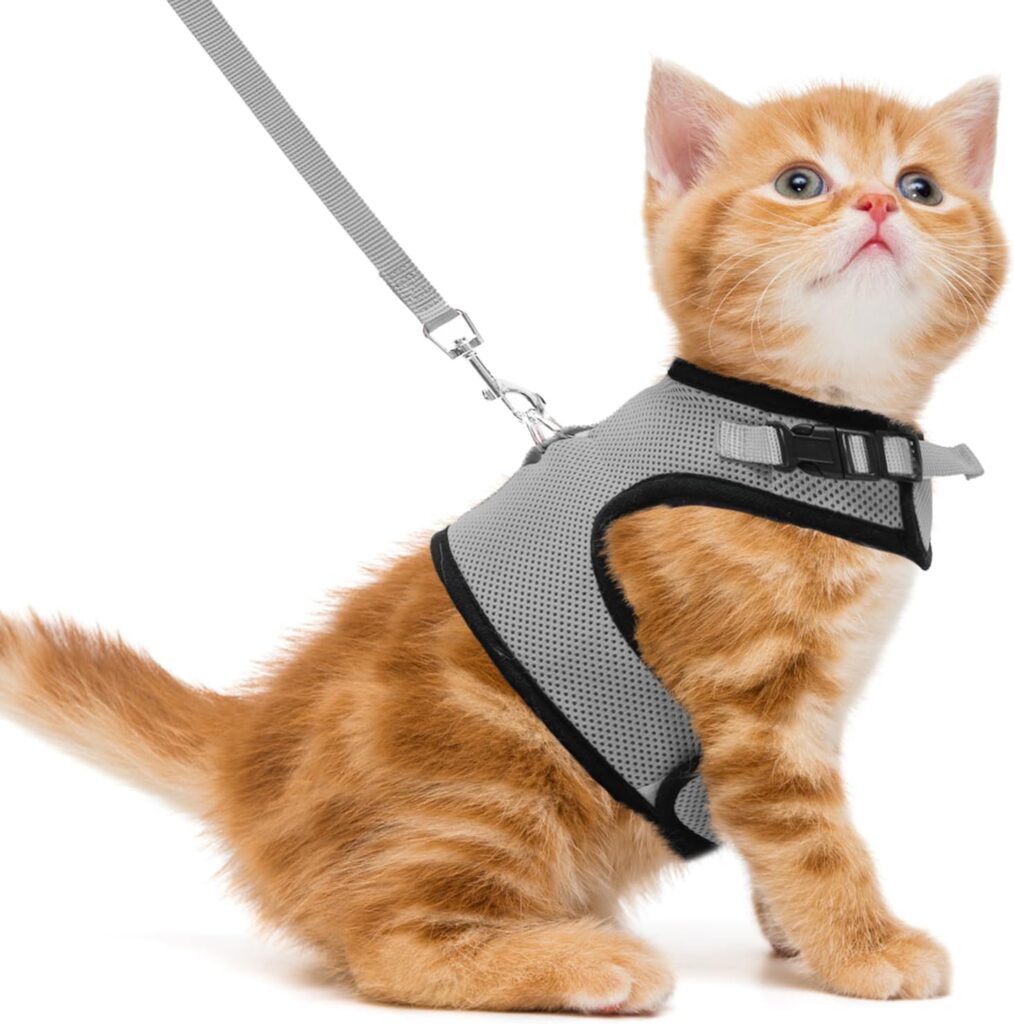
The PUPTECK Soft Mesh Cat Vest Harness and Leash Set is a simple budget-friendly option for cat parents who want to try leash training without spending too much at first. It uses a basic vest-style design with soft air-mesh fabric, lightweight polyester material, and a leash included.
This set is especially useful for short indoor practice, gentle harness introductions, and testing whether your cat can get comfortable wearing walking gear.
Key Features:
- Harness and leash set
- Budget-friendly starter option
- Soft mesh vest-style design
- Lightweight polyester material
- Breathable air-mesh fabric
- Simple structure for easier use
- Multiple size options
- Suitable for cats, kittens, small dogs, rabbits, and other small pets
Why We Like It:
This is a practical low-cost starter pick because it gives beginners the basic pieces they need: a soft vest harness and a leash. The design is simple, lightweight, and easy to understand, which makes it less intimidating for first-time cat parents.
It is a good option if you are not sure whether your cat will accept leash training yet and want to start with a simple indoor practice set.
Things to Consider:
The fit is very important with this harness. Based on the product page and customer feedback shown, sizing and secure fit can be mixed, so measure your cat’s neck and chest carefully before choosing a size.
This is best for calm practice and beginner introductions. If your cat is very nervous, strong, or likely to back out of a harness, you may want a more secure option after the first trial.
Best Vest-Style Harness Set: Cat Harness and Leash for Walking Escape Proof Breathable Mesh Fabric
Best for: Cats that feel safer with more body coverage
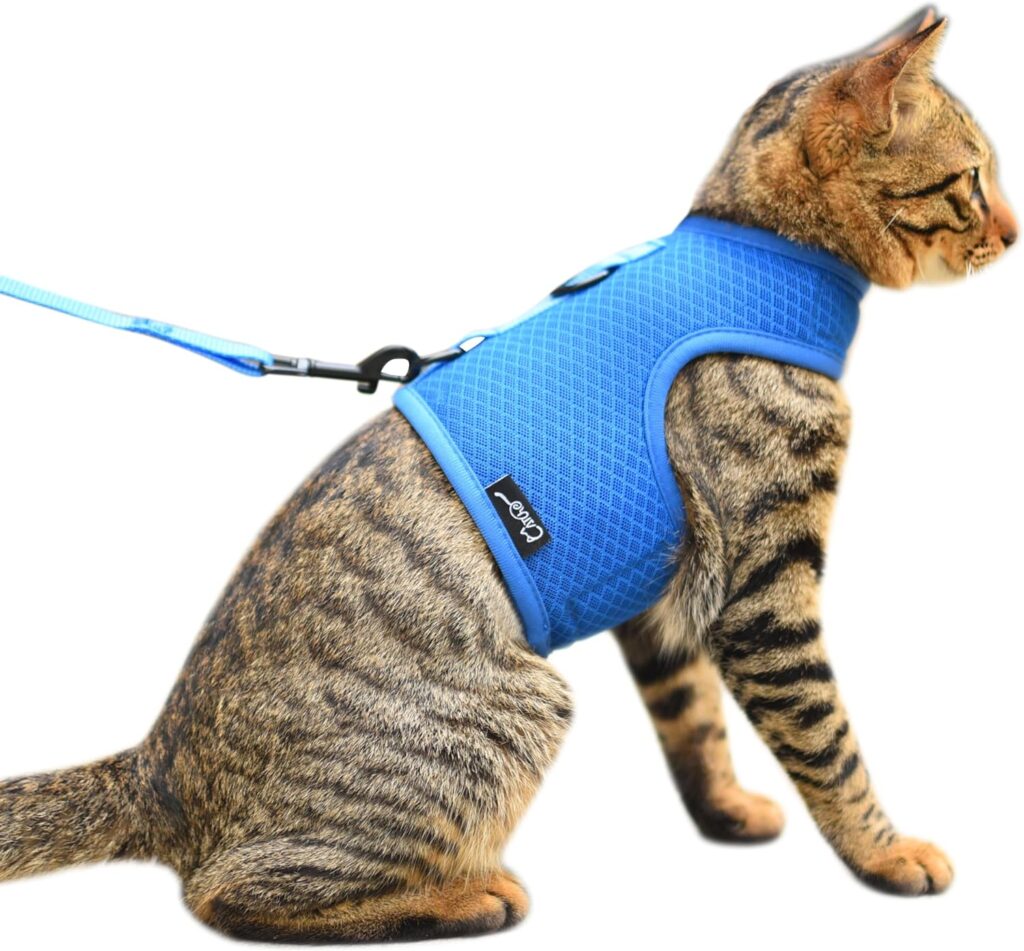
This vest-style cat harness and leash set is designed for cats that may prefer more body coverage than a thin strap harness. It uses breathable mesh fabric, a padded vest structure, and an adjustable walking-jacket style fit.
This type of harness can be useful for beginner cats that need a softer, more supportive feeling during early training.
Key Features:
- Vest-style cat harness
- Leash included
- Breathable mesh fabric
- Padded design
- Adjustable fit
- Walking-jacket style structure
- Suitable for indoor training and outdoor practice
Why We Like It:
The vest-style structure gives cats more coverage and can feel more secure for beginners. It is a good option for cats that dislike narrow straps or need a more supportive harness shape.
Things to Consider:
Vest-style harnesses can feel bulkier than strap-style harnesses. Some cats may freeze at first, so introduce it slowly indoors.
Best Strap-Style Harness Set: PetThem Cat Harness and Leash Set
Best for: Cats that dislike bulky vest harnesses
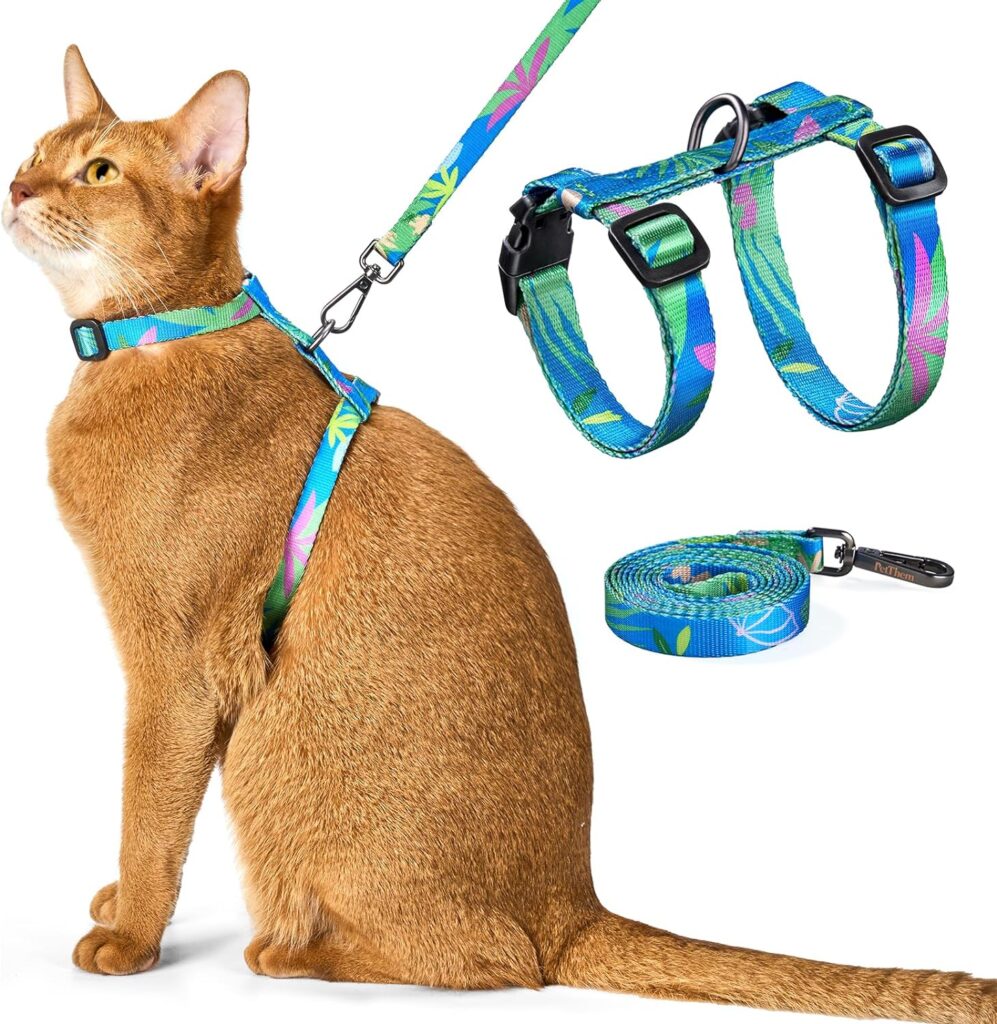
The PetThem Cat Harness and Leash Set is a lighter, more minimal harness option for cats that may dislike large vest-style designs. It is described as an adjustable, soft, lightweight cat harness and leash set for walking, travel, and outdoor practice.
This category is useful for cats that prefer less fabric coverage and a simpler harness feel.
Key Features:
- Cat harness and leash set
- Adjustable structure
- Soft and lightweight design
- Travel-friendly
- Suitable for small, medium, and large cats
- Good for cats that dislike bulky gear
Why We Like It:
This is a good strap-style or lighter-structure option because it gives cats more freedom than a full vest harness. For sensitive cats that dislike a lot of fabric, this can feel less restrictive.
Things to Consider:
A lighter harness must still fit securely. Check the size chart carefully and make sure the harness is not loose around the chest.
Best Step-In Harness Set: Best Pet Supplies Voyager Step-in Air Harness
Best for: Cats that dislike over-the-head designs
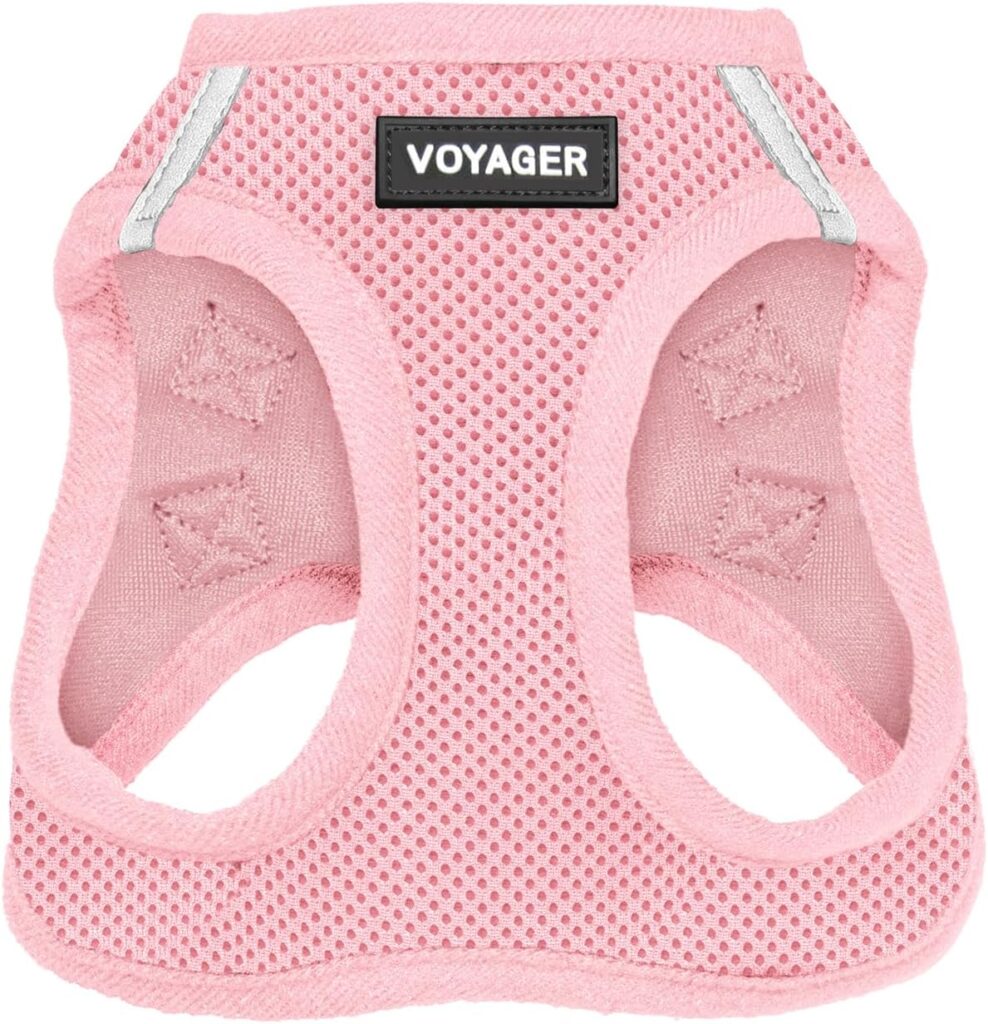
The Best Pet Supplies Voyager Step-in Air Harness is a step-in style harness made with all-weather mesh. Instead of pulling the harness over your cat’s head, the step-in structure lets the front legs go into the harness before it fastens at the top.
This is helpful for cats that resist over-the-head harness designs.
Key Features:
- Step-in harness design
- All-weather mesh
- Hook-and-loop fastener
- Buckle closure
- Double D-rings
- Reflective detail
- No-pull style structure
- Designed for dogs and cats
Why We Like It:
The step-in design gives beginners a different wearing method. For cats that dislike having a harness pulled over their ears or head, this can make training easier.
Things to Consider:
This product is also marketed for dogs, so sizing matters. Measure carefully and choose a size that fits your cat’s chest, not just their weight.
Best for Kittens or Petite Cats: Fida Cat Harness and Leash Set for Walking Kitten and Puppy
Best for: Small cats, kittens, and petite body shapes
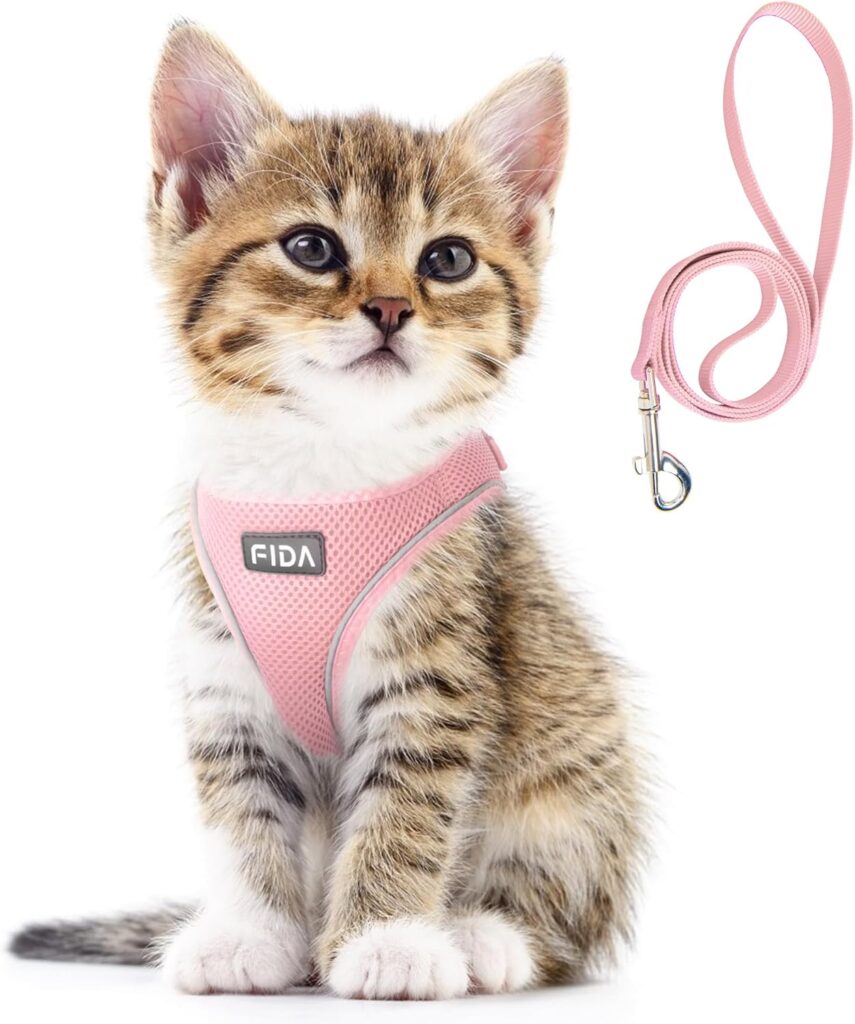
The Fida Cat Harness and Leash Set is a smaller harness option designed for kittens, puppies, and extra-small pets. It uses breathable lightweight mesh, an adjustable reflective step-in design, and a soft structure for smaller body shapes.
This is a good pick for kittens or petite cats that may not fit standard adult cat harness sizes.
Key Features:
- Harness and leash set
- Designed for kittens and small pets
- Breathable lightweight mesh
- Adjustable fit
- Reflective details
- Step-in design
- Extra-small sizing option
Why We Like It:
Small cats need a harness that does not feel bulky or loose. This set is useful because it focuses on smaller sizing and lighter materials.
Things to Consider:
Kittens grow quickly. Check the fit often and replace the harness once it becomes too tight.
Best Long Leash Training Set: Extra Long Cat Leash for Yard
Best for: Backyard, patio, or quiet outdoor practice
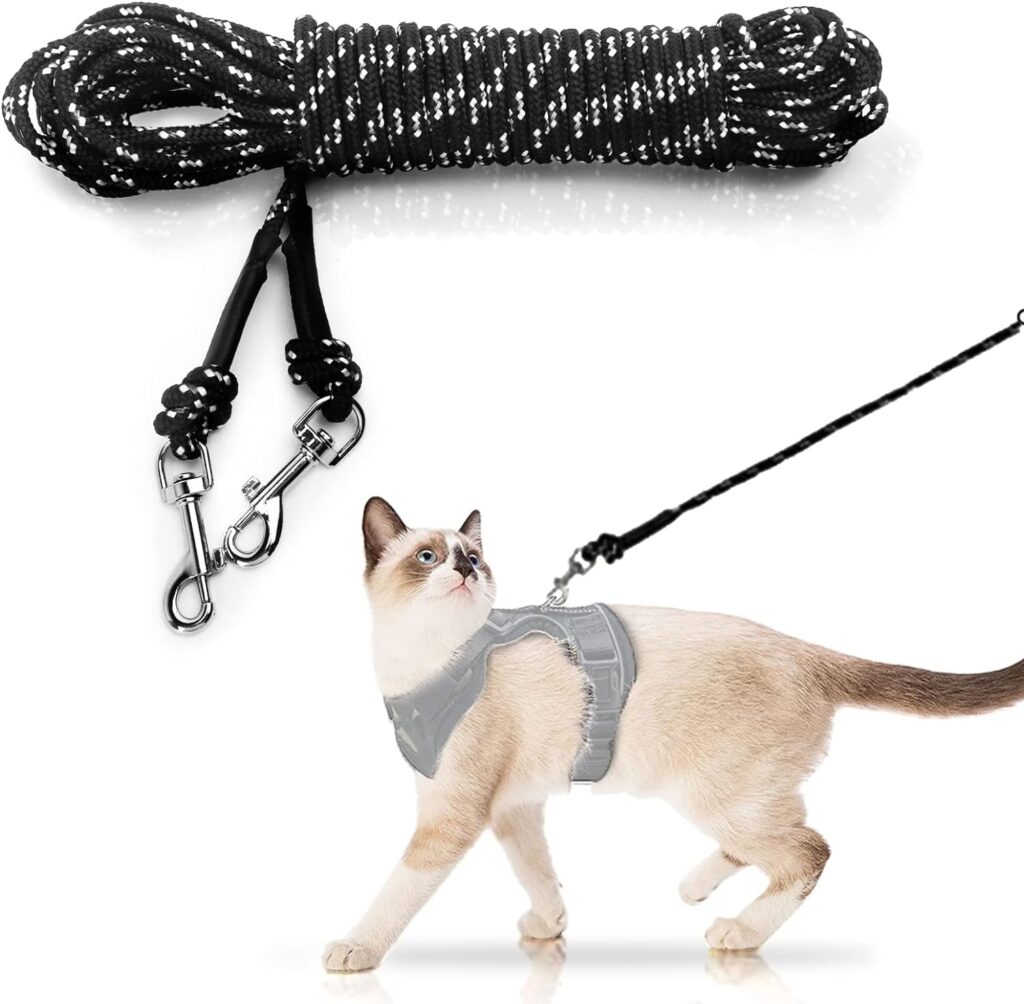
The Extra Long Cat Leash for Yard is a 15-foot lightweight outdoor leash designed for cats, kittens, rabbits, puppies, and small animals. This is not a full harness set, but it can be paired with a secure cat harness for supervised yard or patio training.
This is best for cats that are already comfortable wearing a harness and are ready for more controlled outdoor exploration.
Key Features:
- Extra-long outdoor leash
- 15 ft / 4.5 m length
- Lightweight thin lead
- Designed for cats, kittens, rabbits, puppies, and small animals
- Useful for yard or patio practice
- Gives more supervised exploration range
Why We Like It:
A longer leash can be useful after your cat has already accepted the harness. It gives your cat more space to sniff, explore, and move slowly in a safe controlled area.
Things to Consider:
This is a leash only, not a harness set. It should be used with a secure cat harness, not attached directly to a collar. Long leashes can also tangle, so they need close supervision.
Best Reflective Outdoor Set: Supet Cat Harness and Leash with Reflective Trim
Best for: Safer outdoor visibility and low-light training
The Supet Cat Harness and Leash Set is a reflective outdoor option with an adjustable breathable vest-style design. It includes reflective trim, making it more visible for early morning, evening, porch, patio, or shaded outdoor practice.
This is a good pick for cat parents who want a beginner-friendly harness set with extra visibility outdoors.
Key Features:
- Harness and leash set
- Reflective trim
- Adjustable fit
- Breathable vest-style design
- Suitable for large and small cats
- Also works for kittens and puppies
- Good for outdoor visibility
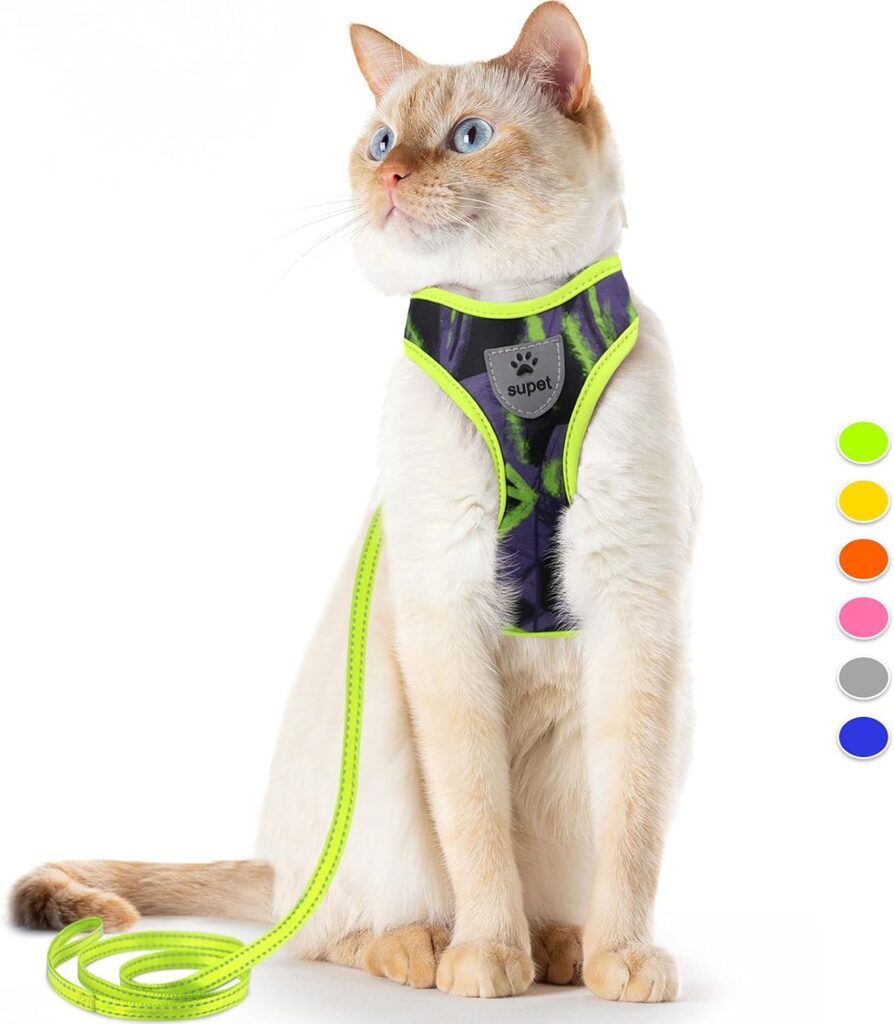
Why We Like It:
Reflective trim is useful when training near the home, especially in low-light areas. This set combines outdoor visibility with a soft, adjustable harness structure.
Things to Consider:
Reflective trim is helpful, but it does not replace careful sizing, indoor practice, and close supervision.
How to Choose the Right Cat Leash for Beginners
Choose by Harness Style First
Instead of choosing only by marketing words like “soft” or “escape-resistant,” look at the actual harness style.
Vest-style harnesses give more coverage. Strap-style harnesses feel lighter. Step-in harnesses avoid over-the-head dressing. Long leash sets are better for supervised exploration after indoor training.
Choosing the right structure makes it easier to match the product to your cat’s personality.
Measure Your Cat Before Buying
Do not choose a harness size based only on weight. Measure your cat’s chest and neck, then compare those measurements with the brand’s size chart.
A harness should fit snugly but not tightly. You should be able to fit one or two fingers under the straps.
Start Indoors First
Before going outside, let your cat smell the harness. Place it near their bed, toys, or treats. Once your cat seems comfortable, put it on for a short time indoors.
Some cats freeze, crouch, or flop over at first. This is common. Keep the session short and try again later.
Use a Simple Leash at the Beginning
For the first training sessions, a simple lightweight leash is usually easier to manage than a retractable leash. A shorter leash gives you more control and reduces tangling.
Long leashes are better for later practice in quiet, open, supervised areas.
Do Not Attach the Leash to a Collar
A cat leash should attach to a harness, not directly to a collar. A collar is not secure enough for walking and can put pressure on your cat’s neck if they panic or pull.
A harness gives you better control and helps distribute pressure more safely.
Match the Gear to the Training Stage
If your cat has never worn a harness before, start with a simple starter set. If your cat dislikes bulky fabric, try a strap-style harness. If your cat dislikes over-the-head designs, try a step-in harness. If your cat is already comfortable and ready for supervised outdoor space, consider a long leash set.
The right product depends on where your cat is in the training process.
How to Introduce a Cat to a Harness and Leash
Start slowly. Let your cat explore the harness before wearing it. Reward calm behavior with treats or gentle praise.
Once your cat accepts the harness, let them wear it indoors for a few minutes. Then add the leash and let it drag under supervision. After your cat is comfortable, practice gentle indoor walking.
The first outdoor session should be short and quiet. Let your cat observe instead of forcing them to walk. Some cats will explore right away, while others may sit, sniff, or hide.
The goal is not to make your cat walk like a dog. The goal is safe, calm exploration.
Best Places to Practice First
Start in a quiet, controlled space where your cat will not be overwhelmed.
Good beginner places include:
- A fenced backyard
- A quiet patio
- A calm porch
- A small enclosed garden
- A low-traffic courtyard
Avoid busy sidewalks, dog parks, loud streets, and crowded public areas during early training.
Common Beginner Mistakes to Avoid
Avoid rushing the process. Many cats need days or weeks to feel comfortable with leash training.
Common mistakes include:
- Going outside too soon
- Using a collar instead of a harness
- Choosing the wrong harness style
- Buying without measuring your cat
- Starting in a loud or busy place
- Pulling the leash like you would with a dog
- Using a long leash too early
- Leaving your cat unattended outdoors
- Expecting your cat to walk in a straight line
Cat leash training should feel slow, safe, and flexible.
What If Your Cat Does Not Like the Leash?
Not every cat enjoys leash training, and that is okay. Some cats prefer window watching, cat trees, stroller rides, or indoor enrichment.
If your cat seems very stressed, stop and try again another day. You can also offer other safe enrichment options, such as indoor toys, window perches, or a pet stroller.
For safer travel alternatives, see our guide to Best Cat Carriers for Vet Visits or Best Pet Strollers for Dogs and Cats.
Related HavenTails Guides
Best Cat Carriers for Vet Visits
Find safe and comfortable cat carrier options for vet visits and short trips.
Best Pet Strollers for Dogs and Cats
Explore pet stroller ideas for easier outdoor time, travel, and everyday outings.
Give indoor cats more exercise, play, and enrichment at home.
Pinterest-Inspired Cat Spaces for Cozy Homes
Create a cozy indoor setup with cat beds, toys, vertical space, and pet-friendly decor.
Final Thoughts
The best cat leash for beginners is usually a harness and leash set that matches your cat’s body, comfort level, and training stage. Instead of choosing only by common marketing words, compare the harness structure, wearing method, leash length, fit range, and outdoor safety features.
For most cats, training should begin indoors with short sessions. Once your cat is comfortable, you can move slowly to a quiet outdoor space.
Some cats enjoy leash training, while others prefer indoor enrichment or stroller rides. A good beginner setup should make exploration safer, calmer, and more comfortable for both you and your cat.
FAQs
Can cats walk on leashes?
Yes, some cats can learn to walk on a leash, but they need slow training and a secure harness. Not every cat will enjoy it.
Should I use a collar or harness for a cat leash?
Use a harness, not a collar, for leash walking. A harness is safer and more secure because it spreads pressure across the body.
What type of harness is best for beginner cats?
It depends on your cat. Vest-style harnesses offer more body coverage, strap-style harnesses feel lighter, and step-in harnesses can help cats that dislike over-the-head designs.
Are long leashes good for cats?
Long leashes can be useful for supervised backyard or patio training, but they are better after your cat is already comfortable wearing a harness.
How do I introduce my cat to a leash?
Start indoors. Let your cat smell the harness, wear it for short sessions, then add the leash before trying a quiet outdoor area.
What if my cat freezes in the harness?
This is common. Keep sessions short, use treats, and let your cat adjust slowly. Do not force your cat to walk.