Affiliate Disclosure: As an Amazon Associate, we earn from qualifying purchases. This post contains affiliate links, which means we may earn a small commission if you buy through our links, at no extra cost to you.
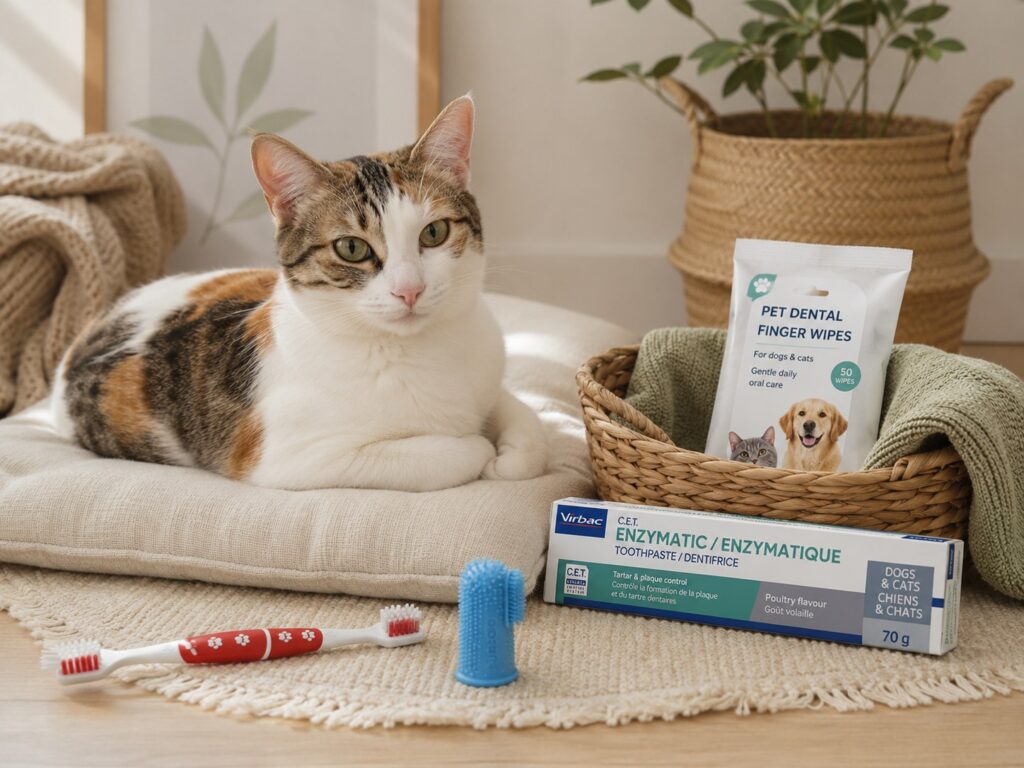
Cat dental care is easy to overlook because most cats do not like having their mouths touched. But healthy teeth and gums are an important part of your cat’s overall comfort.
Bad breath, red gums, tartar buildup, drooling, pawing at the mouth, or changes in eating habits can all be signs that your cat may need dental attention. At-home dental care can help support cleaner teeth, but it should not replace regular veterinary dental checkups.
Tooth brushing is one of the most effective at-home ways to reduce plaque buildup. Cornell Feline Health Center explains that brushing helps remove plaque and that cat parents should use only toothpaste or tooth gel made specifically for cats, because human toothpaste can be toxic to cats.
The challenge is choosing dental products your cat will actually tolerate. Some cats accept a small toothbrush. Some do better with a finger brush. Others need to start with dental wipes, gels, treats, or water additives before moving toward brushing.
In this guide, we’ll compare the best cat toothbrushes and dental care products, including finger brushes, cat-safe toothpaste, dental wipes, treats, water additives, and brush-free oral care options.
Quick Picks
| Pick | Product | Type | Best For |
|---|---|---|---|
| Best Overall | Petrodex Dental Care Kit | Kit | Beginners |
| Best Finger Brush | Jasper 360 | Finger brush | First-time brushing |
| Best Long Handle | Pets & Pupps | Dual-head brush | Better reach |
| Best Toothpaste | Virbac C.E.T. | Enzymatic toothpaste | Regular brushing |
| Best Dental Wipes | BuddyCheer | Finger wipes | Brush-resistant cats |
| Best Dental Treats | Greenies Feline Dental Treats | Crunchy treat | Between brushing |
| Best Water Additive | Oxyfresh | Water additive | Low-effort routine |
| Best Dental Spray | HICC PET | Oral spray | No-brush support |
How We Chose These Cat Dental Care Products
We compared these products based on cat-appropriate size and design, ease of use, ingredient or formula safety, how realistic they are for at-home routines, and whether they suit different levels of brushing tolerance. For dental treats, additives, wipes, gels, and similar products, we also recommend checking for the Veterinary Oral Health Council (VOHC) Seal when available.
Best Overall Cat Dental Care Kit: Petrodex Dental Care Kit for Cats
Best for:
Cat parents who want a simple starter kit with both a cat toothbrush and cat-safe toothpaste.
Key Features :
- Cat dental care kit
- Includes toothbrush and toothpaste
- Malt-flavored toothpaste
- 2.5 oz toothpaste size
- Paste formula
- Designed for cats
- Helps reduce plaque with regular use
- Helps fight bad breath
- Non-foaming formula
- Does not require rinsing
Product Overview:
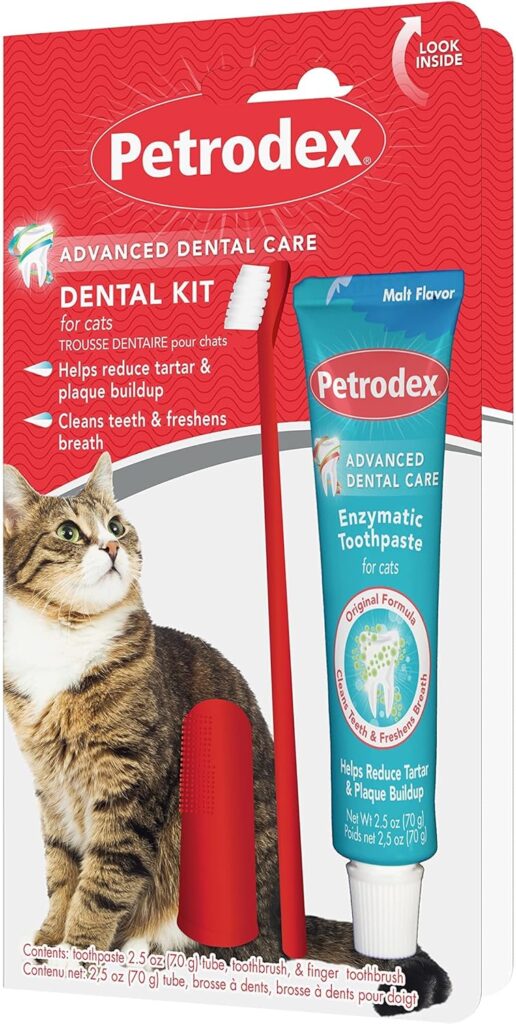
The Petrodex Dental Care Kit for Cats is a good starting point for cat parents who are new to at-home dental care. Instead of buying a toothbrush and toothpaste separately, this kit gives you the basic tools needed to begin a gentle brushing routine.
The malt-flavored toothpaste may be easier for some cats to accept than a plain formula, and the non-foaming design is helpful because pet toothpaste should be easy to use without rinsing. This makes it a practical first pick for building a slow, low-pressure dental routine at home.
Why It Fits This Pick:
This fits the best overall category because it is a complete beginner-friendly kit. It gives cat parents both the brushing tool and cat toothpaste in one product, which makes it easier to start without overcomplicating the routine.
Things to Consider:
Some cats may still need time to accept the taste or feeling of brushing. Start by letting your cat smell or lick a small amount of toothpaste before using the toothbrush.
Best Finger Toothbrush for Cats: Jasper 360 Finger Toothbrush
Best for:
A finger toothbrush for cats can be a useful starting point when you want more control during short brushing sessions.
Key Features :
- 2-pack finger toothbrush
- 360-degree design
- Silicone bristles
- Extra-soft bristle texture
- Manual use
- Toothpaste not included
- Works for small and large pets
- Travel-size design
- BPA-free and phthalate-free
- Designed for teeth cleaning
Product Overview:
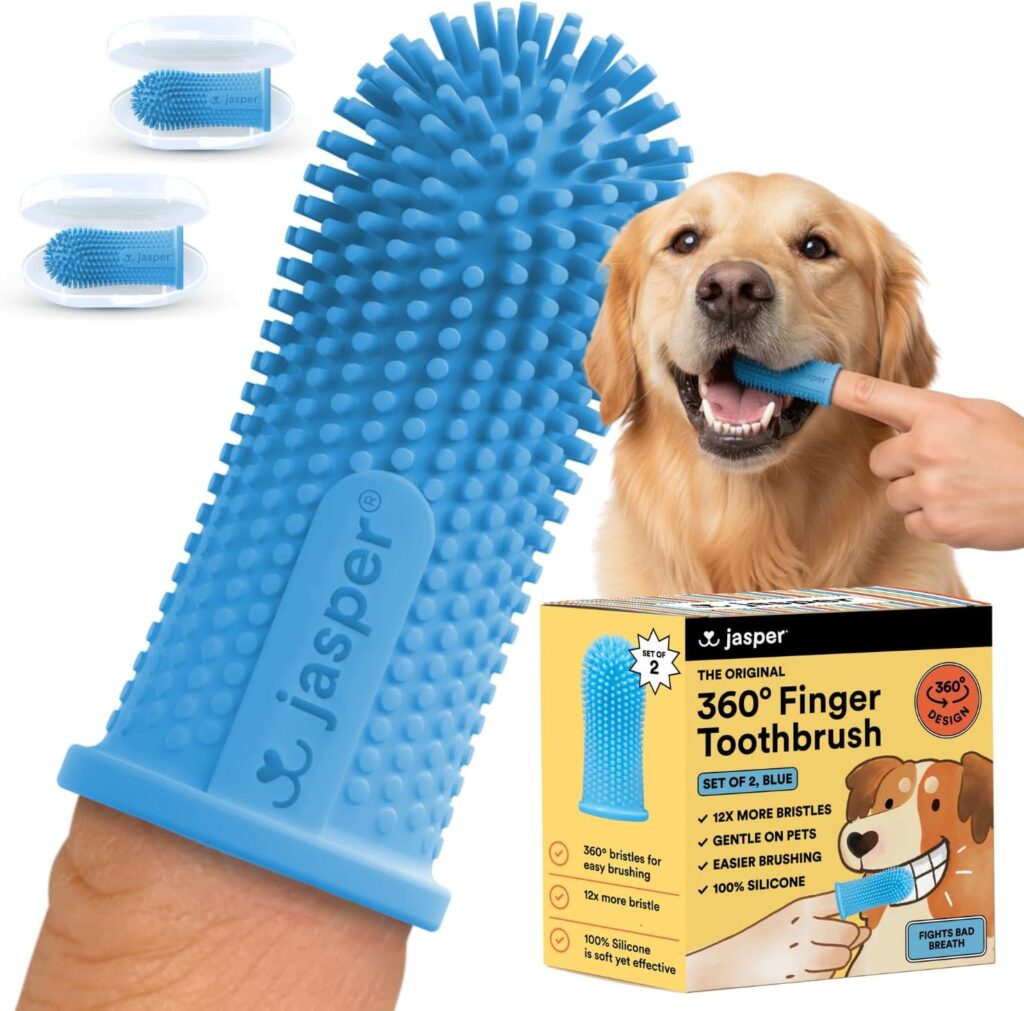
The Jasper 360 Finger Toothbrush is useful for cat parents who want more control during early brushing practice. Because it fits over your finger, it can feel easier to guide gently along the front teeth and gumline.
The 360-degree bristle design also means you do not have to position the brush as precisely as a traditional toothbrush. For cats that are just learning to accept mouth handling, this can make short brushing sessions feel more manageable.
Why It Fits This Pick:
This fits the finger toothbrush category because it is soft, simple, and beginner-friendly. It is especially useful when you are still training your cat to accept dental care and only brushing for a few seconds at a time.
Things to Consider:
A finger brush puts your finger closer to your cat’s mouth. If your cat bites when nervous or stressed, a long-handle toothbrush may be safer.
Best Long-Handle Cat Toothbrush: Pets & Pupps Dual-Head Pet Toothbrush
Best for:
Cats that already tolerate brushing and cat parents who want better reach without putting fingers too close to the mouth.
Key Features :
- Long-handle pet toothbrush
- Dual-head design
- Soft bristles
- 217 mm ergonomic handle
- 45-degree angled brush head
- Larger brush head for back teeth and larger surfaces
- Smaller brush head for harder-to-reach areas
- Non-slip design
- Toothpaste not included
- Designed for dogs and cats
Product Overview:
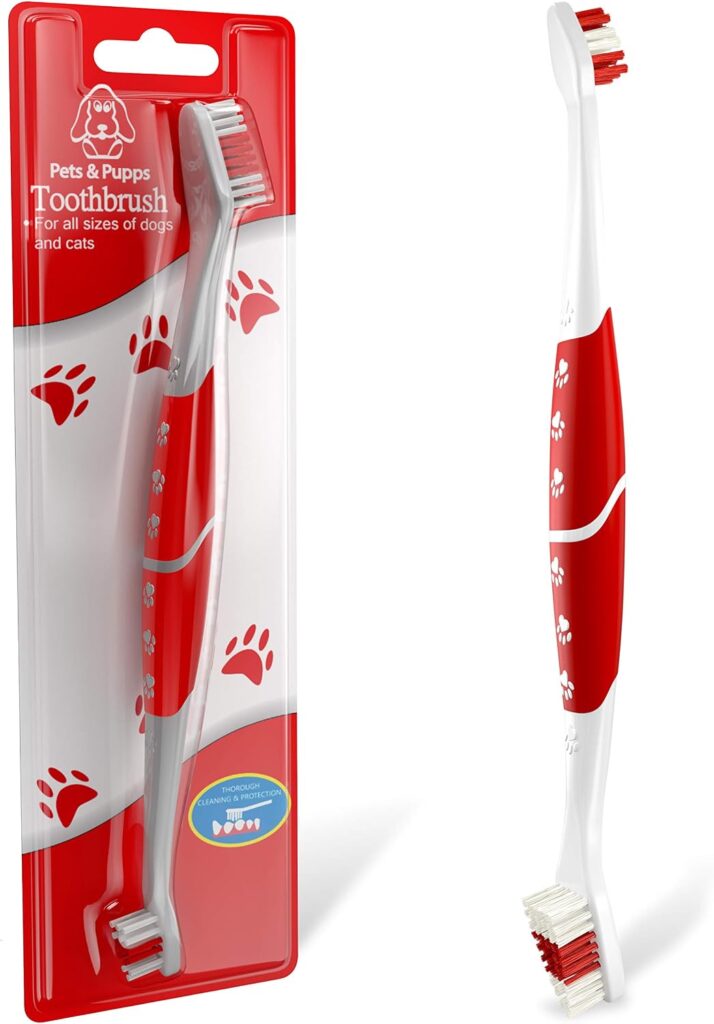
The Pets & Pupps Dual-Head Pet Toothbrush is a better fit for cats that are already somewhat comfortable with brushing. The long handle keeps your fingers farther away from the mouth, while the dual brush heads give you more flexibility when cleaning different areas.
The smaller brush head can be useful for tighter areas, while the longer handle helps with reach. This makes it a practical option for cat parents who want to move beyond beginner finger brushing.
Why It Fits This Pick:
This fits the long-handle toothbrush category because it gives better reach and control than a finger brush. It is especially helpful when you want to focus on the outer tooth surfaces and back teeth without placing your hand too close to your cat’s mouth.
Things to Consider:
This may feel too large or awkward for very small cats or cats that strongly resist brushing. Introduce it slowly and use only gentle pressure.
Best Cat Toothpaste: Virbac C.E.T. Enzymatic Toothpaste
Best for:
A cat toothpaste should be specifically formulated for pets and easy to use without rinsing.
Key Features :
- Enzymatic pet toothpaste
- Poultry flavor
- 2.5 oz size
- Designed for tartar and plaque control
- Helps freshen breath
- Pet dental care toothpaste
- Works with toothbrush or finger brush
- Made for pet oral care routines
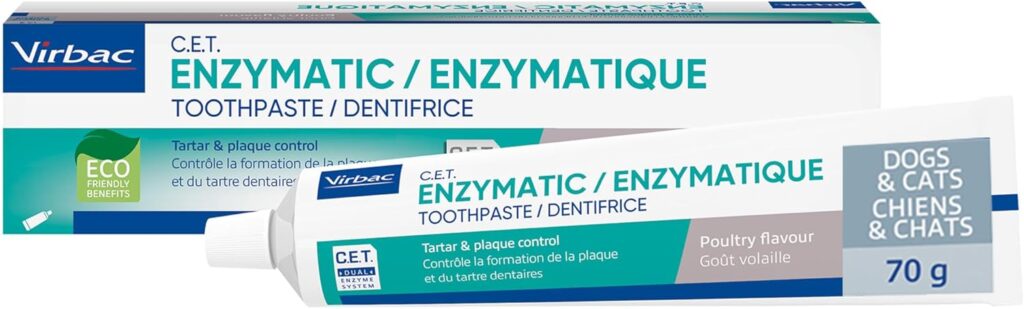
Product Overview:
Virbac C.E.T. Enzymatic Toothpaste is a strong standalone toothpaste pick for cats that are ready to begin a more consistent dental routine. The poultry flavor may be more appealing to some cats than mint-style products, which are usually not ideal for cats.
This toothpaste works best when paired with a small cat toothbrush or finger brush. For beginners, you can start by letting your cat taste a tiny amount before brushing.
Why It Fits This Pick:
This fits the best cat toothpaste category because toothpaste is one of the most important parts of a safe cat dental routine. You should not use human toothpaste for cats, so a pet-specific toothpaste is necessary.
Things to Consider:
Flavor preference varies. If your cat refuses the poultry flavor, try a different pet-safe flavor rather than forcing the routine.
Best Dental Wipes for Cats: BuddyCheer No-Rinse Dental Care Wipes
Best for:
Dental wipes for cats can be a useful transition option when your cat is not ready to accept a toothbrush.
Key Features :
- 50-count dental wipes
- No-rinse formula
- Disposable finger wipes
- Designed for cats and dogs
- Helps clean teeth
- Helps remove plaque and tartar buildup
- Alcohol-free
- Paraben-free
- Fragrance-free
- Made for pets that dislike traditional toothbrushes
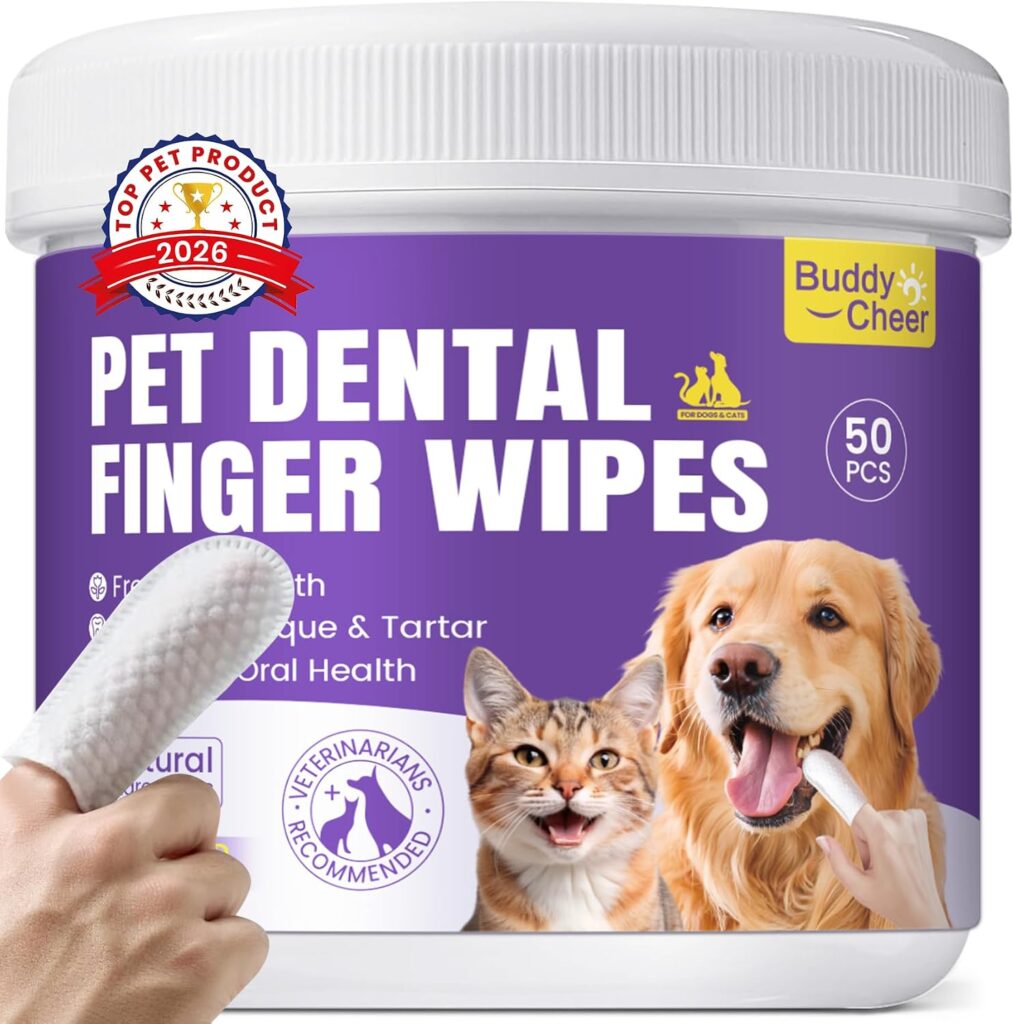
Product Overview:
BuddyCheer No-Rinse Dental Care Wipes are a practical option for cats that refuse toothbrushes. Instead of using a brush, you can place a wipe over your finger and gently rub along the outer teeth and gumline.
This can be a helpful bridge product for dental training. It lets your cat get used to mouth handling before moving toward a toothbrush, while still giving you a simple way to clean around the teeth.
Why It Fits This Pick:
This fits the dental wipes category because it is easier and less intimidating than brushing for many cats. It is especially useful for cats that panic around toothbrushes but may accept a quick wipe.
Things to Consider:
Your finger is still close to your cat’s mouth, so be careful with cats that bite when stressed. Wipes are helpful, but they may not clean as thoroughly as regular brushing.
Best Cat Dental Treats: Greenies Feline Dental Cat Treats
Best for:
Dental treats for cats can provide an easy supplemental step between brushing sessions.
Key Features :
- Adult dental cat treats
- Oven roasted chicken flavor
- 9.75 oz tub
- Wafer form
- Designed for dental care
- Veterinarian-recommended positioning
- Natural dental cat treat format
- Easy to add to a daily routine
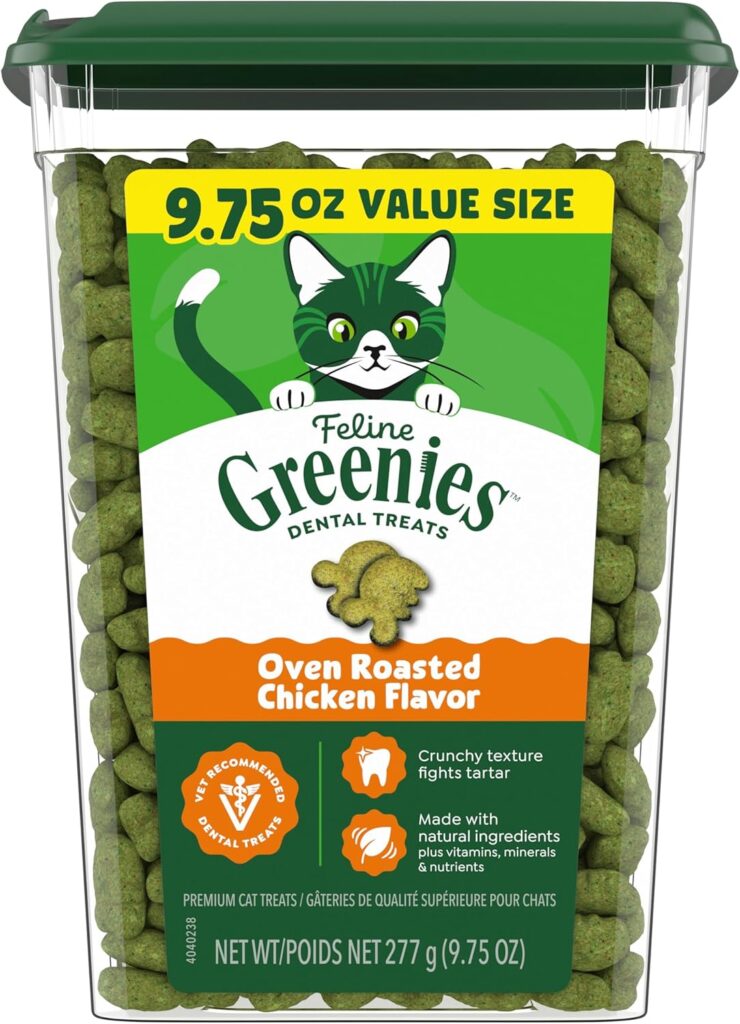
Product Overview:
Greenies Feline Dental Cat Treats are a low-stress way to add dental support to your cat’s routine. They are especially useful for cats that strongly resist brushing or for cat parents who want something easy to use between brushing sessions.
The crunchy treat format makes them simple to give, and many cats may accept treats more readily than toothbrushes, gels, or sprays.
Why It Fits This Pick:
This fits the dental treats category because it is one of the easiest dental care options to use consistently. It is not a replacement for brushing or vet dental care, but it can be a helpful support product for everyday oral care. Feline Greenies Dental Treats are also listed by the Veterinary Oral Health Council (VOHC) as an accepted product for helping control tartar.
Things to Consider:
Dental treats add calories, so follow the feeding directions and adjust your cat’s diet if needed. Do not rely on treats alone if your cat has bad breath, red gums, visible tartar, drooling, or trouble eating.
Best Cat Water Additive: Oxyfresh Premium Pet Dental Care Solution
Best for:
A cat dental water additive can be convenient for cats that strongly resist mouth handling, but always make sure it does not reduce normal water intake.
Key Features :
- Pet dental water additive
- 16 oz bottle
- Liquid formula
- Flavor-free
- Designed for cats and dogs
- Helps fight bad breath
- Helps support plaque and tartar control
- Mint-free
- Tea tree-free
- Add-to-water use
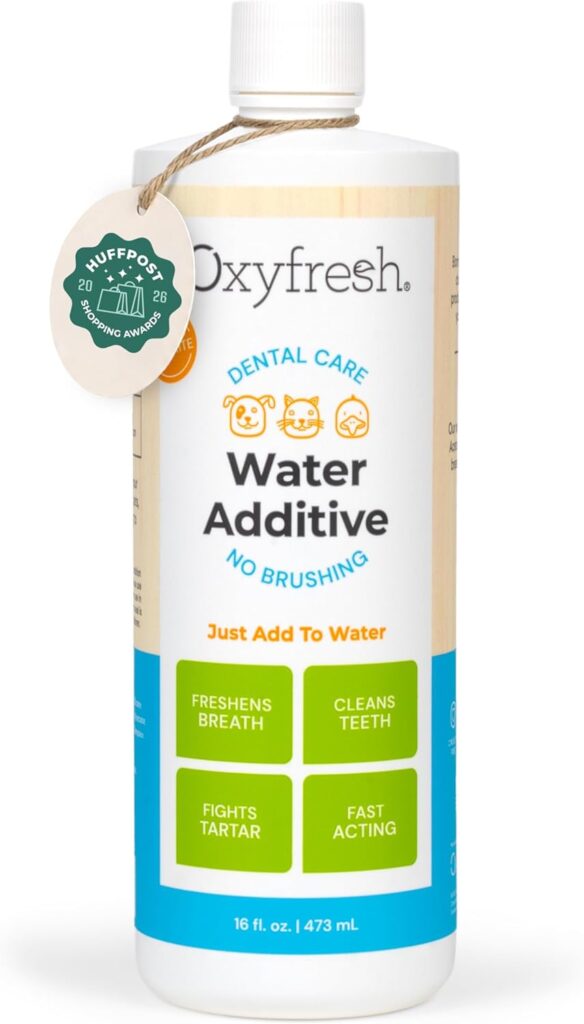
Product Overview:
Oxyfresh Premium Pet Dental Care Solution is useful for cat parents who struggle with brushing consistency. Instead of handling your cat’s mouth every day, you add the product to your cat’s drinking water according to the directions.
This type of product can be helpful for cats that resist toothbrushes, wipes, or gels. It is one of the lowest-effort options in a dental care routine.
Why It Fits This Pick:
This fits the water additive category because it is simple to use and does not require brushing. It can be a practical daily support product for cats that tolerate changes to their water.
Things to Consider:
Watch your cat’s water intake carefully. If your cat drinks less after you add a water additive, stop using it and return to plain fresh water.
Best Dental Spray for Cats: HICC PET Oral Care Spray
Best for:
A dental spray for cats may provide another option when traditional brushing is not realistic yet.
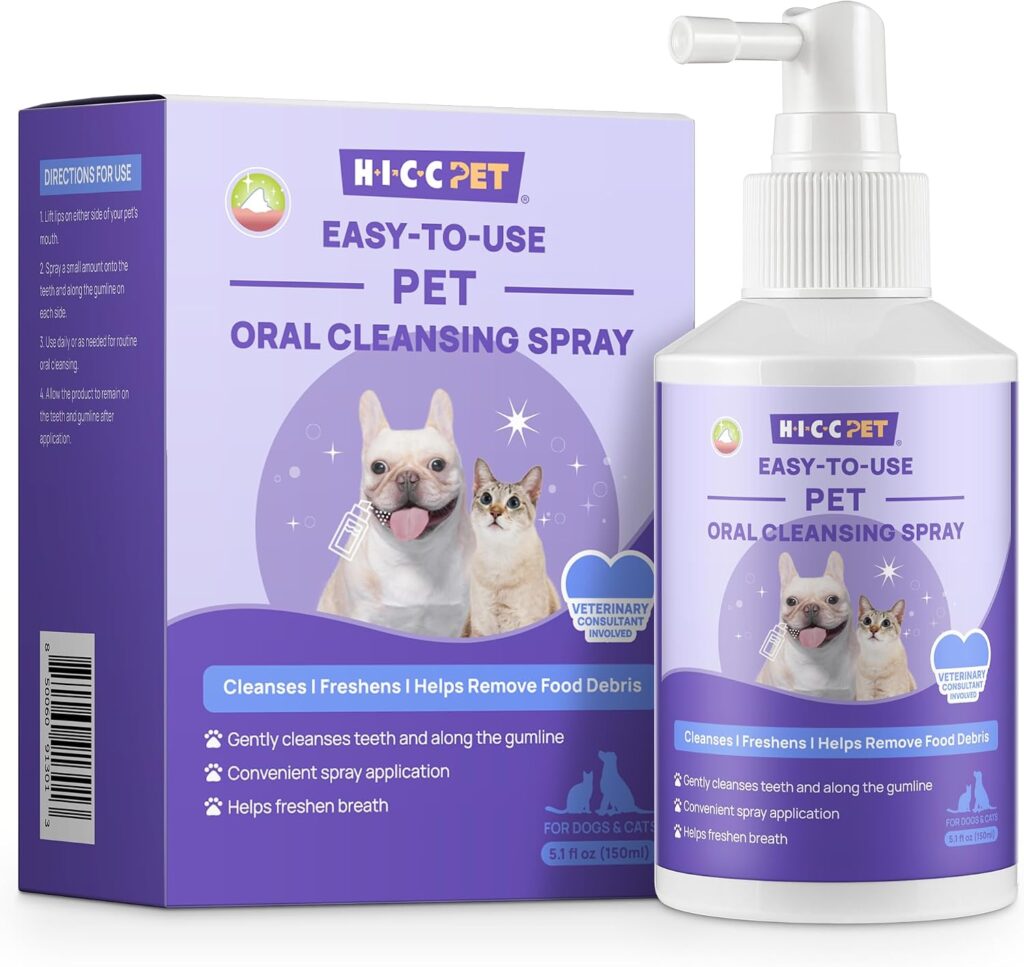
Key Features :
- No-brushing oral care spray
- 5.1 fl oz bottle
- Breath freshener
- Uses hypochlorous acid
- Alcohol-free
- No artificial fragrances
- No harsh chemical additives
- 360-degree rotating spray head
- Safe if licked or ingested according to product page
- Suitable for pets of different ages, including kittens over 8 weeks according to product page
Product Overview:
HICC PET Oral Care Spray is a brush-free option for cats that do not tolerate toothbrushes. Instead of brushing, the spray is designed to be applied along the teeth and gumline for quick daily oral care support.
This can be useful for cat parents who want something faster than brushing but more direct than a water additive. The 360-degree spray head may also make it easier to reach different areas of the mouth.
If your cat is already picky about drinking water, our guide to cat water fountains can help you compare different ways to keep fresh water available without making hydration more complicated.
Why It Fits This Pick:
This fits the dental gel or spray category because it gives brushing-resistant cats another option. It is best positioned as a supplement or alternative step when traditional brushing is not realistic yet.
Things to Consider:
Some cats dislike spray sounds or the feeling of mist near their mouth. For sensitive cats, introduce it slowly, and stop if your cat becomes too stressed.
What to Look for in Cat Dental Care Products
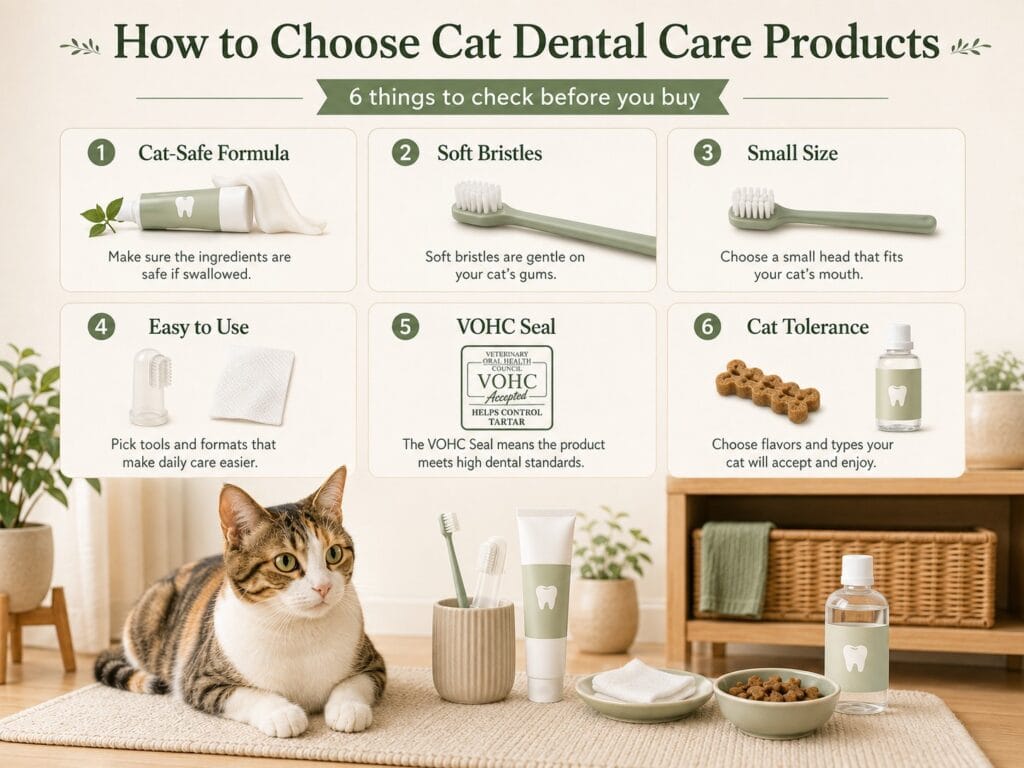
1. Cat-Safe Formula
Only choose products made for cats or pets. Avoid human toothpaste, human mouthwash, baking soda mixtures, and essential oil products unless your veterinarian specifically recommends them.
2. Soft Bristles or Gentle Texture
Cat gums can be sensitive. Whether you choose a toothbrush, finger brush, or wipe, the product should feel soft and gentle.
3. Small Size
A cat toothbrush should fit comfortably in a small mouth. Large dog toothbrushes may be too bulky for cats.
4. Easy Introduction
The best dental product is the one your cat will actually tolerate. Start with taste, touch, and short sessions before expecting full brushing. If your cat becomes tense during handling or grooming, our guide on how to calm an anxious cat at home may help you build a slower, more predictable routine.
VCA explains that successful toothbrushing training works best when the process is broken down into small steps and paired with something pleasant.
5. VOHC Seal When Possible
When comparing dental treats, water additives, toothpaste, wipes, gels, sprays, and other oral-care products, check the VOHC Accepted Products for Cats list when possible. The VOHC Seal indicates that a product has met the council’s standards for helping control plaque, tartar, or both based on submitted trial data.
6. Fits Your Cat’s Personality
Some cats accept brushing. Some tolerate wipes. Some do best with a water additive or treats. Choose based on your cat’s stress level and slowly build from there.
How to Start Brushing Your Cat’s Teeth
If you are learning how to brush your cat’s teeth, do not start by forcing a toothbrush into the mouth.
Step 1: Let Your Cat Taste the Toothpaste
Put a tiny amount of cat toothpaste on your finger and let your cat smell or lick it.
Step 2: Touch Around the Mouth
Gently touch the outside of your cat’s lips and cheeks for a few seconds. Stop before your cat gets upset.
Step 3: Lift the Lip Gently
Once your cat is comfortable, gently lift the lip and touch the outside of the teeth.
Step 4: Use a Finger Brush or Small Toothbrush
Apply cat toothpaste and brush a small area for just a few seconds.
Step 5: Focus on the Outer Tooth Surfaces
You usually do not need to force your cat’s mouth wide open. VCA notes that the mouth can remain closed while you gently lift the lips and brush the outer surfaces.
Step 6: Keep Sessions Short
A few seconds of calm brushing is better than a long stressful session. Build slowly over days or weeks.
How Often Should You Brush Your Cat’s Teeth?
Daily brushing is ideal when your cat allows it. AAHA says brushing daily is the best way to help reduce plaque accumulation, and the AVMA describes regular tooth brushing as the single most effective thing pet owners can do between dental cleanings.
If daily brushing is not realistic, start with a few short sessions per week and use other dental products as support.
When Dental Products Are Not Enough
At-home dental products can help, but they cannot fix every dental problem.
Call your veterinarian if your cat has:
- Bad breath that does not improve
- Red or bleeding gums
- Yellow or brown tartar buildup
- Drooling
- Pawing at the mouth
- Loose teeth
- Trouble chewing
- Dropping food
- Eating on one side
- Refusing dry food
- Swelling around the face or mouth
- Sudden behavior changes
Dental pain can be easy to miss because cats often hide discomfort. A vet exam is the safest way to know what is happening.
Common Mistakes to Avoid
Avoid these common cat dental care mistakes:
- Using human toothpaste
- Starting too fast
- Forcing the mouth open
- Brushing too hard
- Ignoring bad breath
- Using dog-sized brushes for cats
- Relying only on treats
- Adding water additives if your cat drinks less
- Skipping vet dental checkups
- Waiting until your cat is in pain
A gentle routine is more effective than a stressful one your cat learns to fear.
Related HavenTails Guides
How to Calm an Anxious Cat at Home
Create a calmer routine for cats that dislike handling or grooming.
Best Nail Clippers for Cats
Find beginner-friendly tools for gentle at-home grooming.
Best Grooming Gloves for Cats
Compare gentle grooming gloves for brushing, wiping, bathing, and hair cleanup.
Best Cat Water Fountains for Fresh Drinking Water
Compare quiet, easy-to-clean, stainless steel, ceramic, and cordless fountains for keeping fresh water available throughout the day.
Final Thoughts
The best cat dental care product depends on your cat’s comfort level. I’ve tried finger toothbrushes and long-handle cat toothbrushes with cat toothpaste, but my cat really dislikes having anything placed in her mouth and tends to struggle during brushing. Dental treats have been much easier for us to use regularly because she accepts them far more readily. I still see them as a convenient supplement rather than a complete replacement for brushing or professional dental care.
If your cat is new to dental care, start with a simple dental kit, cat-safe toothpaste, or a finger brush. If brushing feels too difficult, dental wipes, treats, gels, sprays, or water additives may help support the routine while you continue training slowly.
The most important thing is to keep dental care gentle, safe, and consistent. Never use human toothpaste, do not force your cat, and contact your veterinarian if you notice bad breath, gum redness, tartar buildup, drooling, or changes in eating habits.
If you are building a broader at-home care routine, our guide to grooming gloves for cats includes gentle options for cats that are still getting used to regular handling and grooming.
If you are putting together a complete at-home grooming routine, our guide to nail clippers for cats covers beginner-friendly tools for calm, controlled nail trims.
A few calm seconds today can be the beginning of a better dental routine over time.
FAQs
What is the best toothbrush for cats?
The best cat toothbrush is small, soft, and easy to control. Many beginners start with a finger brush, while cats that accept brushing may do well with a small long-handle toothbrush.
Can I use human toothpaste on my cat?
No. Human toothpaste should not be used for cats. Use only toothpaste or tooth gel made specifically for cats or pets.
How often should I brush my cat’s teeth?
Daily brushing is ideal if your cat allows it. If not, start with short sessions a few times a week and build slowly.
Are dental treats enough for cats?
Dental treats can help support oral care, but they are not a full replacement for brushing or veterinary dental care.
Are dental wipes good for cats?
Dental wipes can be useful for cats that are not ready for brushing. They may help your cat get used to mouth handling and gentle gumline cleaning.
What if my cat refuses tooth brushing?
Start slower. Let your cat taste the toothpaste, touch around the mouth briefly, and try wipes or gels before moving to a toothbrush. If your cat is painful, aggressive, or very stressed, ask your vet for advice.