Affiliate Disclosure: As an Amazon Associate, we earn from qualifying purchases. This post contains affiliate links, which means we may earn a small commission if you buy through our links, at no extra cost to you.
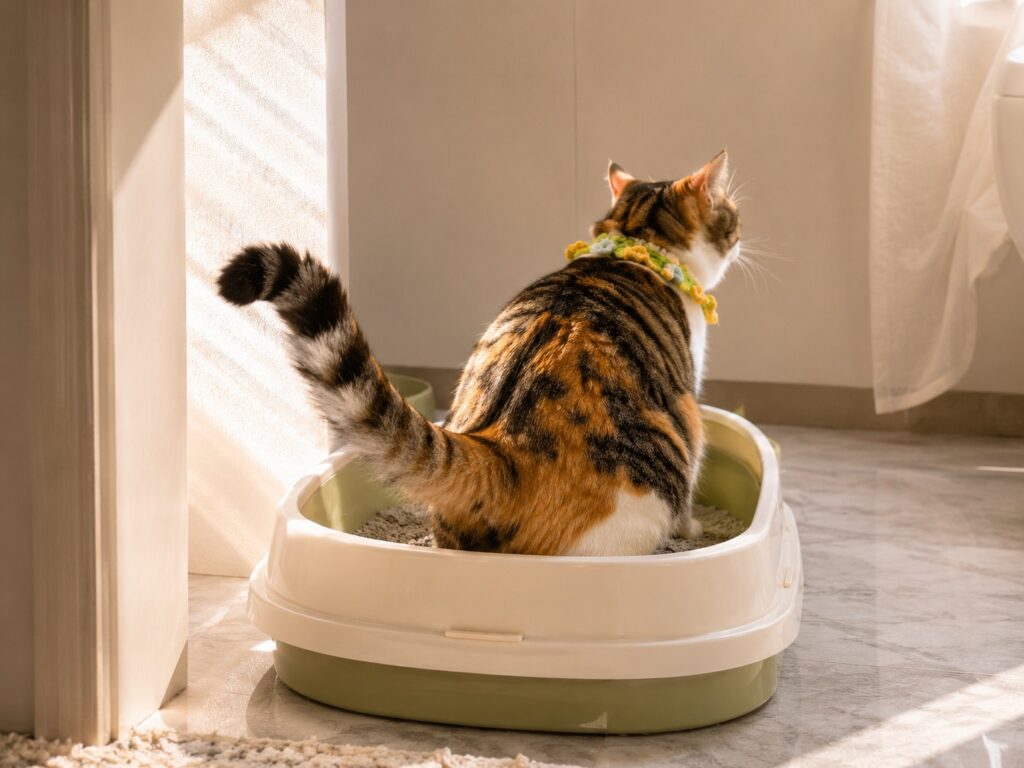
Choosing a litter box sounds simple, but the wrong one can make daily life harder for both you and your cat. Some cats dislike covered boxes, some need lower entry, and some make a mess with litter tracking. The best litter box is not always the most expensive one — it is the one your cat feels comfortable using and the one you can realistically keep clean.
In this guide, learn how to choose the right litter box for your cat, including size, covered vs open designs, placement, cleaning, odor control, and small-space tips.
Start with the Right Size
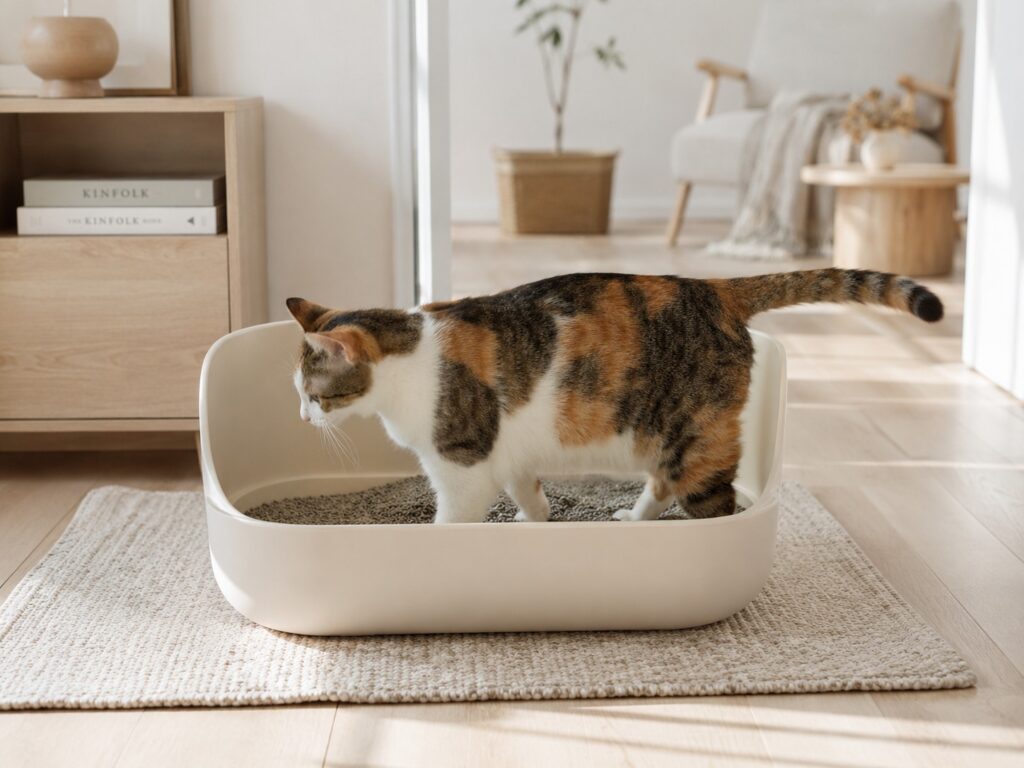
A litter box should be large enough for your cat to turn around, dig, and cover waste comfortably. If the box is too small, your cat may avoid using it, step outside the box, or kick litter everywhere.
A simple rule is to choose a litter box that is longer than your cat’s body, not including the tail. Bigger is usually better, as long as it still fits your space.
For kittens, a smaller box with low sides may be easier to use. For adult cats, choose a roomier box. For large breeds or bigger cats, look for an extra-large litter box with enough floor space.
Choose Between Open and Covered Litter Boxes
Open and covered litter boxes both have benefits, but your cat’s preference matters most.
Open Litter Boxes
Open litter boxes are easy for cats to enter, easy for you to scoop, and usually have better airflow. They are a good choice for cats who dislike enclosed spaces or need a simple, low-stress setup.
They are also easier to monitor, which can be helpful if you want to notice changes in your cat’s litter habits.
The downside is that open boxes do not hide odor or visual mess as well as covered options.
Covered Litter Boxes
Covered litter boxes can help contain litter scatter, hide mess, and make the litter area look cleaner. They can work well in apartments or shared spaces where the litter box is more visible.
However, not every cat likes a covered box. Some cats may feel trapped, especially if the box is small, dark, or has a swinging door. If your cat hesitates to enter, try removing the door or switching to a more open design.
Think About Entry Height
Entry height is especially important for kittens, senior cats, overweight cats, or cats with mobility issues.
A low-entry litter box makes it easier for cats to step in and out. This can help prevent accidents outside the box and make the litter area feel more comfortable.
High-sided litter boxes are better for cats who kick litter or pee near the edge, but they may not be ideal for cats who have trouble climbing.
If your cat is young, older, or less active, comfort should come before style.
Consider Litter Tracking
Litter tracking happens when small pieces of litter stick to your cat’s paws and spread around the home. If you live in a small space, this can become noticeable quickly.
To reduce tracking, consider:
- A high-sided litter box
- A top-entry litter box
- A litter mat outside the entrance
- Heavier or low-tracking litter
- Regular sweeping or vacuuming around the box
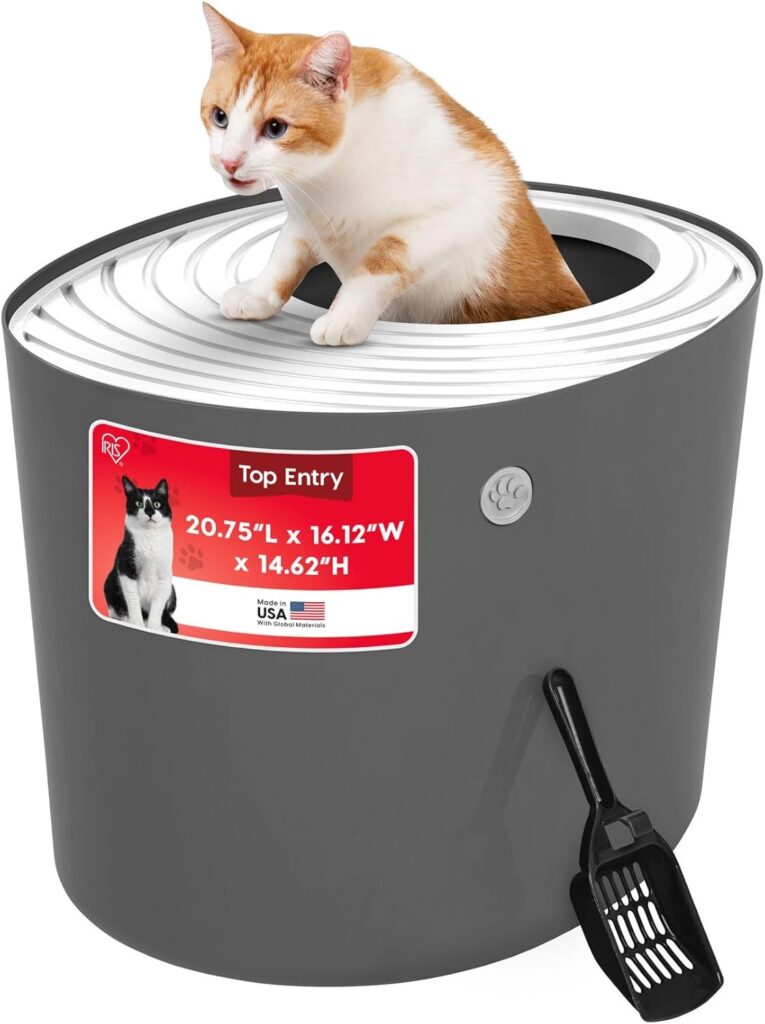
Top-entry boxes can help catch loose litter as cats climb out, but they are not suitable for every cat. Avoid top-entry boxes for kittens, senior cats, or cats with joint problems. The litter itself matters just as much as the box design. Compare low-tracking litter options if scattered litter is one of your main concerns.
Example pick:
If litter tracking is your biggest issue, a top-entry option like the IRIS USA Large Top Entry Cat Litter Box can help catch loose litter on the lid before your cat steps back onto the floor.
Pay Attention to Odor Control
A good litter box can help manage odor, but cleaning habits matter more than the box itself.
Covered boxes, carbon filters, and enclosed designs can help reduce odor spread, but they can also trap smell inside if the box is not scooped regularly.
For better odor control:
- Scoop the litter box daily
- Replace litter as needed
- Wash the box regularly
- Keep the box in a ventilated area
- Avoid placing it in a completely sealed cabinet without airflow
If you live in a small apartment, odor control depends more on routine than on buying the fanciest litter box.
Choose a Box That Is Easy to Clean
An easy-to-clean litter box makes it much easier to keep a consistent routine. Look for smooth surfaces, rounded corners, removable lids, and a wide opening for scooping.
Avoid designs with too many tiny gaps, complicated parts, or hard-to-reach corners. These may look stylish at first but can become annoying to clean over time.
If you are busy, a simple box that you can scoop and wipe quickly may be better than a decorative one that is difficult to maintain.
Example pick:
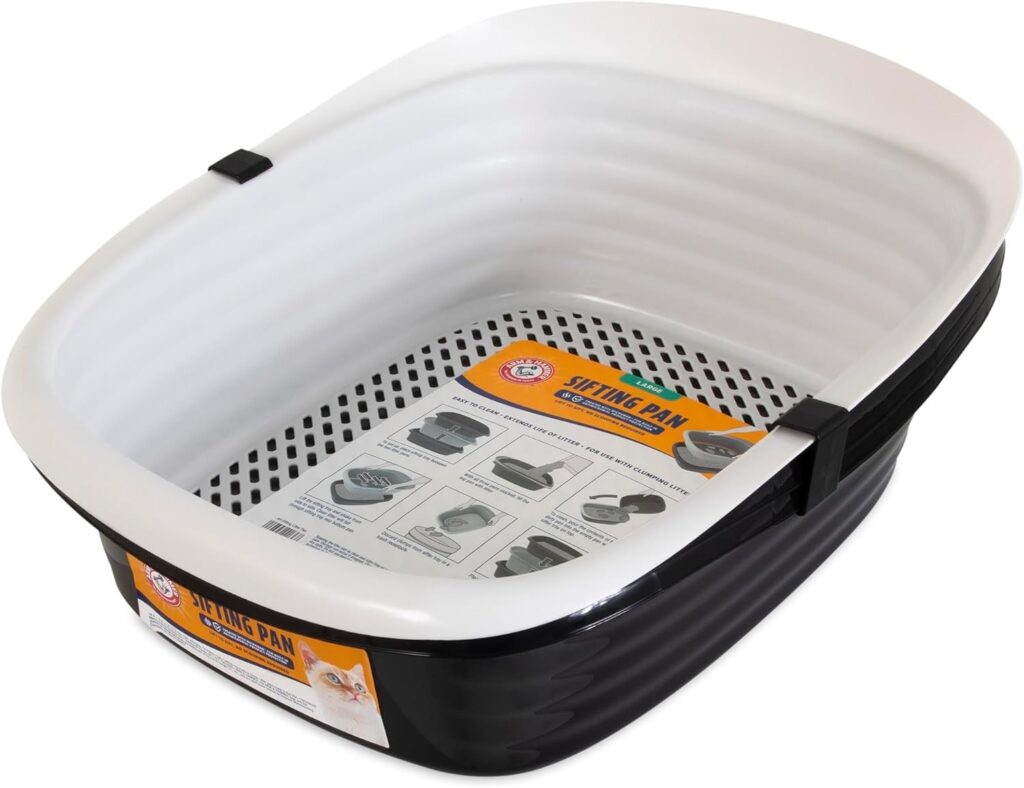
If easy cleaning is your top priority, a simple sifting litter box like the Arm & Hammer Large Sifting Litter Box can make daily maintenance quicker by helping separate waste from clean litter.
Match the Litter Box to Your Home
Your home layout also matters. A large covered box may work well in a bathroom, while a hidden litter box cabinet may be better for a living room or hallway. A corner litter box can save space in small apartments, and an open box can work well in a quiet utility area.
Think about where the box will go before buying it. Measure the space, check the height, and make sure your cat has enough room to enter and exit comfortably. If floor space is limited, compare our best cat litter boxes for small apartments for covered, open, top-entry, corner, and hidden options.
The litter box should be easy for your cat to find and easy for you to clean.
Place the Litter Box in the Right Spot
Even the best litter box may not work if it is placed in the wrong location.
Choose a spot that is:
- Quiet
- Easy to access
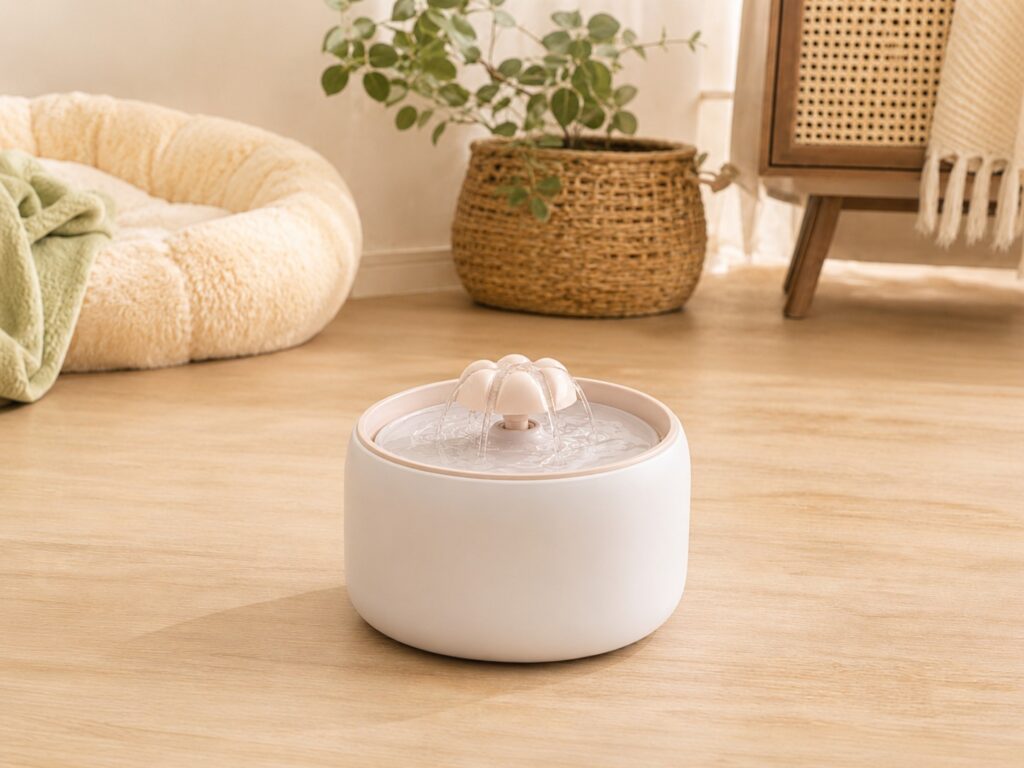
- Away from food and water bowls
- Away from loud appliances
- Not too hidden or hard for your cat to reach
Bathrooms, laundry corners, hallway nooks, and quiet bedroom corners can work well. Avoid placing the litter box next to a washing machine, dryer, or other loud appliance that may scare your cat.
Watch Your Cat’s Behavior
Your cat will usually show you whether the litter box works. If your cat avoids the box, rushes out quickly, scratches around the outside, or has accidents nearby, the setup may not feel comfortable.
Possible issues include:
- The box is too small
- The sides are too high
- The box is too enclosed
- The location feels unsafe
- The litter type is uncomfortable
- The box is not cleaned often enough
If your cat suddenly stops using the litter box, it can also be a health concern, so it is worth contacting a veterinarian if the behavior continues.
Choose Based on Your Cat, Not Just the Look
A beautiful litter box is nice, especially if it sits in a visible part of your home. But your cat’s comfort should come first.
If your cat likes privacy, a covered or hidden litter box may work well. If your cat prefers open space, an open tray or high-sided box may be better. If you have a small apartment, a corner or top-entry box may help save space — as long as your cat can use it comfortably.
The right litter box should balance three things: your cat’s comfort, your cleaning routine, and your home layout.
FAQ
What size litter box should I choose?
Choose a litter box large enough for your cat to turn around, dig, and cover waste comfortably. Bigger is usually better, especially for adult cats.
Are covered litter boxes better?
Covered litter boxes can help hide mess and reduce odor spread, but some cats dislike enclosed spaces. Your cat’s comfort matters most.
Are top-entry litter boxes good for cats?
Top-entry litter boxes can reduce litter tracking, but they are not ideal for kittens, senior cats, or cats with mobility issues.
How often should I clean a litter box?
Scoop the litter box daily and do a deeper clean regularly to prevent odor and buildup.
Where should I place my cat’s litter box?
Place it in a quiet, accessible area away from food, water, and loud appliances.
What if my cat refuses to use the litter box?
Check the size, location, cleanliness, entry height, and litter type. If the issue continues or happens suddenly, contact a veterinarian.
Final Thoughts
The right litter box should make your cat feel comfortable and make daily cleaning easier for you. Start with enough space, choose a design that matches your cat’s needs, and place it somewhere quiet and accessible.
Whether you choose an open box, covered box, top-entry design, or hidden litter box furniture, the best option is the one your cat uses consistently and you can keep clean without stress.