Affiliate Disclosure: As an Amazon Associate, we earn from qualifying purchases. This post contains affiliate links, which means we may earn a small commission if you buy through our links, at no extra cost to you.
Introduction
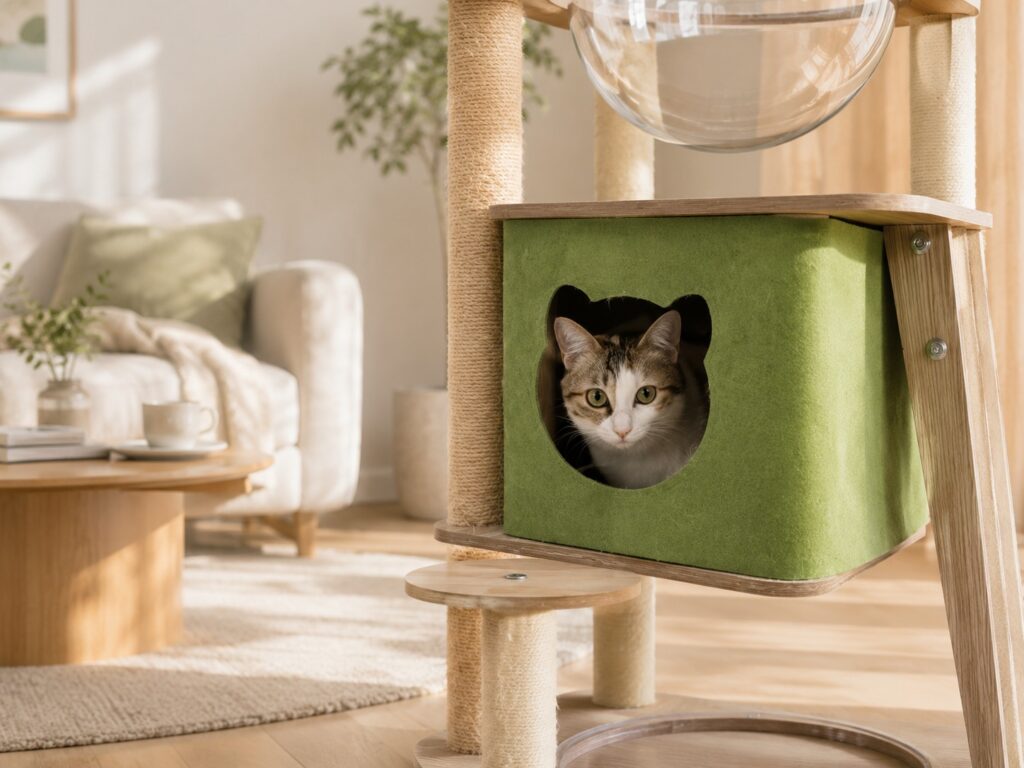
Living in a small apartment does not mean your cat has to miss out on climbing, scratching, resting, or watching the world from above. The key is choosing a cat tree that fits your space while still giving your cat enough comfort and activity.
A good cat tree for a small apartment should use vertical space, have a stable base, include scratching areas, and fit naturally into your home. In this guide, we’ll walk through what to look for before choosing a cat tree for a smaller living space.
1. Start with the Footprint
The footprint is the amount of floor space the cat tree takes up. In a small apartment, this matters more than the total height.
Look for cat trees with a compact base, slim shape, or corner-friendly design. A cat tree that uses more vertical space instead of spreading wide across the floor can give your cat more activity space without making your room feel crowded.
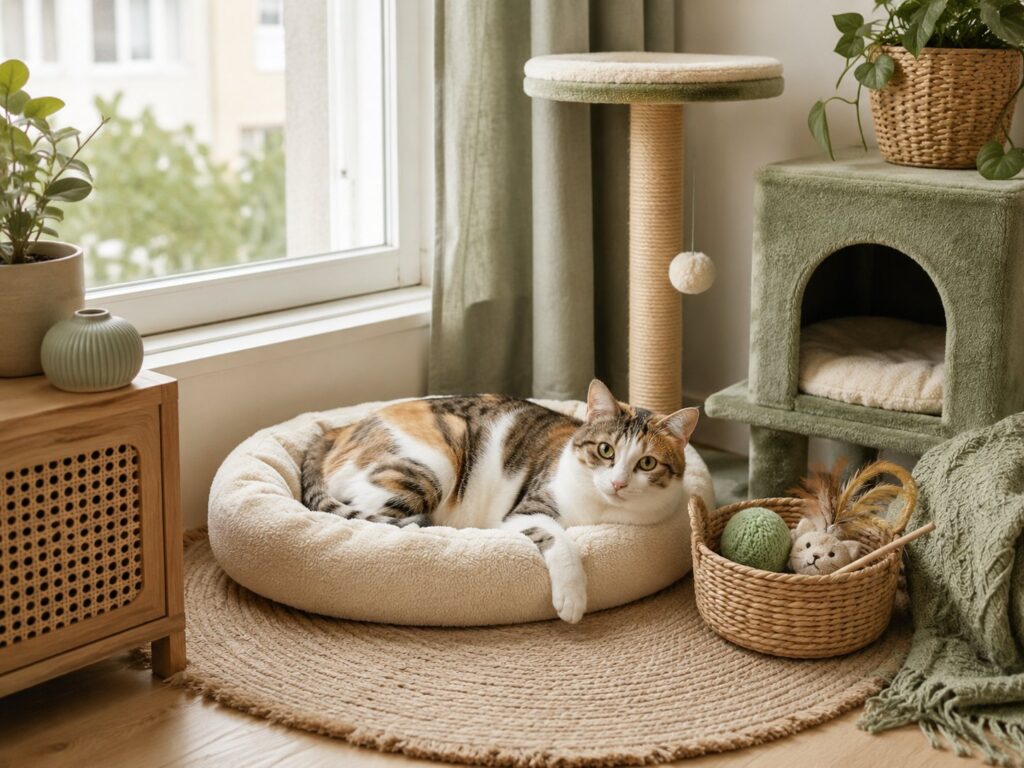
Before buying, measure the area where you plan to place it. Good spots include a window corner, beside a sofa, near a bookshelf, or along a wall. If you are planning the rest of the space around the tree, you can also create a cozy cat corner with a small bed, scratcher, rug, and a few simple toys.
2. Use Vertical Space
Cats often enjoy climbing, perching, and observing from above. For small apartments, vertical space is your best friend.
A tall narrow cat tree can give your cat multiple levels without taking up much floor space. This is especially helpful for indoor cats who need more enrichment and exercise at home.
However, taller is not always better. If your cat is older, overweight, or has mobility issues, a lower compact cat tree may be safer and easier to use.
3. Check Stability First
Stability is one of the most important things to consider, especially for tall or narrow cat trees. A cat tree should not wobble easily when your cat jumps, climbs, or scratches.
Look for a sturdy base, strong posts, and a balanced structure. If the cat tree is tall, placing it against a wall or in a corner can make it feel more secure.
For very active cats, choose a cat tree with a wider base or one that can be secured to the wall.
4. Choose the Right Height for Your Cat
The best height depends on your cat’s age, size, and personality.
Young and active cats may enjoy a taller cat tree with several levels. Calm cats may prefer a medium-height tree with a comfortable perch. Senior cats or less active cats may do better with a lower tree that is easier to climb.
If your cat already likes sitting on shelves, windowsills, or the back of the sofa, they may enjoy a taller cat tree. If your cat mostly naps near the floor, choose something lower and cozier.
For more ideas on making cat furniture feel like part of your interior, explore our Pinterest-inspired cat spaces for cozy, small-home-friendly styling ideas.
5. Look for Scratching Areas
A cat tree should give your cat a place to scratch. This helps support natural behavior and may reduce scratching on sofas, rugs, or furniture.
Sisal rope and sisal fabric are common scratching materials. For small apartments, a cat tree with built-in scratching posts is especially useful because one piece of furniture can serve multiple purposes: climbing, scratching, resting, and play.
Make sure the scratching posts are tall enough for your cat to stretch comfortably.
6. Think About Resting Space
Cats do not only climb cat trees — they also use them for napping and relaxing. Look for a perch, platform, hammock, or small condo that fits your cat’s size.
If your cat likes hiding, a small condo or enclosed cubby may be useful. If your cat prefers open spaces, a flat platform or soft perch may be better.
For larger cats, check the platform size carefully. Some small cat trees are compact, but the resting areas may be too small for adult cats to relax comfortably.
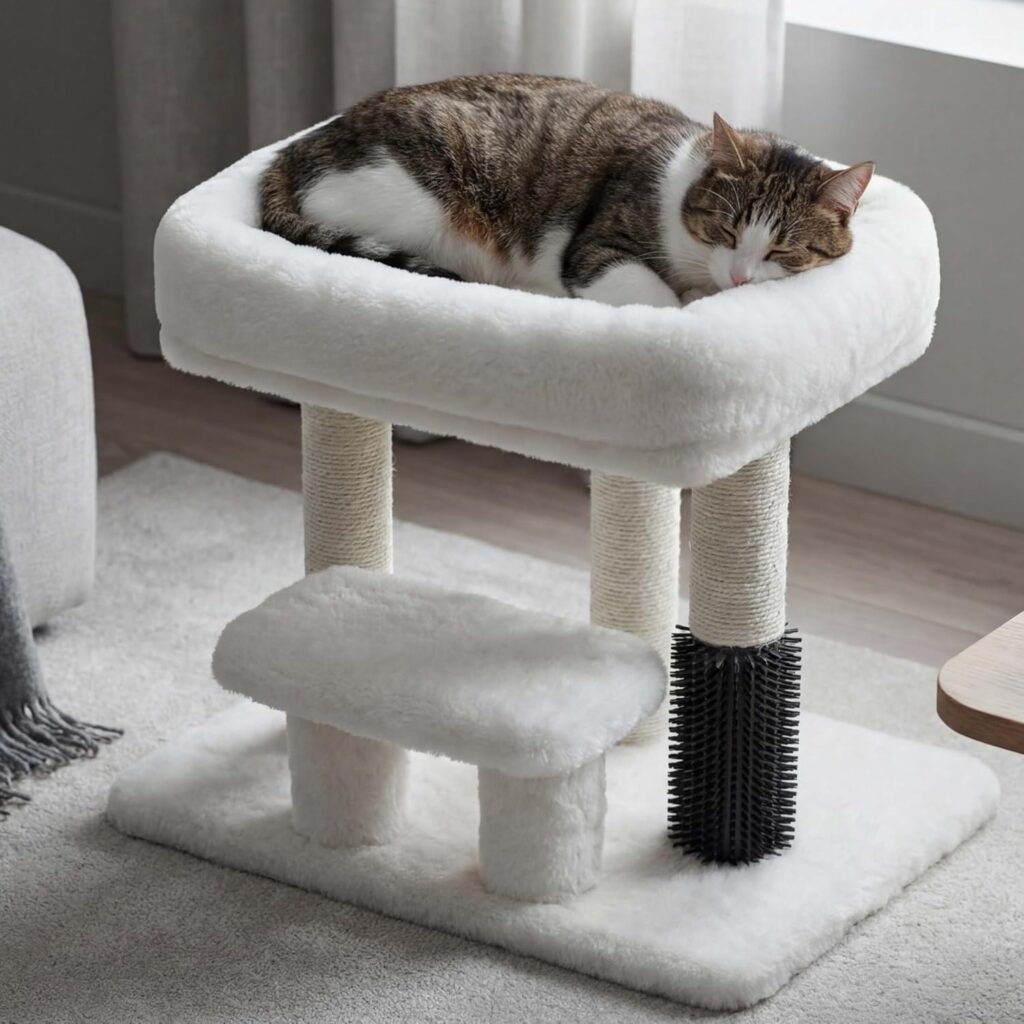
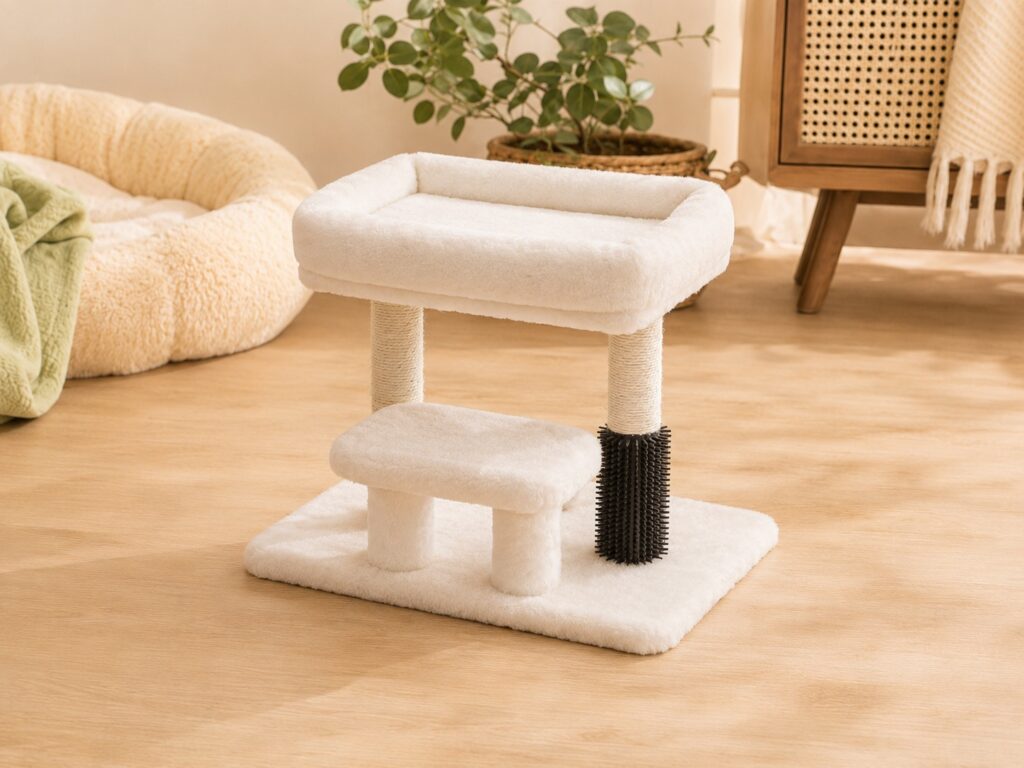
The Heybly Small Cat Tree Tower is a good fit for small spaces because it gives cats several everyday features without taking over the room. The compact structure works well beside a sofa, near a window, or in a bedroom corner, while the sisal posts give cats a dedicated place to scratch.
We also like the removable plush bed and grooming brush, which make it feel more useful than a basic scratching post. For kittens, small cats, or calmer indoor cats, this is a practical small-space option.
7. Match the Cat Tree to Your Home
In a small apartment, the cat tree will probably be visible. That means design matters.
If you want a softer, home-friendly look, choose neutral colors like beige, cream, gray, white, or natural wood tones. Modern cat trees with simple shapes can blend better with living rooms, bedrooms, and cozy corners.
A cat tree should work for your cat, but it should also feel natural in your space.
8. Place It Near a Window If Possible
A window can make a cat tree much more interesting. Many indoor cats enjoy watching birds, people, sunlight, and outdoor movement.
If possible, place the cat tree near a window or sunny area. This gives your cat a comfortable place to rest and observe while adding daily enrichment.
Just make sure the tree does not block walkways or feel unstable near curtains, blinds, or furniture.
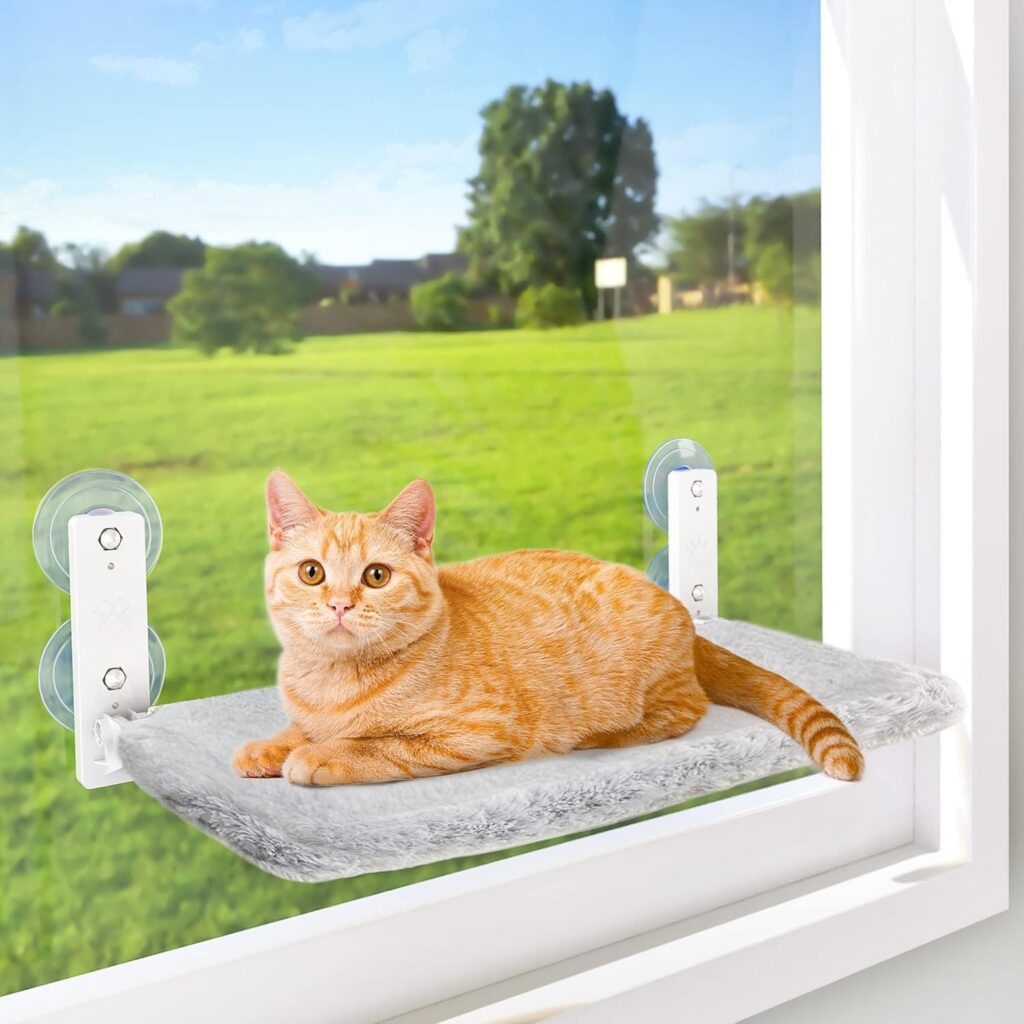
The AMOSIJOY Cordless Cat Window Perch is a great option for small spaces because it does not take up floor space like a traditional cat tree. Instead, it turns a window into a cozy lookout spot where your cat can rest, sunbathe, and watch the outside world.
We especially like that it offers two installation methods: suction cups or anchor-and-screw installation. For apartment living, this gives you more flexibility depending on your window setup and how permanent you want the perch to be.
If a full cat tree feels too bulky for the room, explore these sunny window perch ideas for simpler ways to create vertical or window-level space.
9. Consider Cleaning and Maintenance
Cat trees collect fur, dust, and sometimes litter from paws. In a small apartment, this can become noticeable quickly.
Choose materials that are easy to vacuum or wipe down. Removable cushions, washable pads, or smooth surfaces can make cleaning easier.
Avoid overly complicated designs with many tight corners if you want a low-maintenance setup.
10. Choose Based on Your Cat’s Habits
The best cat tree is not always the tallest or most expensive one. It is the one your cat will actually use.
If your cat loves scratching, choose a tree with strong scratching posts. If your cat loves window watching, choose a window-height perch. If your cat likes hiding, choose a design with a cozy condo. If your cat is older or cautious, choose a lower, easier-to-climb tree.
Pay attention to your cat’s current habits before choosing.
Small Apartment Cat Tree Tips
For small apartments, choose a cat tree that gives your cat more function without taking over the room. A compact base, vertical design, scratching posts, and comfortable resting spots are the most important features. Once you know which size and style will fit your home, compare our best cat trees for small spaces for compact, tall, modern, scratching-focused, and window-friendly options.
If your cat does not use the cat tree right away, place it near a favorite window, add a blanket that smells familiar, or use treats to encourage exploration. Some cats need a few days to feel comfortable with new furniture.
FAQ
What kind of cat tree is best for a small apartment?
A compact or tall narrow cat tree usually works best because it saves floor space while giving your cat climbing and resting areas.
Do cats need a cat tree in an apartment?
A cat tree is not required, but it can be very helpful for indoor cats. It gives them a place to climb, scratch, nap, and feel more secure.
Is a tall cat tree better for small spaces?
A tall narrow cat tree can be great for small spaces because it uses vertical space instead of floor space. Just make sure it is stable.
Where should I put a cat tree in a small apartment?
Near a window, beside a sofa, in a quiet corner, or against a wall are good options. Avoid placing it where it blocks walkways.
What should I look for in a cat tree?
Look for a stable base, scratching posts, comfortable platforms, cat-safe materials, and a size that fits both your cat and your space.
Are modern cat trees worth it?
Modern cat trees can be worth it if you want something that blends better with your home decor, especially in a small apartment where furniture is more visible.
Final Thoughts
Choosing a cat tree for a small apartment is all about balance. You want something compact enough for your home, but useful enough for your cat’s daily routine.
The best cat tree should give your cat a place to climb, scratch, rest, and observe without making your apartment feel crowded. Focus on footprint, stability, scratching space, comfort, and your cat’s personality. A well-chosen cat tree can make a small home feel much richer and more enjoyable for your cat.