Affiliate Disclosure: As an Amazon Associate, we earn from qualifying purchases. This post contains affiliate links, which means we may earn a small commission if you buy through our links, at no extra cost to you.
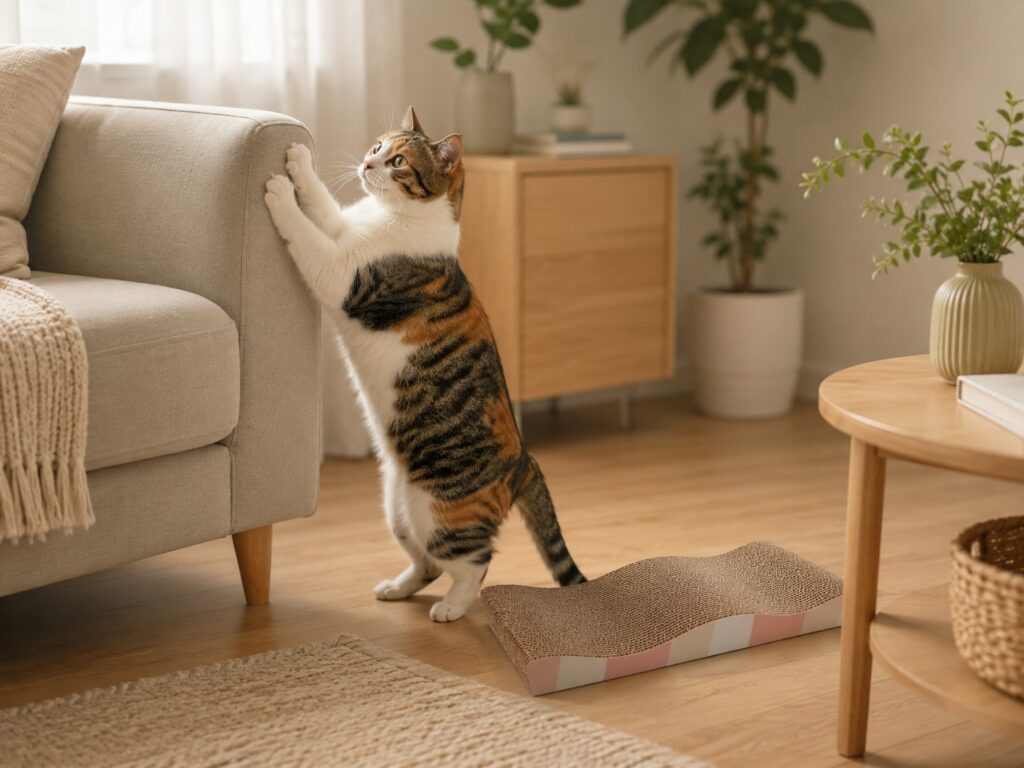
If your cat keeps scratching the sofa, it can feel frustrating — especially when you have already tried saying “no” or moving them away. But sofa scratching is not usually about being naughty or trying to ruin your furniture.
Scratching is a normal cat behavior. Cats scratch to mark territory, stretch their bodies, maintain their claws, and release energy. Cornell Feline Health Center explains that cats scratching furniture are not trying to destroy the home; they are meeting natural needs such as marking, claw sheath removal, and communication.
The goal is not to stop your cat from scratching completely. The goal is to give your cat better places to scratch — and make the sofa less appealing.
Why Cats Scratch the Sofa
1. Scratching Helps Cats Mark Territory
Cats have scent glands in their paws. When they scratch, they leave both a visual mark and a scent mark. This can help them feel more secure in their space.
That is one reason cats often scratch highly visible areas, like sofa arms, living room furniture, door frames, or rugs. These are places where scent and scratch marks are easy to “announce.”
2. The Sofa Is in a Social Area
Many cats scratch where people spend time. If your sofa is in the living room, it is probably one of the most important areas in your cat’s daily world.
Your cat may scratch there because it smells like the family, sits in a central location, and feels like a meaningful territory marker.
3. The Sofa Has a Texture Your Cat Likes
Cats often prefer surfaces they can dig their claws into. Fabric sofa arms, woven upholstery, textured rugs, and nubby materials can feel satisfying for scratching.
If the sofa gives your cat a good grip, they may keep returning to it even if there are other scratchers nearby.
4. Your Cat Needs to Stretch
Scratching is not only about claws. It also lets cats stretch their shoulders, back, and legs.
This is why many cats scratch after waking up. If your cat naps on or near the sofa, they may naturally stretch and scratch right after getting up.
The American Association of Feline Practitioners notes that many cats prefer vertical scratching posts tall enough for a full stretch and firmly anchored for resistance.
5. The Scratching Post Is in the Wrong Place
A scratching post may go unused if it is hidden in a corner your cat never visits.
If your cat scratches the sofa, place a scratching post or pad directly next to the sofa first. The ASPCA recommends placing scratching posts next to objects cats are already scratching as acceptable alternatives.
Once your cat starts using the scratcher consistently, you can slowly move it to a better long-term spot.
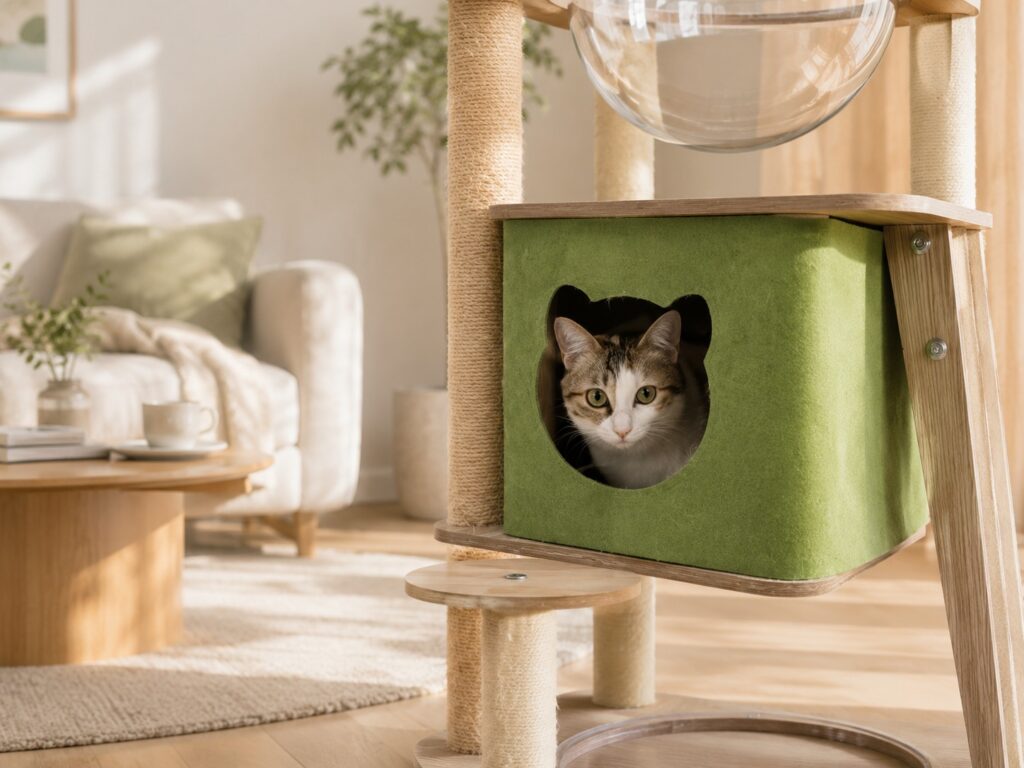
A cat tree for a small space can also combine scratching, climbing, and resting in one piece of furniture, which is useful when you do not have room for several separate cat items.
6. The Scratcher Is Not Stable Enough
Cats may ignore a scratcher if it wobbles. When cats scratch, they pull with real force. If the post tips, shakes, or feels unstable, the sofa may feel like the better option.
Humane World notes that many cats prefer a sturdy scratching post that does not wobble and is tall enough for stretching.
7. Your Cat Needs More Scratching Options
Some cats like vertical posts. Others prefer horizontal cardboard scratchers. Some like sisal, while others prefer carpet, wood, cardboard, or rough fabric.
If your cat ignores one scratcher, it may not be the right style. Try offering more than one type.
Good options include:
- Tall sisal scratching post
- Horizontal cardboard scratcher
- Angled scratcher
- Cat tree with sisal posts
- Scratching lounge
- Wall-mounted scratching board
Scratching surfaces support normal claw behavior, but some indoor cats still benefit from routine nail trims. If you trim at home, compare our best nail clippers for cats for beginner-friendly, kitten-sized, safety-guard, LED, and grinder options.
8. Your Cat May Be Bored or Under-Stimulated
Indoor cats need daily outlets for movement, play, climbing, and scratching. If your cat does not have enough enrichment, the sofa may become a convenient way to release energy.
Adding toys, play sessions, cat trees, window perches, and scratching surfaces can help redirect that energy in a better way. If boredom seems to be part of the problem, our best cat toys for indoor cats guide includes active, interactive, puzzle, and solo-play options for daily enrichment.
9. Stress or Household Changes Can Increase Scratching
Cats may scratch more during stress, change, or uncertainty. Moving homes, new pets, guests, furniture changes, loud noises, or changes in routine can make a cat mark territory more often.
If the scratching suddenly increases along with hiding, appetite changes, aggression, litter box changes, or overgrooming, consider asking your veterinarian for advice.
How to Stop Your Cat from Scratching the Sofa
1. Add a Scratching Post Right Beside the Sofa
Start by placing a scratcher exactly where the problem is happening. If your cat scratches the sofa arm, place a tall scratching post next to that arm.
Do not hide the scratcher across the room. Your cat has already chosen the sofa area for a reason.
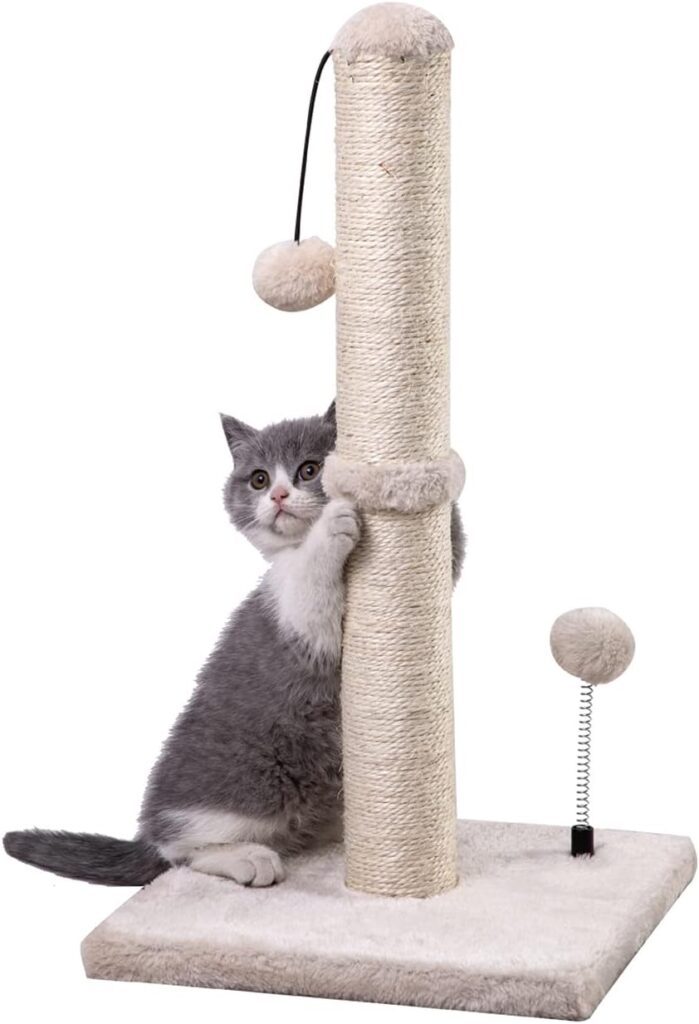
Product to Try: MECOOL Cat Scratching Post
Best for: Placing beside the sofa as a better vertical scratching option
If your cat scratches the sofa arm, a vertical scratching post beside the sofa is often the best place to start. The MECOOL Cat Scratching Post is a sisal scratching post with a hanging ball and a 22-inch design, which makes it a simple option for kittens or smaller cats that need a nearby sofa-side alternative.
Place it directly beside the sofa area your cat already scratches. Once your cat starts using it consistently, you can slowly move it to a better long-term spot if needed.
Why it helps:
- Gives cats a vertical scratching surface
- Better match for cats that scratch sofa arms
- Sisal texture gives claws something to grip
- Hanging ball may encourage interest
- Simple option for kittens or smaller cats
Things to consider:
This 22-inch version is better for kittens or smaller cats. Larger adult cats may need a taller scratching post that allows a full-body stretch.
2. Choose the Right Scratcher Style
For sofa scratching, a tall vertical post often works well because sofa arms give cats a vertical surface. A good post should be tall enough for a full stretch and stable enough not to wobble.
For cats that scratch rugs or sofa cushions, try a horizontal cardboard scratcher or angled scratch pad.
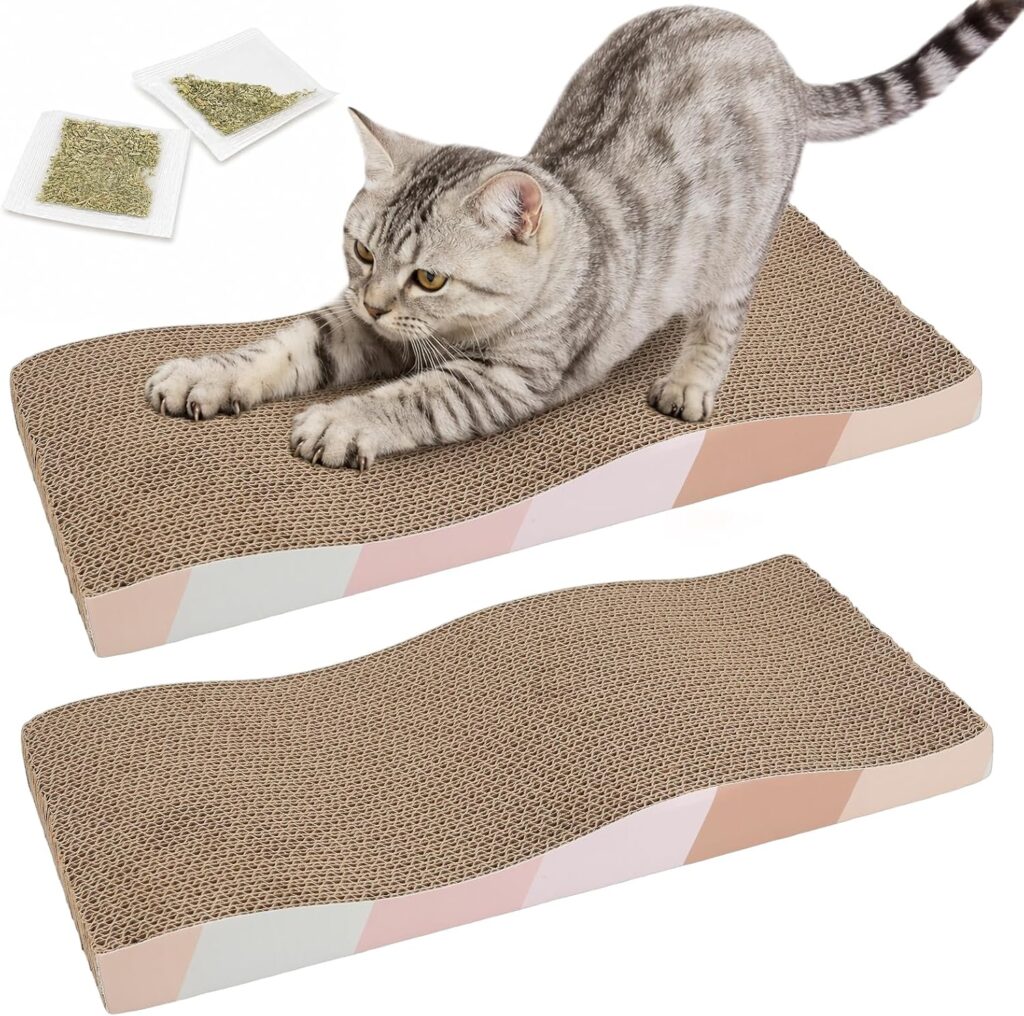
Product to Try: SIDAZON Cat Scratching Board
Best for: Cats that prefer horizontal cardboard scratching
Not every cat wants a vertical post. Some cats prefer scratching flat surfaces, rugs, or sofa cushions. The SIDAZON Cat Scratching Board is a reversible corrugated cardboard scratch pad that comes as a 2-piece set with catnip.
This is a good option to test if your cat ignores upright posts but likes scratching low, flat surfaces.
Why it helps:
- Horizontal cardboard scratching style
- Good for cats that scratch rugs or sofa seats
- Reversible design
- Comes as a 2-piece set
- Catnip can help attract cats to the scratcher
Things to consider:
Cardboard scratchers can shed paper bits over time. Place it on an easy-to-clean floor or near the sofa area where your cat already scratches.
3. Make the Scratcher More Attractive
You can make the scratcher more appealing by:
- Sprinkling catnip nearby
- Using silvervine if your cat likes it
- Playing with a wand toy around the scratcher
- Praising your cat when they use it
- Placing it near a favorite resting spot
Reward your cat for using the scratcher so they learn what you want them to do.
4. Make the Sofa Less Appealing Temporarily
While your cat is learning, make the sofa less satisfying to scratch.
The ASPCA suggests using options like double-sided sticky tape, plastic, or other surface covers on furniture, while placing acceptable scratching posts nearby.
You can also try:
- Sofa arm covers
- Washable furniture throws
- Temporary scratch guards
- Double-sided furniture-safe tape
- A blanket over the favorite scratching spot
Use these as temporary training tools, not permanent punishment.
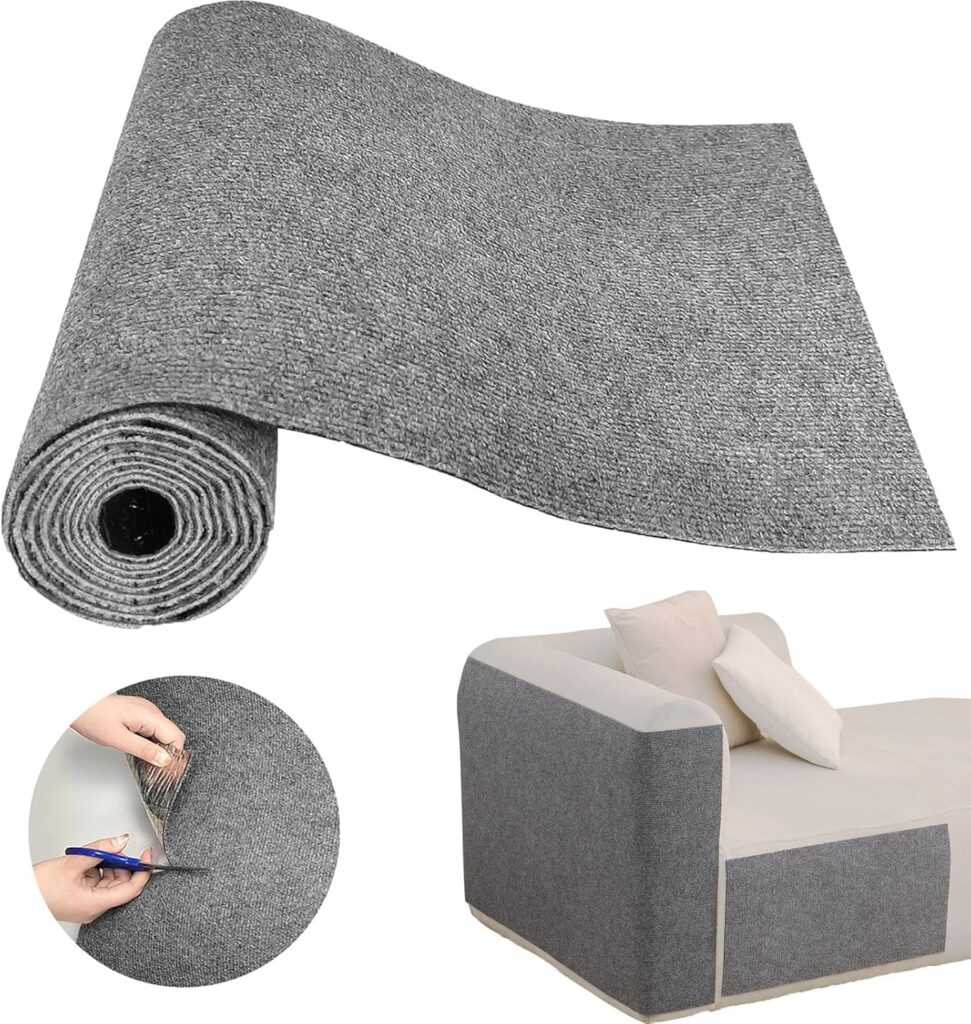
Product to Try: Cat Scratch Couch Furniture Protector
Best for: Covering the sofa area while giving cats a scratchable surface
This Cat Scratch Couch Furniture Protector is a self-adhesive scratch pad designed to protect furniture from cat claw scratching. It also works like a DIY climbing or scratching surface and includes pins for installation.
This type of product is useful when your cat keeps returning to one sofa arm or furniture corner. It can protect the fabric while you redirect your cat toward a nearby scratching post.
Why it helps:
- Covers the favorite sofa scratching area
- Gives a textured surface instead of exposed sofa fabric
- Can be used on couch areas cats already target
- Includes pins for installation
- Useful as a temporary training support
Things to consider:
This should not be the only solution. Pair it with a real scratching post or scratch pad nearby so your cat has a better long-term option.
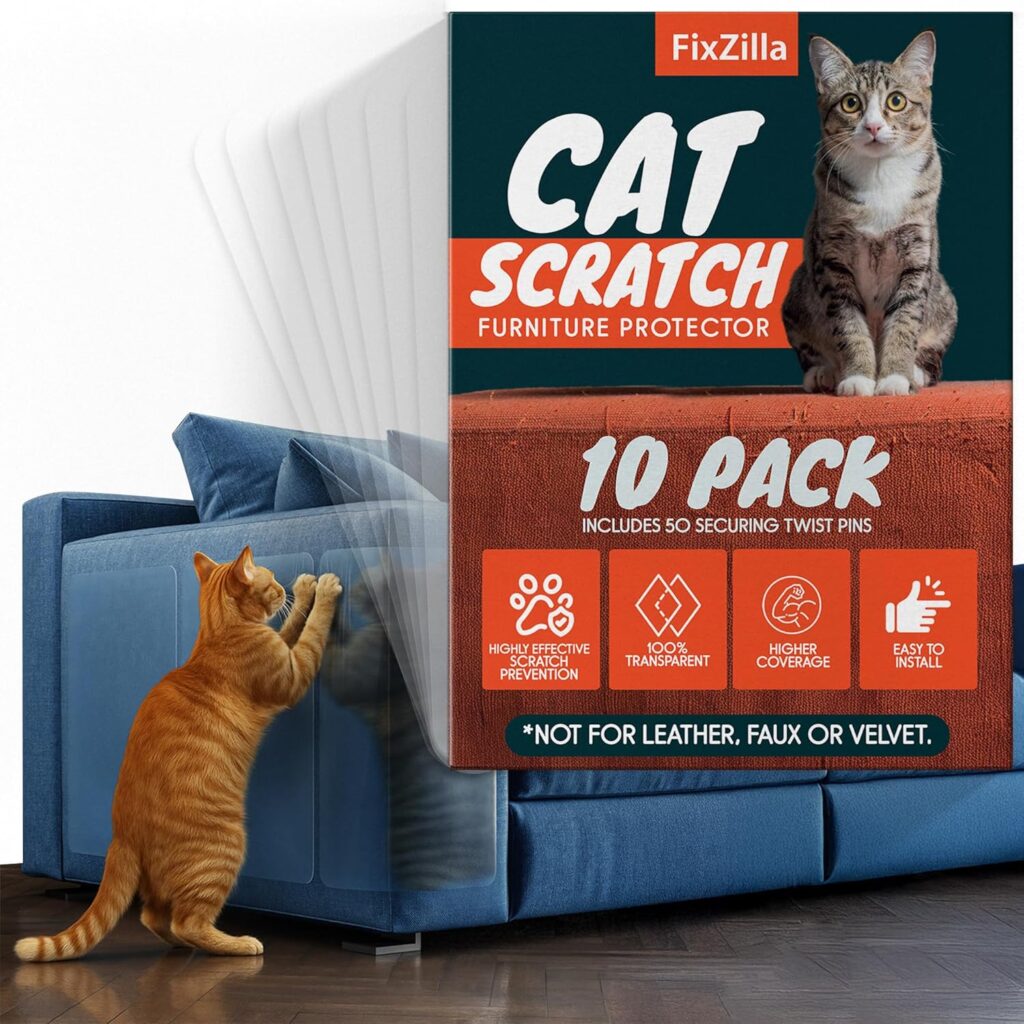
Product to Try: FixZilla Anti Cat Scratch Furniture Protector
Best for: Making sofa corners less appealing to scratch
The FixZilla Anti Cat Scratch Furniture Protector is a 10-pack heavy-duty furniture shield designed for sofa corners, walls, and doors. It includes twist pins and is meant to act as a scratching deterrent and protective barrier.
This is a good option if you want a less visible furniture shield while your cat learns to use a scratching post instead.
Why it helps:
- Protects sofa corners and furniture edges
- Helps make the sofa less satisfying to scratch
- 10-pack set for multiple areas
- Includes twist pins
- Useful for temporary furniture protection
Things to consider:
Furniture protectors work best when paired with a better scratching option nearby. If you only block the sofa without offering a scratcher, your cat may choose another piece of furniture.
5. Trim Your Cat’s Nails Regularly
Regular nail trims can reduce sharp tips and help lower furniture damage. The AVMA lists frequent nail trims as one alternative to declawing and recommends appropriate scratching surfaces as part of humane management.
If you are nervous about trimming nails, start slowly and trim only the very tip.
Related guide: Best Nail Clippers for Cats
6. Do Not Punish Your Cat
Yelling, spraying water, or chasing your cat may create fear without teaching the right behavior. Your cat may simply scratch when you are not watching.
Instead, redirect calmly:
- Interrupt gently.
- Move attention to the scratcher.
- Reward your cat when they use the correct surface.
7. Add Scratching Near Sleep Spots
Cats often stretch and scratch after waking up. Put scratchers near beds, windows, sofas, or cat trees where your cat likes to nap.
This makes it easier for your cat to choose the scratcher at the exact moment they want to stretch.
8. Use a Cat Tree for Vertical Scratching
A cat tree can be especially helpful in small apartments because it combines scratching, climbing, resting, and vertical space.
If your cat scratches the sofa because they need stretching and territory marking, a cat tree with sturdy sisal posts may give them a better outlet.
Related guide: How to Choose a Cat Tree for Small Apartments
What Kind of Scratcher Is Best for Sofa Scratchers?
If your cat scratches the sofa arm, start with a tall vertical sisal post.
Look for:
- Tall enough for a full stretch
- Heavy, stable base
- Sisal rope or sisal fabric
- Placement beside the sofa
- A texture your cat can grip
- Height that matches your cat’s body length
If your cat scratches the sofa seat or rug area, try a horizontal cardboard scratcher or angled scratcher.
Some cats need both vertical and horizontal options.
Should You Declaw a Cat for Scratching Furniture?
Declawing should not be treated as a simple furniture-protection solution. The AVMA emphasizes alternatives such as appropriate scratching surfaces and nail trimming, and many veterinary and welfare groups encourage humane behavior management before considering invasive procedures.
For a sofa-scratching problem, start with scratchers, nail trims, furniture protection, enrichment, and positive reinforcement. If the scratching is severe or linked to stress, ask a veterinarian or qualified behavior professional for help.
Simple Sofa-Saving Plan
If you want a quick plan, try this:
Tall scratcher beside sofa + temporary sofa cover + nail trims + daily play + reward the scratcher
Do not change everything at once. Start by placing the right scratcher directly beside the sofa, then make the sofa less appealing while rewarding the correct behavior.
Common Mistakes to Avoid
Avoid these common mistakes:
- Putting the scratcher far away from the sofa
- Buying a post that is too short
- Choosing a wobbly scratcher
- Only offering one scratching texture
- Punishing your cat instead of redirecting
- Forgetting to trim nails
- Expecting the behavior to change overnight
- Removing the sofa cover too early
Scratching habits take time to redirect. Consistency matters.
Related HavenTails Guides
Best Cat Trees for Small Spaces
Find compact cat trees that give indoor cats climbing, scratching, and resting space.
How to Choose a Cat Tree for Small Apartments
Learn how to choose a stable, space-saving cat tree for small homes.
Compare beginner-friendly nail clippers for safer at-home grooming.
Help your cat release energy with daily play and enrichment.
Pinterest-Inspired Cat Spaces for Cozy Homes
Create a cozy cat-friendly home with beds, toys, scratching areas, and vertical space.
Final Thoughts
Your cat scratches the sofa because scratching is natural, useful, and meaningful to them. It helps with stretching, claw care, scent marking, and territory communication.
Instead of trying to stop scratching completely, give your cat a better place to scratch. Place a sturdy post beside the sofa, choose the right texture, reward your cat for using it, and protect the sofa while your cat learns.
With the right setup, you can protect your furniture while still respecting your cat’s natural behavior.
FAQs
Why does my cat scratch the sofa even with a scratching post?
The scratching post may be in the wrong location, too short, unstable, or the wrong texture. Try placing a tall sturdy post directly beside the sofa.
How do I stop my cat from scratching the couch?
Add a scratching post next to the couch, make the couch less appealing with temporary covers or tape, trim nails regularly, and reward your cat for using the scratcher.
What type of scratching post is best?
Many cats like tall, sturdy posts that allow a full-body stretch. Sisal posts are often a good choice, but some cats prefer cardboard or horizontal scratchers.
Should I punish my cat for scratching furniture?
No. Punishment can create fear and does not teach your cat where to scratch. Redirect to an appropriate scratcher and reward the correct behavior.
Do nail trims help with sofa scratching?
Yes, regular nail trims can reduce sharp tips and furniture damage, but they should be combined with proper scratching surfaces.
Is sofa scratching a sign of stress?
Sometimes. Scratching is normal, but a sudden increase in scratching along with hiding, appetite changes, aggression, or litter box changes may suggest stress or a health issue.