Affiliate Disclosure: As an Amazon Associate, we earn from qualifying purchases. This post contains affiliate links, which means we may earn a small commission if you buy through our links, at no extra cost to you.
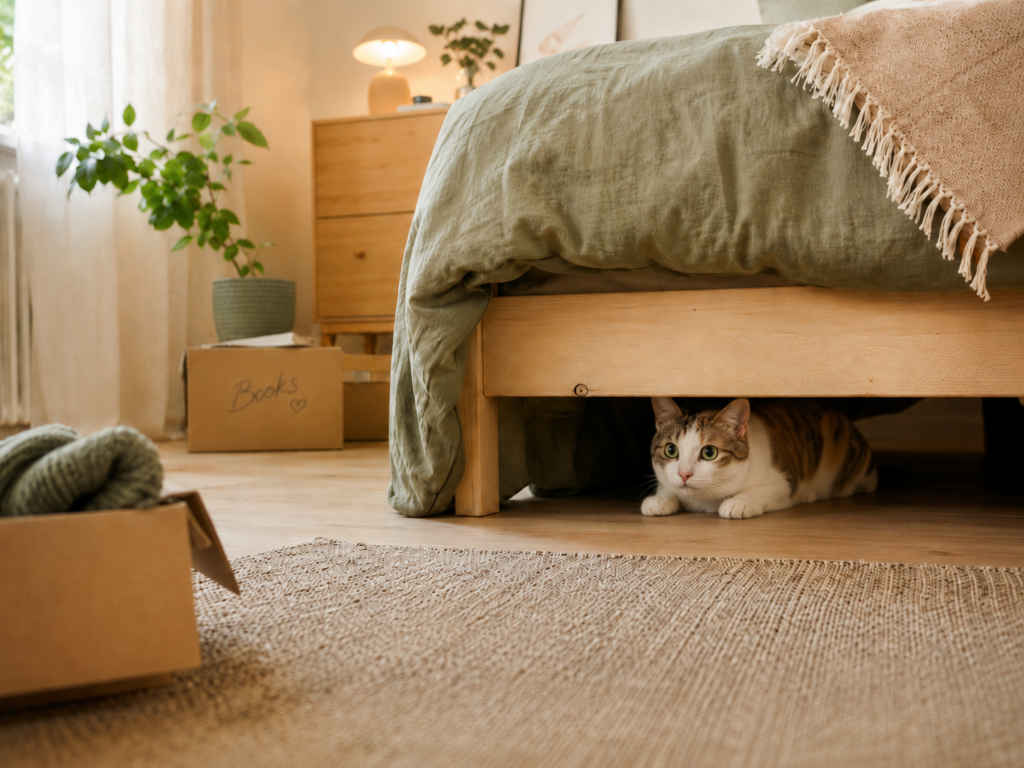
Bringing a new cat home is exciting, but for your cat, it can feel like stepping into a completely unfamiliar world.
New smells, new sounds, new people, and a new space can all feel overwhelming at first. Some cats may hide under the bed for hours. Some may refuse to explore. Others may seem curious one moment and nervous the next. This is normal.
The best thing you can do is not rush the process. A new cat needs time, patience, and a calm environment to feel safe. To help a new cat feel safe at home, with the right setup and gentle daily routines, your cat can slowly learn that your home is a safe place to rest, explore, and trust.
Start With One Quiet Room
When a new cat first arrives, it is usually better to start with one quiet room instead of giving access to the whole home right away.
A bedroom, small office, or calm spare room can work well. The goal is to create a simple space where your cat can learn the sounds and smells of your home without feeling overwhelmed.
Set up the room with the basics:
- Food and water
- A litter box
- A soft bed or blanket
- A hiding spot
- A scratching pad or small scratcher
- A few simple toys
Once your cat starts feeling more comfortable, you can gradually turn part of the room into a quiet cat corner with a bed, hideaway, scratcher, and familiar blanket.
Try to keep the room calm during the first day or two. Avoid loud music, too many visitors, or constant checking. Your cat may need time to come out on their own.
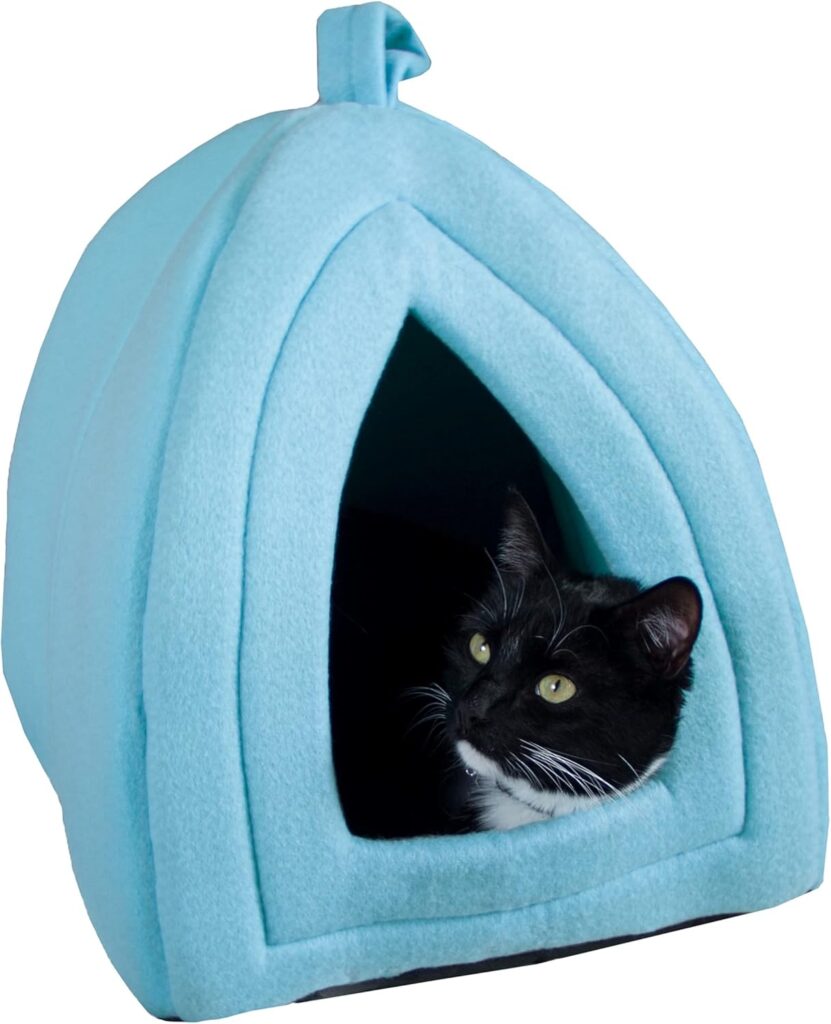
Example pick:PETMAKER Cat House Indoor Cat Bed
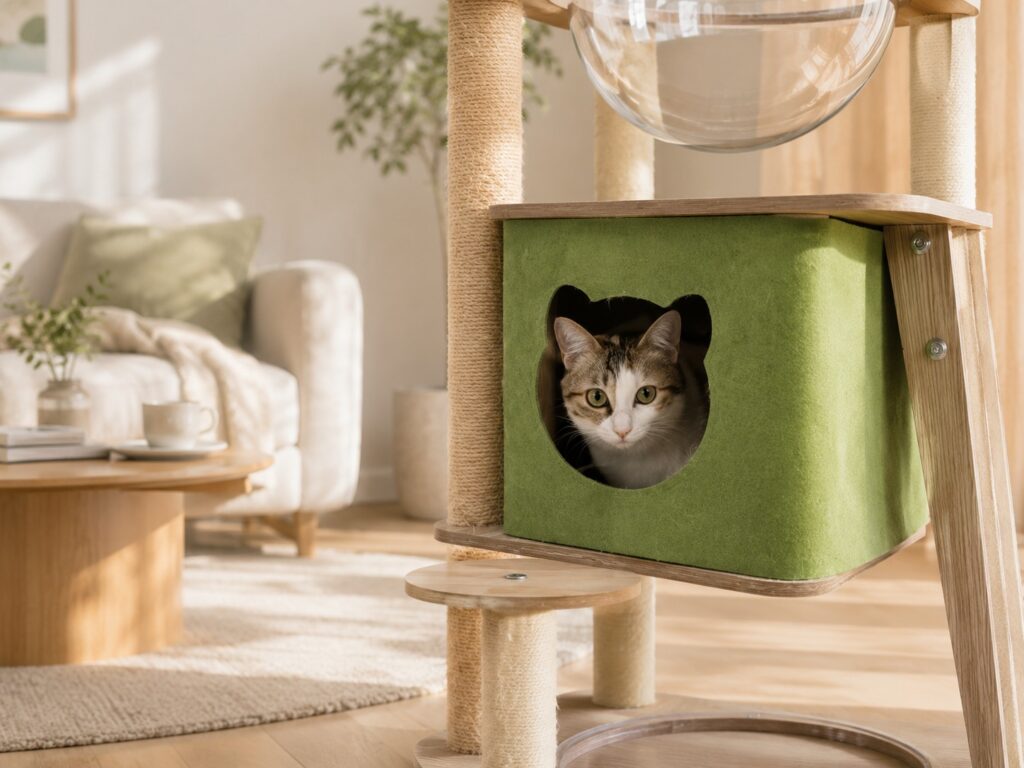
A cave-style cat bed can give a new cat a soft, covered place to hide, rest, and quietly observe the room. This type of enclosed bed fits a cat’s natural need for a protected space, especially when they are still adjusting to new smells, sounds, and people.
Best for:
New cats who need a cozy hiding spot
Why it helps:
The covered design can make cats feel less exposed and more secure.
Give Your Cat a Safe Hiding Spot
Hiding is not a bad sign. For many cats, hiding is how they feel secure while they adjust.
A covered cat bed, cardboard box, soft tunnel, or quiet corner with a blanket can help your cat feel protected. The hiding spot should be easy for your cat to enter and exit, but it should not be in the middle of a busy area.
Avoid pulling your cat out of hiding. This can make them feel more scared and less likely to trust the space. Instead, sit nearby quietly, speak softly, and let your cat choose when to come out.
A safe hiding spot gives your cat control, and control helps reduce stress. Once your cat feels more settled, you can gradually turn that safe area into a more comfortable part of your home. Our guide to cozy cat-friendly home ideas includes beds, vertical spaces, toy storage, and calm room setups.
Keep Food, Water, and Litter Easy to Find
During the first few days, your new cat should not have to search the entire house for basic needs.
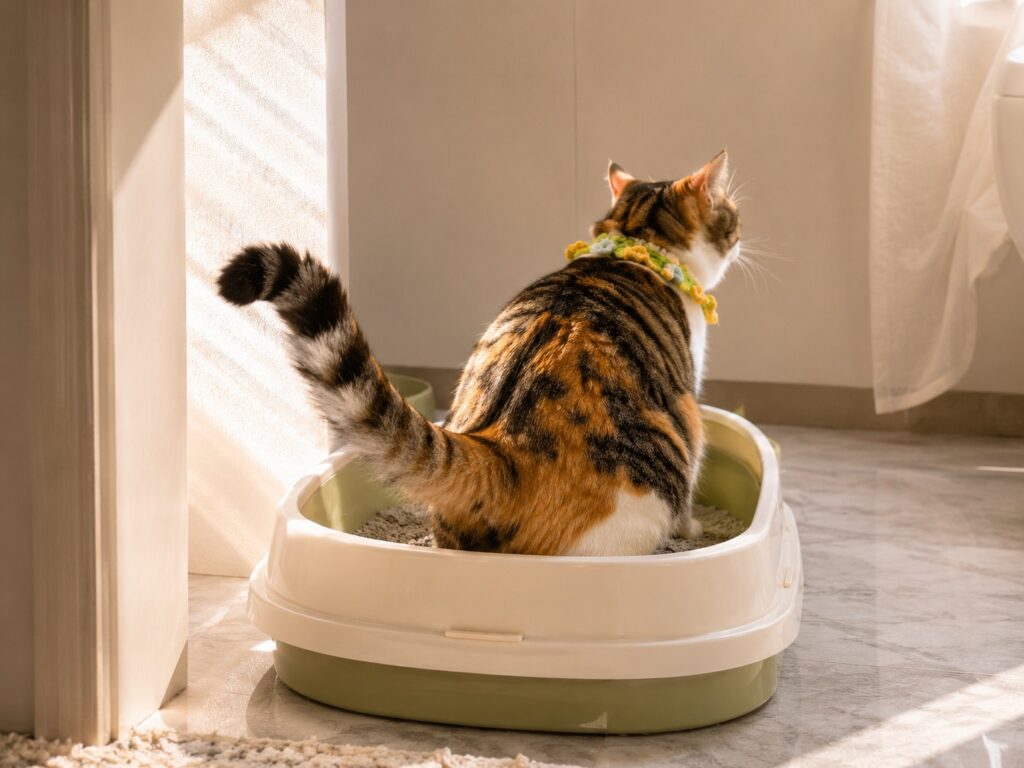
Place food, water, and the litter box in easy-to-find locations inside the starter room. Keep the litter box away from food and water, but not so far that your cat feels unsure where to go.
If your cat seems nervous, simple is better. A shallow food bowl, fresh water, and an uncovered litter box may feel easier to use at first.
Once your cat feels more confident, you can slowly adjust the setup or move items to their long-term locations.
Example pick:Arm & Hammer Large Sifting Litter Box
For a new cat, a simple open litter box can be easier to use than a covered one. The open design allows the cat to see the room and leave quickly if they feel nervous, which may help them feel safer while learning their new space.

Best for:
A simple first litter box setup
Why it helps:
The open, easy-access design can make litter box use feel less stressful for a new cat.
Let Your Cat Explore at Their Own Pace
Some cats start exploring within a few hours. Others may need several days. Both are normal.
When your cat begins to come out, let them move slowly. Do not follow too closely or pick them up right away. Let them sniff furniture, walk around the room, and return to their hiding spot if they want to.
After your cat seems comfortable in the starter room, you can open the door and allow them to explore one new area at a time.
A good rule is: small steps, calm energy, and no pressure.
Use a Gentle Routine
Cats often feel safer when daily life becomes predictable.
Try to feed your new cat around the same times each day. Keep cleaning routines calm and consistent. Speak in a soft voice when entering the room. If your cat enjoys play, use a wand toy for short sessions.
Simple routines help your cat understand what to expect. Over time, this can make the home feel less strange and more secure.
Avoid Too Much Attention Too Soon
It is natural to want to pet, hold, and play with your new cat right away. But too much attention can feel overwhelming, especially for a shy or recently rescued cat.
Instead, let your cat approach you first.
You can sit on the floor nearby, read, work quietly, or simply spend time in the same room. If your cat comes closer, offer a slow blink, soft voice, or gentle hand for them to sniff.
If your cat walks away, let them. Respecting their space helps build trust.
Introduce Family Members Slowly
If you live with other people, make introductions gradual.
Ask family members to enter the room calmly and avoid sudden movements. Children should be reminded to use quiet voices and let the cat come to them. It is better to have one calm introduction at a time than a busy group greeting.
If you have other pets, do not introduce them immediately. Let your new cat settle in first. Scent swapping, slow visual introductions, and supervised meetings can help make the process safer and less stressful.
Make the Home Feel Cat-Friendly
Once your cat starts exploring more of the home, look for ways to make the environment feel safe and comfortable.
Helpful additions include:
- A cozy cat bed in a quiet corner
- A scratching post near a resting area
- A cat tree or perch by a window
- A calm feeding station
- A clean water area
- Soft blankets in low-traffic spaces
Cats often feel safer when they have vertical space, quiet corners, and places where they can watch the room without feeling exposed.
Your home does not need to be filled with cat products. A few thoughtful spaces are enough.
Watch for Stress Signs
A new cat may need time to adjust, but it is still important to watch for signs of stress.
Common signs include hiding for long periods, refusing food, avoiding the litter box, excessive grooming, growling, hissing, or staying frozen in one spot. If you want to check on a shy new cat without repeatedly entering their safe room, a cat camera can provide a quiet way to observe resting, eating, and general activity from a distance.
Mild nervousness is common in the beginning. But if your cat is not eating, not drinking, seems unwell, or has ongoing litter box issues, it is best to contact a veterinarian.
Trust your instincts. A calm setup helps, but health concerns should not be ignored.
Be Patient With the Timeline
There is no perfect timeline for a new cat to feel at home.
Some cats settle in within a few days. Others may take weeks or longer, especially if they are shy, recently rescued, or adjusting after a major change.
Progress can look small at first. Maybe your cat eats while you are nearby. Maybe they come out for a few minutes. Maybe they sleep in the open instead of hiding all day.
These small signs matter.
The goal is not to force closeness quickly. The goal is to help your cat feel safe enough to choose connection.
A Simple First-Week Setup
If you are preparing for a new cat, here is a simple first-week setup to start with:
Day 1: Keep your cat in one quiet room with food, water, litter, bedding, and a hiding spot. Let them rest.
Days 2–3: Spend quiet time nearby. Let your cat approach you if they feel ready.
Days 4–5: Begin gentle play or soft interaction if your cat seems comfortable.
Days 6–7: Allow slow exploration of another room if your cat is eating, using the litter box, and moving around more confidently.
This timeline can be adjusted. Your cat may need more time, and that is okay.
Final Thoughts
Helping a new cat feel safe at home is mostly about patience, quiet routines, and respect.
Start small. Give your cat a calm room, a safe hiding spot, easy access to food and litter, and time to explore without pressure. Let your cat decide when they are ready for more space, more attention, and more connection.
A gentle beginning can make a big difference.
With time, your new cat can learn that your home is not just a new place — it is their safe place.
Related Articles
If you are helping a new cat settle into your home, these guides may also help:
- New Cat Checklist: What to Prepare Before Bringing Your Cat Home
- Best Cat Water Fountains for Fresh Drinking Water
- Best Automatic Cat Feeders for Busy Cat Parents
- Best Cat Litter Boxes for Small Apartments
- Best Cat Toys for Indoor Cats
- Cozy Cat Corner Ideas for Small Apartments
FAQ
How long does it take for a new cat to feel safe?
Some cats feel comfortable within a few days, while others may need several weeks. Shy cats, rescued cats, or cats coming from stressful environments may need more time.
Should I let my new cat hide?
Yes. Hiding can help a new cat feel safe while adjusting. Give them a quiet hiding spot and avoid forcing them out.
When should I let my new cat explore the house?
Start with one quiet room. Once your cat is eating, using the litter box, and moving around more confidently, you can slowly allow access to more areas.
Why is my new cat not eating much?
Some cats eat less when they are stressed by a new environment. Keep food easy to access and the room calm. If your cat refuses food for a long time or seems unwell, contact a veterinarian.
How can I bond with a new cat?
Spend quiet time nearby, use a soft voice, offer gentle play, and let your cat approach you first. Trust usually grows faster when your cat does not feel pressured.
How do I introduce a new cat to my resident cat?
Keep the new cat in a separate room at first and begin with scent swapping before any face-to-face meeting. Let the cats smell each other through a closed door, then try short visual introductions with a barrier. Move slowly, supervise early meetings, and provide separate food, water, litter boxes, beds, and hiding spots.