Affiliate Disclosure: As an Amazon Associate, we earn from qualifying purchases. This post contains affiliate links, which means we may earn a small commission if you buy through our links, at no extra cost to you.
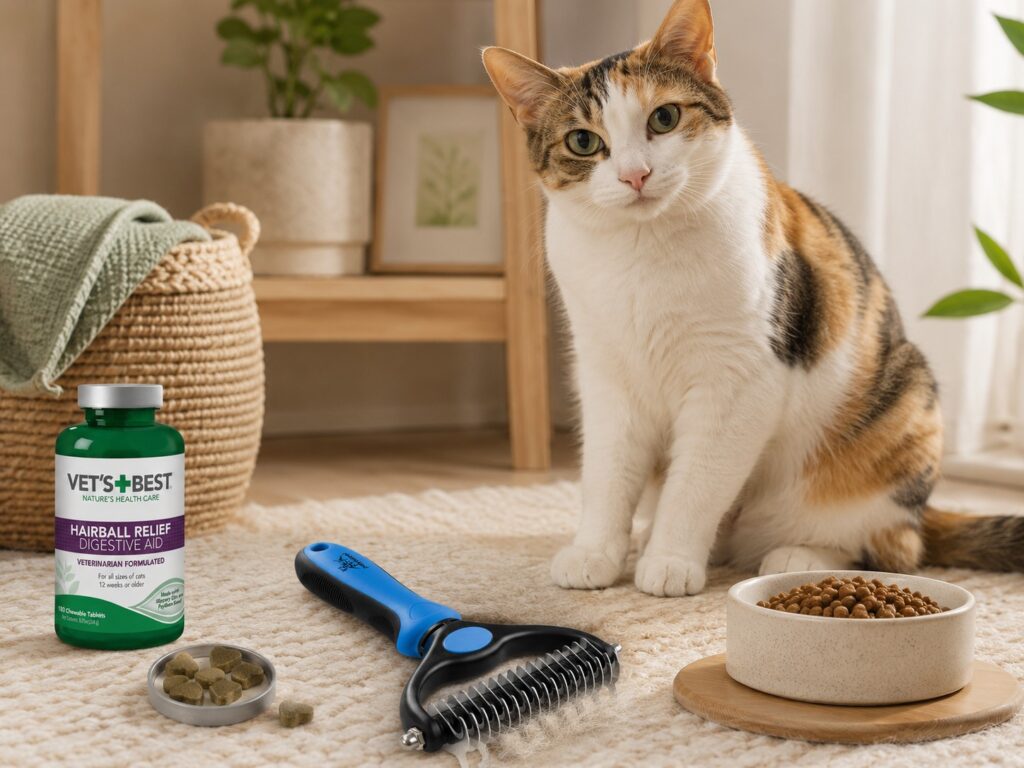
Hairballs are a common part of cat life, especially for indoor cats that groom often, shed seasonally, or spend a lot of time resting on soft furniture.
When cats groom themselves, they swallow loose hair. Most swallowed hair passes through the digestive tract and leaves in the stool, but sometimes hair collects in the stomach and forms a hairball.
An occasional hairball may not be unusual, but frequent vomiting, repeated retching, appetite loss, low energy, or signs of discomfort should not be ignored. Cornell Feline Health Center notes that repeated unproductive retching, lethargy, or refusing food can be reasons to contact a veterinarian without delay.
The best hairball remedies for indoor cats often involve more than one approach rather than relying on a single product. For many indoor cats, the most effective routine combines regular grooming, enough water, the right diet, and a safe hairball support product when needed.
In this guide, we’ll compare the best types of hairball remedies for indoor cats, including gels, petroleum-free options, hairball-control foods, treats, chews, fiber toppers, and grooming tools. For many indoor cats, the most useful cat hairball remedies work best as part of a routine that also includes grooming, hydration, and an appropriate diet.
Quick Picks
| Pick | Remedy Type | Best For |
|---|---|---|
| Best Overall | Chewable Tablet | Everyday hairball support |
| Best Petroleum-Free | Gel | Cats that accept flavored gels |
| Best Dry Food | Dry Food | Daily diet-based support |
| Best Wet Food | Wet Food | Hairball support + moisture |
| Best Treats | Treat | Cats that refuse gels/tablets |
| Best Soft Chews | Soft Chew | Texture-sensitive cats |
| Best Fiber Topper | Pumpkin/Fiber | Food-based digestive support |
| Best Prevention Tool | Grooming Brush | Reducing swallowed loose fur |
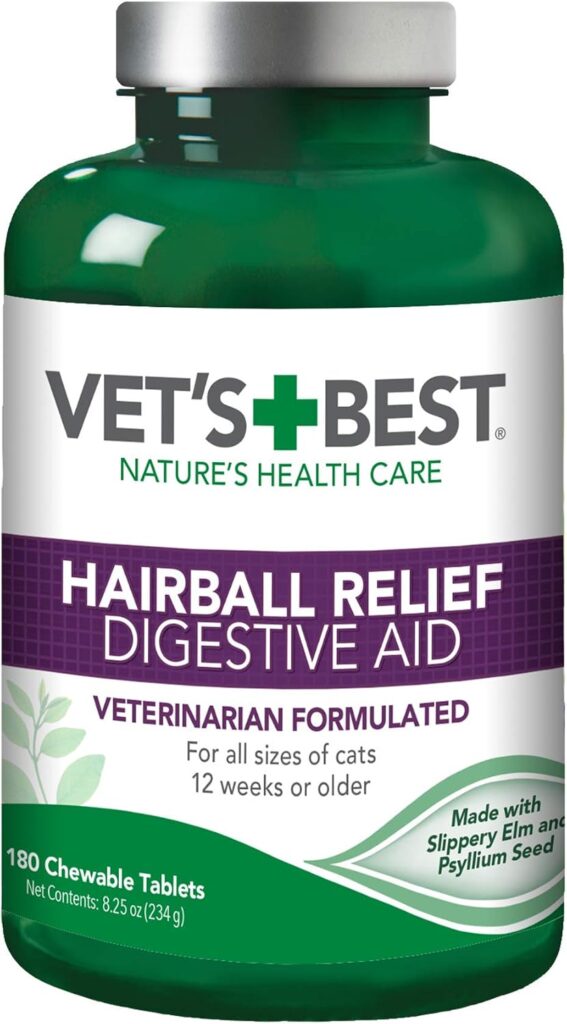
Best Overall Hairball Remedy for Indoor Cats: Vet’s Best Cat Hairball Relief Digestive Aid
Hairball remedies come in several forms, including chewable tablets, gels, treats, foods, and fiber-based supplements. The best option often depends on what your cat will actually accept and how you prefer to add hairball support to their routine. These products are usually oral gels or pastes designed to help swallowed hair move through the digestive tract.
Digestive lubricants and hairball gels are often sold over the counter, but VCA notes that they should be used under your veterinarian’s direction for managing hairballs or constipation.
Best for:
Indoor cats that need a daily chewable hairball support product instead of a sticky gel or paste.
Key Features to Look For:
- Chewable tablet format
- Classic chicken flavor
- 180 chewable tablets
- Vet-formulated hairball support
- Contains psyllium seed, marshmallow root, slippery elm, papaya, and digestive enzyme ingredients
- Can be given directly or crumbled into food
- Designed to support digestion and help reduce hairball formation
Product Overview:
Vet’s Best Cat Hairball Relief Digestive Aid is a good overall option for cat parents who want hairball support without using a traditional gel. Instead of a sticky paste, this product comes as chewable tablets, which may be easier for some cats to take as part of a daily routine.
The formula focuses on digestive support, using fiber and plant-based ingredients to help swallowed hair move through the system more comfortably. This makes it a practical pick for indoor cats that groom often, shed seasonally, or need ongoing hairball support.
Why It Fits This Pick:
This fits the overall category because it is easy to use, not messy, and works as a general hairball-support product for daily indoor cat care. It is better described as an overall hairball remedy, not a gel.
Things to Consider:
Because this is a chewable tablet, picky cats may or may not accept it. If your cat refuses tablets, you may need a gel, treat, chew, or food-based option instead.
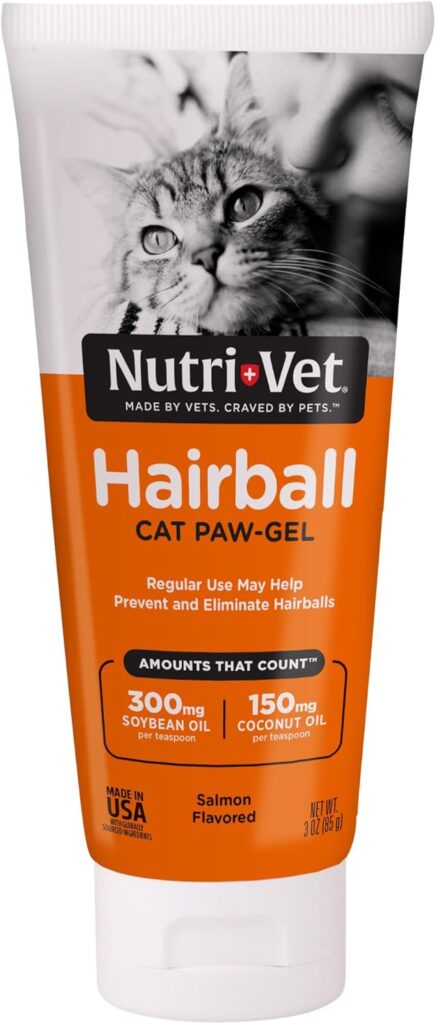
Best Petroleum-Free Hairball Remedy: Nutri-Vet Hairball Paw Gel
For cats that accept gels, a hairball gel for cats can be an easy way to add hairball support without changing their regular food. Some cat parents prefer a petroleum-free hairball remedy, especially if they want a formula that uses fiber, oils, or other digestive support ingredients instead of traditional lubricant-style pastes.
These products may come as gels, soft chews, supplements, or food toppers.
Best for:
Cat parents who want a gel-style hairball remedy made with oils instead of a classic petrolatum-style paste.
Key Features to Look For:
- Gel format
- Salmon flavor
- 3 oz tube
- Made for cats
- Uses soybean oil, coconut oil, and other ingredients
- Can be applied to the paw for licking
- Designed to help lubricate the intestinal tract
- Vet-formulated
- Made in the USA
Product Overview:
Nutri-Vet Hairball Paw Gel is closer to the traditional “hairball gel” category. It is designed to be applied directly or placed on your cat’s paw so they lick it off during grooming.
This can be useful for cats that do not like tablets or dry treats but will accept a flavored gel. The salmon flavor may also make it easier for some cats to take compared with plain formulas.
Why It Fits This Pick:
This fits the petroleum-free-style category because it is positioned around natural oils like soybean and coconut oil rather than being a simple classic mineral-oil paste. It also gives readers a gel option after the overall chewable tablet pick.
Things to Consider:
It is still a gel, so some cats may dislike the texture. Use only as directed, and do not overuse hairball gels. If your cat vomits frequently or seems unwell, check with a veterinarian.
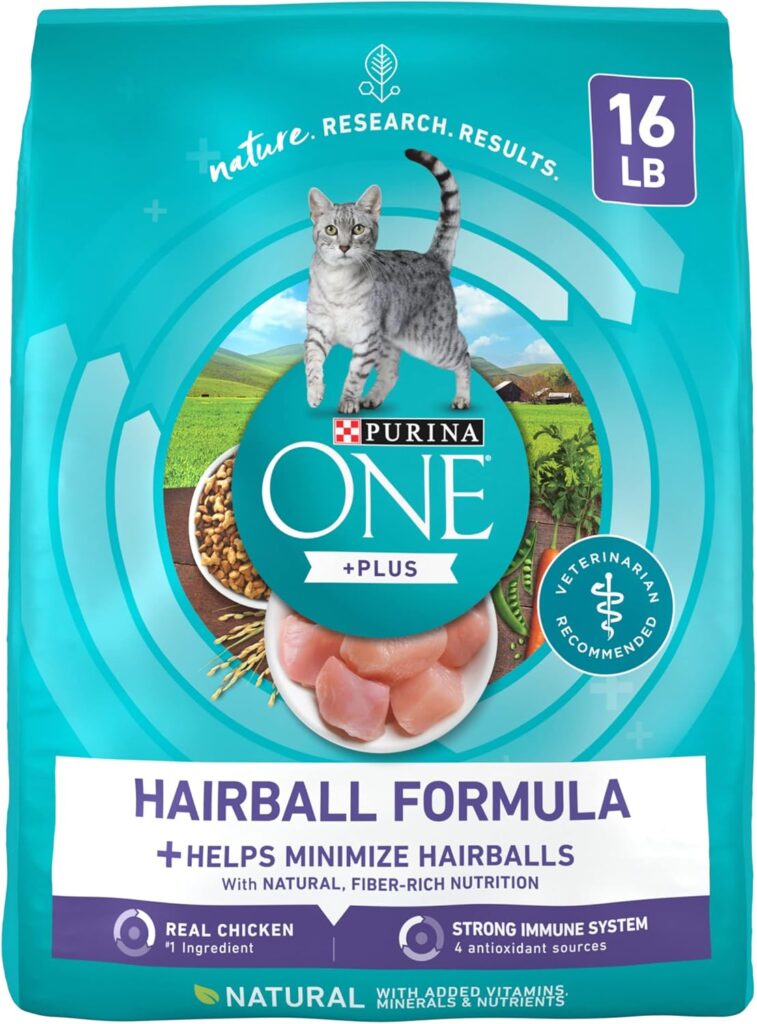
Best Hairball Control Dry Cat Food: Purina ONE +Plus Hairball Formula
A hairball control cat food can be useful for indoor cats that need daily support built into their regular meals. These formulas often include added fiber.
VCA explains that fiber can help move ingested hair through the digestive tract, and some hairball-control foods use fiber or lubricants to support hair passage.
Best for:
Indoor cats that need everyday hairball support through their regular dry food.
Key Features to Look For:
- Dry adult cat food
- Hairball control formula
- 16 lb bag
- Real chicken as the first ingredient
- Natural fiber-rich blend
- Added vitamins, minerals, and nutrients
- Supports immune health with antioxidant sources
- No artificial flavors or preservatives
- Crunchy kibble texture
Product Overview:
Purina ONE +Plus Hairball Formula is a good choice for cat parents who want hairball support built into their cat’s daily meals. Instead of giving a separate gel or supplement, this dry food uses a fiber-rich formula to help support hairball control as part of normal feeding.
This can be especially useful for indoor cats that eat mostly dry food and have mild, recurring hairball issues.
Why It Fits This Pick:
This fits the dry food category because it offers daily, routine-based support. It is convenient for cat parents who want a simple long-term approach instead of giving a separate hairball product every day.
Things to Consider:
Any food change should be gradual. If your cat has a sensitive stomach, allergies, urinary issues, or is already on a special diet, ask your veterinarian before switching foods.
Best Hairball Control Wet Food: Hill’s Science Diet Adult Urinary & Hairball Control Wet Cat Food
Hairball-control wet food can be helpful for cats that need both digestive support and more moisture in their diet.
VCA recommends encouraging water intake with fresh water sources or adding wet food to help support the movement of hair through the digestive tract.
Best for:
Cats that need hairball support plus extra moisture from wet food.
Key Features to Look For:
- Wet cat food
- Chicken minced texture
- 2.9 oz cans
- 12-pack
- Supports urinary health
- Natural fiber to help reduce hairballs
- Omega-6s and vitamin E for skin and coat support
- High-quality protein
- Made with natural ingredients
- Made in the USA with global ingredients
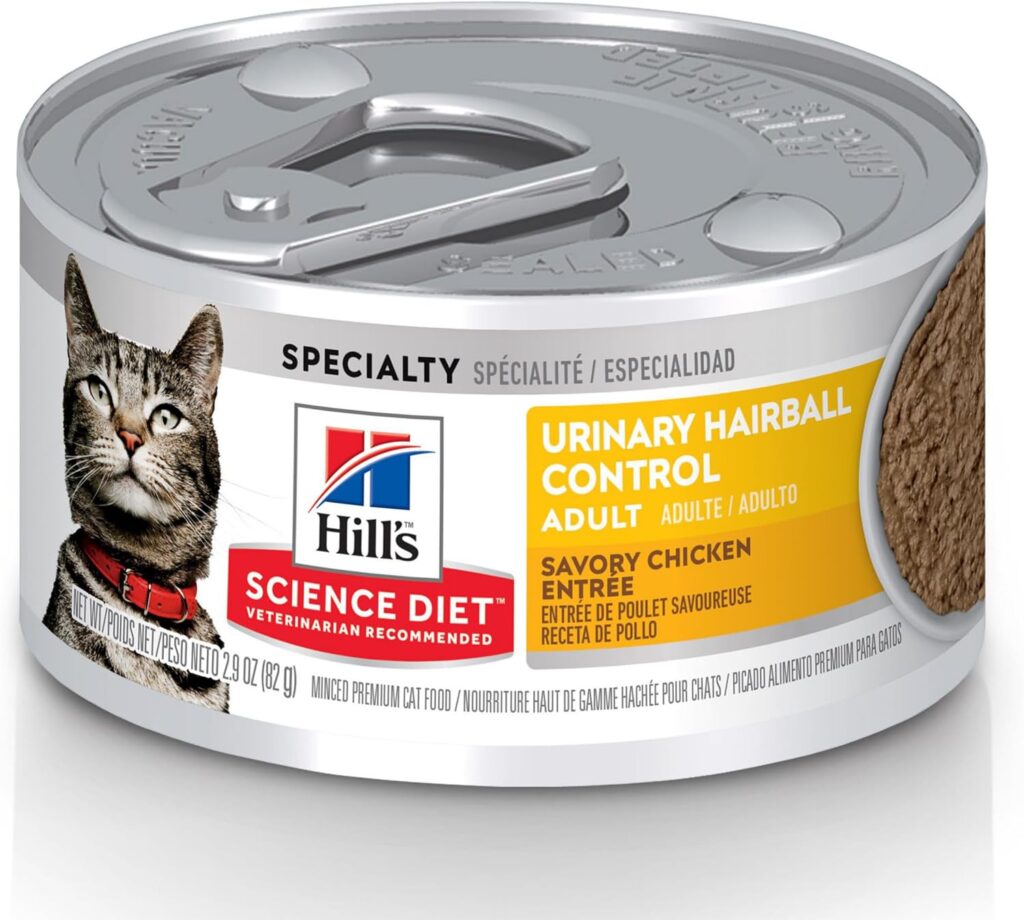
Product Overview:
Hill’s Science Diet Adult Urinary & Hairball Control Wet Cat Food is a good wet food option because it supports two common indoor cat needs: hydration and hairball control.
Wet food can be helpful for cats that do not drink much water, and this formula includes natural fiber to support hairball reduction. It is also useful for cats that prefer soft food over dry kibble or refuse gel-style remedies.
Why It Fits This Pick:
This fits the wet food category because it combines moisture, daily feeding, and hairball support in one product. It is a softer, meal-based option for cats that do better with wet food.
Things to Consider:
This product also focuses on urinary support, so it may not be necessary for every cat. Introduce slowly and check with your vet if your cat has medical diet needs.
Best Hairball Treats for Cats: Pet Honesty Cat Hairball Remedy Treats
Hairball treats for cats can be a convenient option when a cat refuses gels, tablets, or other supplements.
Best for:
Cats that dislike gels or tablets but enjoy crunchy-creamy treat textures.
Key Features to Look For:
- Dual-texture crunchy and creamy treats
- Hairball support formula
- Contains fiber-support ingredients such as psyllium husk, citrus pulp, and apple pomace
- Includes omega-3 fish oil
- Designed for indoor cats
- Chicken flavor
- 30-day supply
- Made in the USA
- NASC certified according to product page
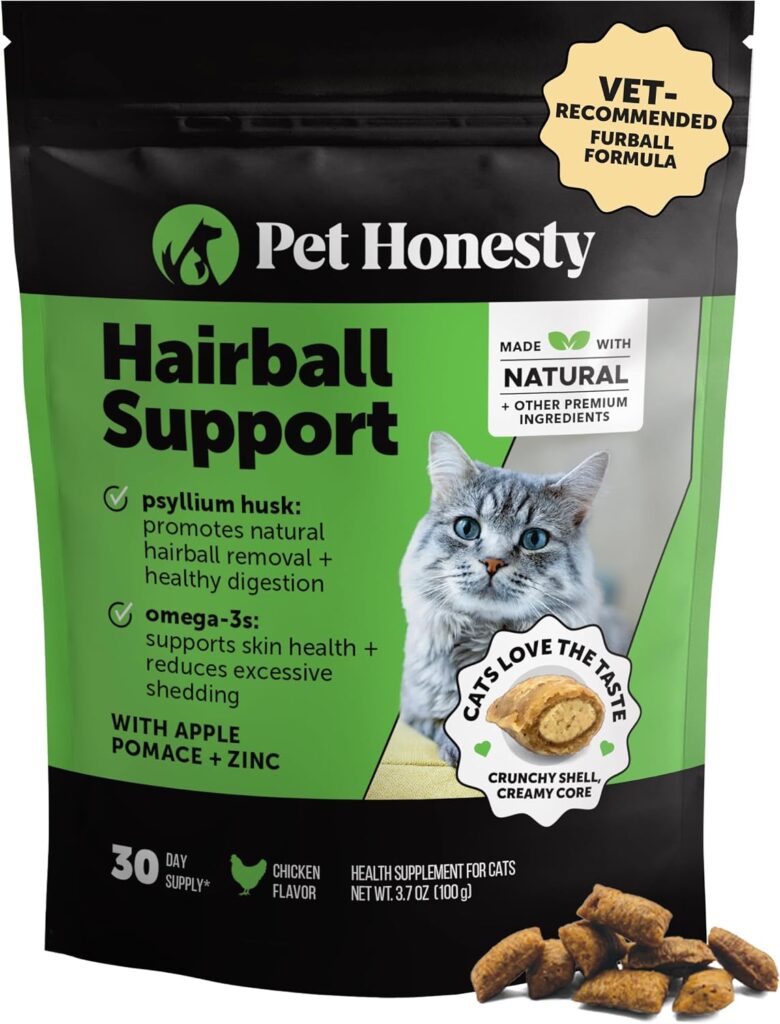
Product Overview:
Pet Honesty Cat Hairball Remedy Treats are a low-stress option for cats that refuse gels or tablets. The dual-texture treat format makes them feel more like a reward than a supplement, which can make daily use easier.
This product is designed around fiber and digestive support, with ingredients like psyllium husk and apple pomace. It also includes fish oil, which can support skin and coat health.
Why It Fits This Pick:
This fits the hairball treats category because it is easy to give and more treat-like than a traditional remedy. It is useful for cat parents who want hairball support without turning it into a stressful routine.
Things to Consider:
Treats add calories. Follow the feeding guide and avoid stacking too many treats or supplements at once.
Best Hairball Support Chews: Hartz Hairball Remedy Plus Soft Chews
Hairball chews are usually soft supplement-style products. They may include fiber, oils, probiotics, or coat-support ingredients, depending on the formula.
Best for:
Cats that prefer soft chews instead of crunchy treats, gels, or tablets.
Key Features to Look For:
- Soft chew format
- Chicken flavor
- 3 oz resealable bag
- Made for cats and kittens
- Helps hairballs pass through the gastrointestinal tract
- Supports prevention of future formation with regular use
- Contains psyllium seed husk and fiber-related ingredients
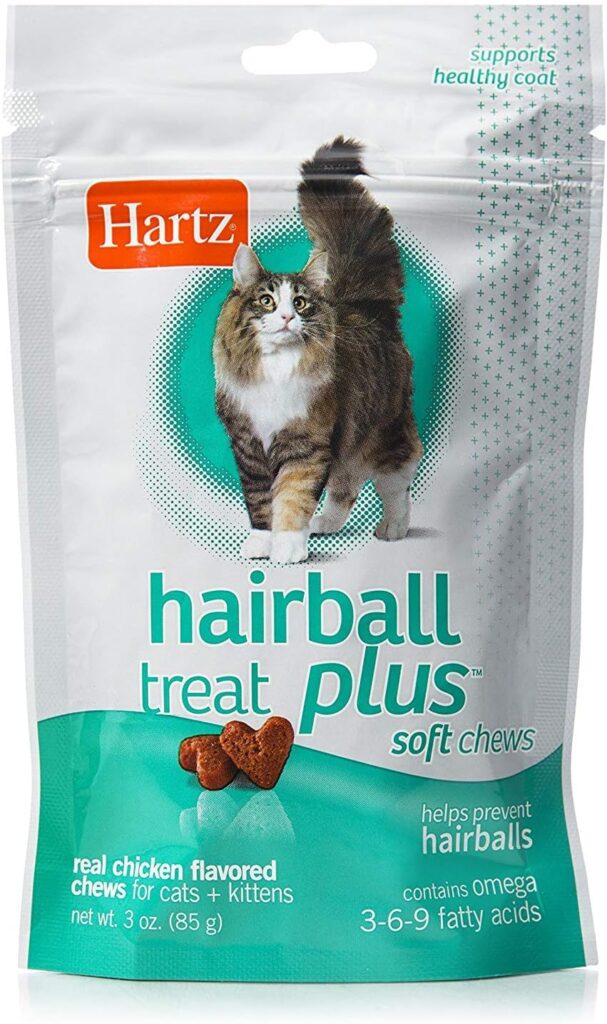
Product Overview:
Hartz Hairball Remedy Plus Soft Chews are a practical middle-ground option between treats and supplements. They are softer than crunchy treats and less messy than gels, making them useful for cats that are texture-sensitive.
The resealable bag also makes them easy to store and use as part of a routine.
Why It Fits This Pick:
This fits the soft chew category because it gives readers another option for cats that do not accept gels, tablets, or crunchy treats. It is simple, affordable-feeling, and easy to explain in the article.
Things to Consider:
This is still a supplement-style product, so follow the product directions. If your cat has ongoing vomiting, repeated retching, or appetite loss, do not rely only on chews.
Best Pumpkin or Fiber Topper: Weruva Pumpkin Patch Up!
A pumpkin or fiber topper can be useful for some cats when added carefully to food.
This category is not a magic fix, but it can be helpful for cat parents who want a simple food-based option for digestive support.
Best for:
Cats that may benefit from gentle fiber support mixed into food.
Key Features to Look For:
- Pumpkin puree supplement
- 2.8 oz pouches
- Pack of 12
- Made for dogs and cats
- Ingredients: pumpkin and water for processing
- Source of soluble and insoluble fiber
- Supports gut motility and stool quality
- Grain-free, gluten-free, and vegetarian
- No corn, wheat, soy, artificial colors, or preservatives
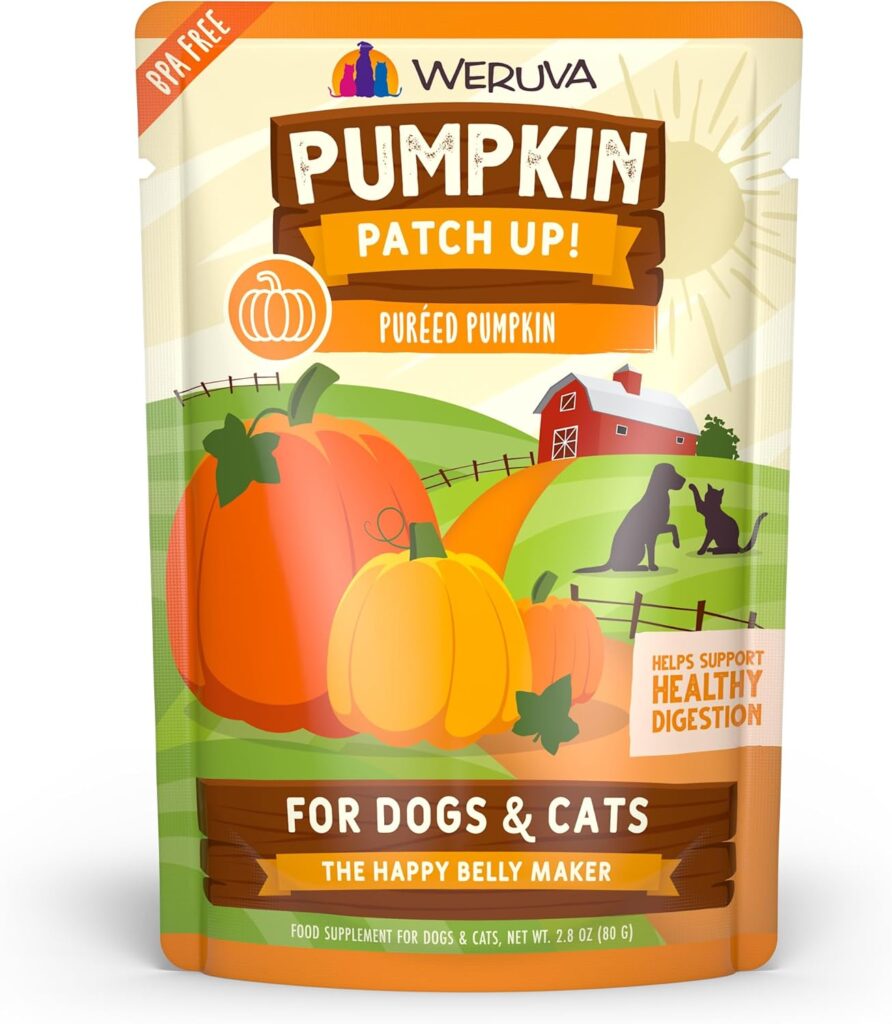
Product Overview:
Weruva Pumpkin Patch Up! is not a traditional hairball remedy, but it can be useful as a fiber-based food topper. For cats that tolerate pumpkin, it may help support digestion and stool quality.
This works best mixed into wet food or served in a small amount according to the product directions. It is a gentle option for cat parents who want something simpler than gels or supplement chews.
Why It Fits This Pick:
This fits the pumpkin or fiber topper category because it supports the digestion side of hairball care. It gives readers a food-based option instead of another treat or paste.
Things to Consider:
Not every cat likes pumpkin. Start with a small amount and stop if your cat develops diarrhea, vomiting, or appetite changes. Do not use human pumpkin pie filling.
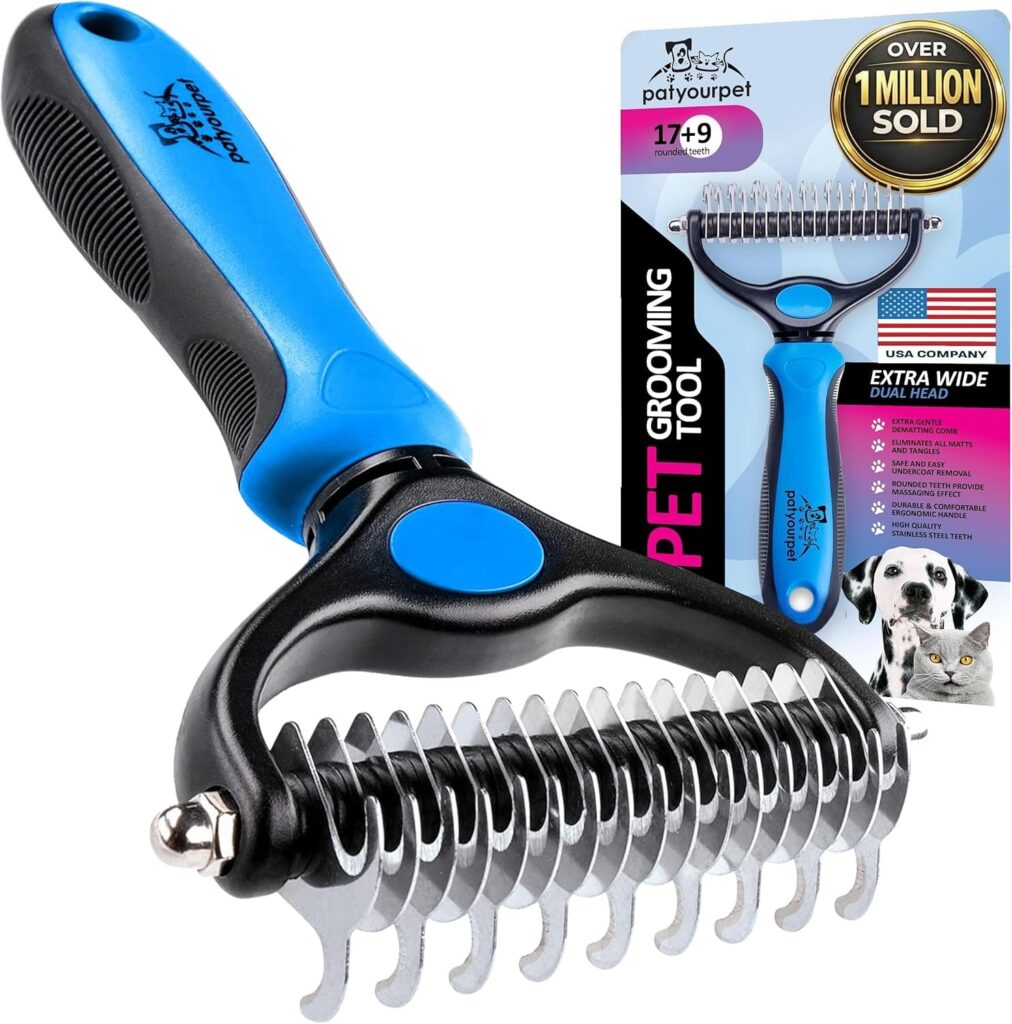
Best Grooming Tool for Hairball Prevention: Pat Your Pet Deshedding Brush
One of the best ways to reduce hairballs is to remove loose fur before your cat swallows it. That makes regular brushing an important part of hairball prevention for cats, especially during shedding seasons.
VCA recommends regular brushing to remove loose hair before it is ingested, especially for long-haired cats or during shedding seasons.
Best for:
Reducing loose fur before your cat swallows it during grooming.
Key Features to Look For:
- Double-sided deshedding and dematting tool
- 9-teeth side for mats and tangles
- 17-teeth side for thinning and deshedding
- Stainless steel teeth
- Rounded teeth for skin safety
- Non-slip rubber handle
- Works for cats and dogs
- Suitable for long-haired and short-haired coats
Product Overview:
The Pat Your Pet Deshedding Brush is not an edible hairball remedy, but it may be one of the most important prevention tools in the article. Hairballs start when cats swallow loose fur, so regular brushing can help reduce how much hair your cat ingests.
This brush has two sides: one for tangles and mats, and one for thinning and deshedding. That makes it especially useful for cats with thicker coats or cats that shed heavily during seasonal changes.
Why It Fits This Pick:
This fits the grooming tool category because hairball care should start before the hair is swallowed. A good brushing routine can support both hairball prevention and a cleaner home.
Things to Consider:
Use this gently. Do not pull through painful mats or irritated skin. For sensitive cats, start with short sessions and use light pressure.
What Causes Hairballs in Indoor Cats?
Hairballs happen because cats groom themselves and swallow loose hair. The rough surface of a cat’s tongue helps pull loose hair into the mouth, and that hair is swallowed. Because hair is difficult to digest, some of it may collect in the stomach and form a hairball.
Indoor cats may deal with hairballs because they:
- Groom often
- Shed seasonally
- Live in warm indoor environments
- Have long or thick coats
- Overgroom from stress, boredom, allergies, or skin irritation
- Do not get brushed regularly
- Need more hydration or fiber support
VCA notes that excessive grooming, seasonal shedding, low fiber, and underlying health issues can all contribute to hairball formation. If stress seems to be contributing to excessive grooming, our guide on how to calm an anxious cat at home covers simple ways to create a quieter, more reassuring environment.
How to Choose a Hairball Remedy for Your Cat
1. Start With Grooming
Before adding supplements, start by reducing loose fur.
Brush your cat regularly, especially during shedding seasons. For cats that dislike brushes, a grooming glove may feel more like petting. For cats that shed heavily, our guide to cat brushes for shedding can help you compare tools designed to remove loose fur before it is swallowed.
Related guide: Best Grooming Gloves for Cats
2. Support Hydration
Fresh water and wet food can help support normal digestion. Some cats drink more from a fountain than from a still bowl.
Related guide: Best Cat Water Fountains for Fresh Drinking Water
3. Choose the Right Remedy Type
Pick based on what your cat will actually accept:
- Gel or paste for direct hairball support
- Treats for picky cats
- Chews for supplement-style support
- Dry food for daily routine
- Wet food for moisture support
- Fiber topper for food-based support
- Grooming tool for prevention
4. Watch for Ingredient Sensitivity
If your cat has food allergies, a sensitive stomach, or a medical condition, check ingredients carefully. Introduce only one new product at a time so you can tell what works and what causes problems.
5. Ask Your Vet When Hairballs Are Frequent
Frequent vomiting is not something to ignore. Hairballs can sometimes be confused with coughing, asthma, digestive disease, or other health concerns. Cornell notes that frequent hacking may have nothing to do with hairballs and can sometimes point to respiratory or gastrointestinal problems.
Signs Your Cat May Need a Vet
Contact your veterinarian if your cat has:
- Repeated retching without producing a hairball
- Frequent vomiting
- Loss of appetite
- Low energy
- Constipation
- Diarrhea
- Weight loss
- Pain or hiding
- Bloated belly
- Trouble breathing
- Coughing that looks like hairball hacking
- Hairballs that suddenly become much more frequent
A hairball should not be used as the explanation for every vomiting or coughing episode. When in doubt, ask your vet.
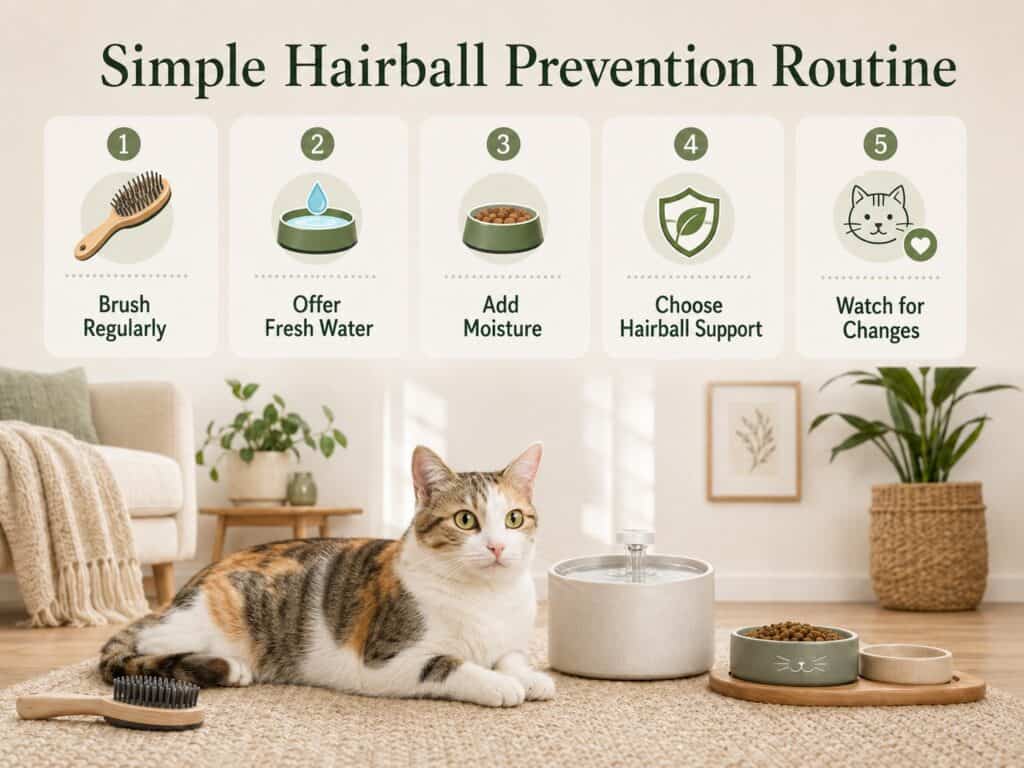
Simple Hairball Prevention Routine
If you are wondering how to prevent hairballs in cats, a simple routine built around grooming, hydration, moisture, and regular monitoring is a good place to start.
Brush regularly.
Remove loose fur before your cat swallows it. Regular grooming can also help reduce cat hair around the home, especially during seasonal shedding.
Offer fresh water.
Use bowls or a cat fountain if your cat prefers moving water.
Consider wet food.
Moisture can support normal digestion.
Use hairball support when needed.
Choose a gel, treat, chew, food, or topper that fits your cat’s routine.
Watch for changes.
Track vomiting, appetite, stool, and grooming behavior.
Common Mistakes to Avoid
Avoid these hairball remedy mistakes:
- Assuming all vomiting is hairballs
- Waiting too long to call a vet
- Giving too many remedies at once
- Switching food too quickly
- Using human laxatives
- Using oils or supplements without guidance
- Ignoring overgrooming
- Not brushing during shedding season
- Relying only on treats
- Forgetting hydration
A gentle, steady routine is usually more helpful than trying many products at once.
Related HavenTails Guides
Best Cat Brushes for Shedding
Find brushing tools that help remove loose fur before your cat swallows it.
Best Grooming Gloves for Cats
Compare gentle grooming gloves for brushing, bathing, wipe-downs, and home hair cleanup.
How to Calm an Anxious Cat at Home
Support cats that overgroom because of stress or household changes.
Best Cat Water Fountains for Fresh Drinking Water
Encourage better hydration with fresh moving water.
Final Thoughts
The best hairball remedy for indoor cats depends on why your cat is having hairballs and what type of product they will actually accept.
For many cats, the best plan starts with regular brushing and better hydration. From there, you can consider a hairball gel, petroleum-free remedy, hairball-control food, treats, chews, fiber topper, or grooming tool.
Occasional hairballs may happen, but frequent vomiting, repeated retching, appetite loss, low energy, constipation, or sudden behavior changes should be checked by a veterinarian.
A good hairball routine is not just about cleaning up fewer messes. It is about helping your cat feel more comfortable from the inside out.
FAQs
Are hairballs normal for indoor cats?
Occasional hairballs can happen, especially in cats that groom often or shed seasonally. Frequent vomiting, repeated retching, appetite loss, or low energy should be checked by a veterinarian.
What is the best hairball remedy for cats?
The best remedy depends on your cat. Some cats do well with gels, while others prefer treats, chews, wet food, fiber toppers, or more regular brushing.
Do hairball gels work for cats?
Hairball gels may help some cats pass swallowed hair, but they should be used according to the label and under veterinary guidance when used for recurring problems.
Can brushing help prevent hairballs?
Yes. Regular grooming helps remove loose fur before your cat swallows it, which can reduce hairball formation.
Is wet food good for hairballs?
Wet food can help increase moisture intake, which may support digestion and the movement of swallowed hair through the digestive tract.
When should I worry about hairballs?
Worry if your cat has frequent vomiting, repeated retching without producing a hairball, appetite loss, lethargy, constipation, weight loss, or signs of pain. These can point to problems beyond normal hairballs.