Affiliate Disclosure: As an Amazon Associate, we earn from qualifying purchases. This post contains affiliate links, which means we may earn a small commission if you buy through our links, at no extra cost to you.
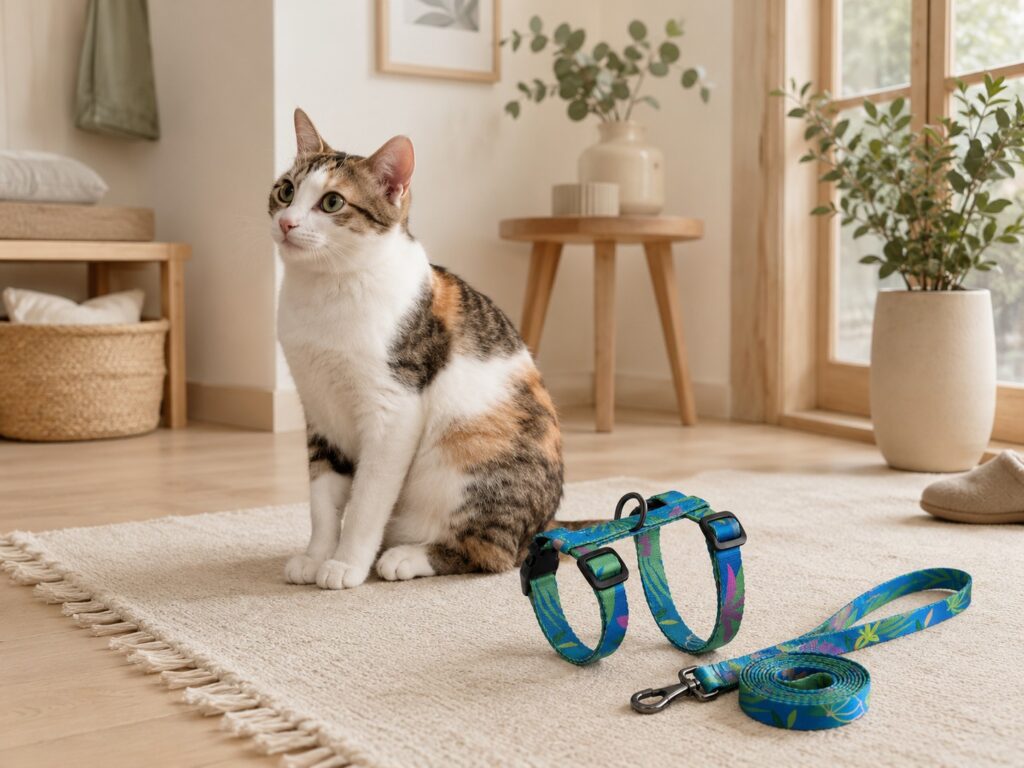
Choosing a cat harness for the first time can feel confusing. There are vest-style harnesses, strap-style harnesses, step-in harnesses, escape-resistant designs, soft mesh options, reflective sets, and different leash lengths.
For beginner cat parents, the most important thing is not choosing the cutest harness. It is choosing one that fits your cat securely, feels comfortable, and gives you enough control while your cat is still learning.
A good cat harness can make outdoor practice, short backyard time, balcony training, vet trips, and travel safer. But the wrong harness can feel uncomfortable, slip off too easily, or make your cat afraid of wearing one.
In this guide, we’ll walk through how to choose a cat harness for beginners, what features matter most, and how to help your cat get used to wearing one at home.
Why Your Cat Needs a Harness Instead of Just a Leash
Cats should not be walked with a leash attached directly to a collar. A collar is not designed to support your cat’s body during leash training, and a frightened cat may twist, pull, or slip in a way that makes a collar unsafe.
A harness spreads pressure across the chest and body instead of the neck. This gives you better control and helps your cat feel more supported.
A harness is useful for:
- Short outdoor practice
- Backyard or patio time
- Travel breaks
- Vet visit safety
- Emergency handling
- Carrier-to-car transitions
- Indoor confidence training
The goal is not to force every cat to go on long walks. Some cats enjoy outdoor exploring. Others only need a harness for safety during travel or controlled short outings. A properly fitted harness can also be useful when preparing for car travel with cats and outdoor adventures.
What Makes a Good Beginner Cat Harness?
A good beginner cat harness should be secure, adjustable, lightweight, and comfortable enough for short training sessions.
Look for a harness that:
- Fits around the chest, not just the neck
- Has adjustable straps
- Uses secure buckles or closures
- Does not rub under the legs
- Feels lightweight
- Allows natural movement
- Comes with a suitable leash
- Is difficult for your cat to slip out of
- Is easy for you to put on and remove
For beginners, comfort and fit matter more than complicated features.
Measure Your Cat Before Buying
Before choosing a harness, measure your cat carefully. Do not guess based only on weight.
You usually need to measure:
Neck girth:
Around the lower part of your cat’s neck where the harness will sit.
Chest girth:
Around the widest part of your cat’s chest, usually just behind the front legs.
Body length:
From the base of the neck toward the middle of the back, depending on the harness style.
Chest girth is usually the most important measurement. A harness that is too loose can slip off. A harness that is too tight can restrict movement and make your cat dislike wearing it.
Always check the product’s size chart before buying.
How Should a Cat Harness Fit?
A cat harness should feel snug but not tight.
A common fit check is the two-finger rule. You should be able to fit one or two fingers between the harness and your cat’s body, depending on your cat’s size and the harness style.
The harness should not:
- Slide around too much
- Pull against the throat
- Rub under the front legs
- Restrict shoulder movement
- Press into the belly
- Gap widely around the chest
- Slip over the head too easily
After putting the harness on, let your cat walk around indoors. Watch how they move. Some cats freeze at first because the feeling is new, but the harness should not block normal movement once they adjust.
Vest-Style vs Strap-Style Cat Harnesses
There are several common harness styles. The best one depends on your cat’s body shape, personality, and comfort level.
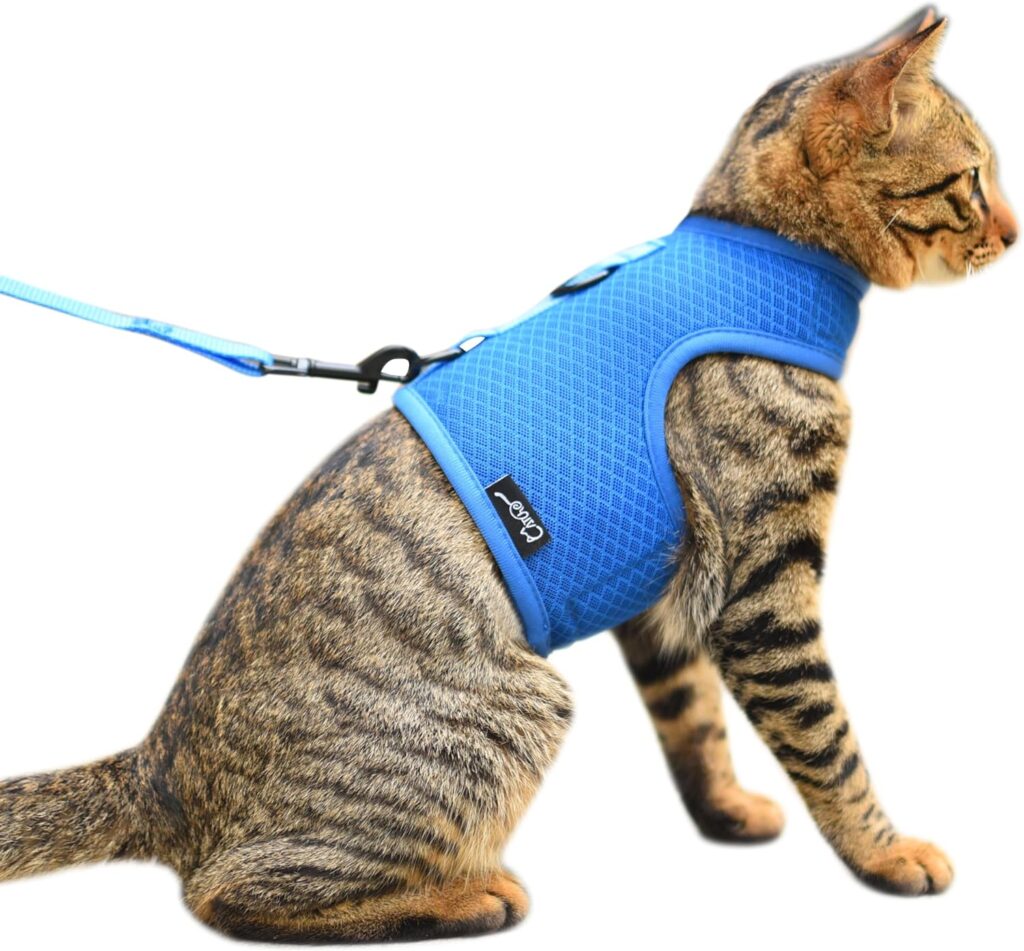
Vest-Style Cat Harness
A vest-style harness covers more of your cat’s body. It often uses soft mesh or padded fabric and wraps around the chest.
Best for:
- Beginners
- Nervous cats
- Cats that need more body coverage
- Short outdoor practice
- Cat parents who want a more secure feeling
Why it can help:
The wider design spreads pressure more evenly and may feel more stable than thin straps. Many beginner cat parents find vest-style harnesses easier to understand and adjust.
Things to consider:
Some cats dislike the feeling of fabric covering their body. If your cat freezes, rolls over, or refuses to move, introduce the harness slowly indoors.
Example pick:Cat Harness and Leash for Walking Escape Proof Breathable Mesh Fabric
Why We Like It:
The vest-style structure gives cats more coverage and can feel more secure for beginners. It is a good option for cats that dislike narrow straps or need a more supportive harness shape.
Strap-Style Cat Harness
A strap-style harness uses thinner straps around the neck and chest area. It is usually lighter and less bulky than a vest.
Best for:
- Cats that dislike bulky harnesses
- Warm weather
- Short supervised practice
- Cats that are already comfortable wearing gear
Why it can help:
Strap-style harnesses are lightweight and may feel less restrictive. They can be a good option for cats that do not like fabric covering their back or chest.
Things to consider:
Fit matters a lot. If the straps are too loose or poorly adjusted, some cats may slip out more easily.
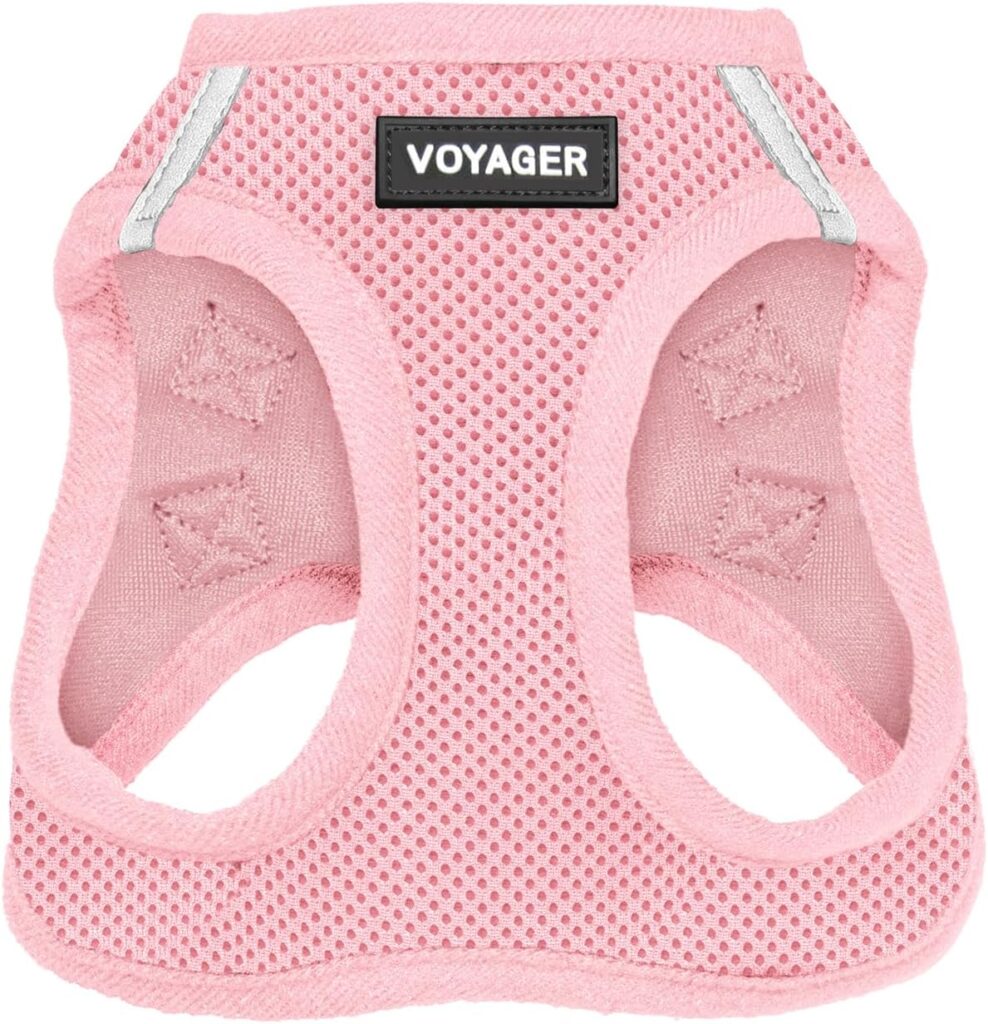
Step-In Cat Harness
A step-in harness is designed so your cat steps into the leg openings before the harness is fastened around the body.
Best for:
- Calm cats
- Cats that dislike harnesses going over the head
- Cat parents who want a simple wearing process
Why it can help:
Some cats hate having anything pulled over their head. A step-in design can make the process easier if your cat is calm enough to stand still.
Things to consider:
Not every cat will willingly step into a harness. If your cat resists handling, a different design may be easier.
Example pick:Best Pet Supplies Voyager Step-in Air Harness
Why We Like It:
The step-in design gives beginners a different wearing method. For cats that dislike having a harness pulled over their ears or head, this can make training easier.
Escape-Resistant Cat Harness
Many cat harnesses are marketed as escape-resistant. This usually means the harness has a more secure shape, multiple adjustment points, or a design that reduces slipping.
Best for:
- Nervous cats
- Cats new to outdoor practice
- Cats that back up or twist when scared
- Beginner leash training
Why it can help:
Cats can be very flexible, so a secure fit is important. An escape-resistant design can reduce the chance of slipping out when your cat pulls backward.
Things to consider:
No harness is 100% escape-proof. You still need proper fit, slow training, and close supervision.
Choose Soft, Lightweight Materials
Comfort is one of the biggest reasons a cat accepts or rejects a harness.
Look for materials that are:
- Soft
- Lightweight
- Breathable
- Smooth around the edges
- Not too stiff
- Not too heavy
- Easy to clean
Soft mesh is common for beginner harnesses because it is breathable and gentle. However, some cats prefer lighter strap harnesses because they feel less covered.
Avoid harnesses with rough edges, heavy hardware, or bulky shapes that make your cat uncomfortable.
Look for Adjustable Straps
Cats come in many body shapes. Some are long and slim, some are rounder, some have deep chests, and some are still growing.
Adjustable straps help you get a better fit around the neck and chest.
A good harness should allow you to adjust the fit enough that it stays secure without pressing tightly against your cat’s body.
For kittens, adjustable sizing is especially important because they grow quickly.
Check the Buckles and Closures
Secure closures are important for safety.
Common closure types include:
- Plastic buckles
- Velcro
- Metal clips
- Zippers
- Combination closures
For beginners, a buckle plus adjustable strap is often easier to control. Velcro can be convenient, but some cats dislike the sound. Zippers can work well on some harnesses, but they need to be placed carefully so they do not catch fur.
Before outdoor use, test the closures indoors. Make sure they do not pop open when your cat moves, twists, or pulls.
Choose the Right Leash
Many beginner harnesses come with a leash. For first-time outdoor practice, a standard short leash is usually better than a very long leash.
A beginner leash should be:
- Lightweight
- Easy to hold
- Not too heavy for your cat
- Long enough for gentle exploring
- Short enough for control
- Securely clipped to the harness
Avoid retractable leashes when your cat is just starting. They can give too much sudden distance and may make it harder to respond if your cat gets scared.
Once your cat is comfortable, you can try a longer training leash in a safe enclosed area.
Reflective Details Can Help Outdoors
If you plan to practice outside, reflective stitching or reflective trim can be helpful, especially during early morning, evening, or shaded areas.
Reflective details do not replace supervision, but they can make your cat easier to see.
This is useful for:
- Backyard practice
- Patio time
- Evening walks
- Travel stops
- Outdoor training in low light
Match the Harness to Your Cat’s Personality
The best harness depends on your cat’s comfort level.
For Nervous Cats
Choose a secure, soft harness with good body support. A vest-style or escape-resistant design may be a better starting point.
Train indoors for several days or weeks before going outside.
For Curious Cats
A lightweight vest or strap harness may work well. Curious cats may enjoy exploring once they feel comfortable wearing the harness.
Start in a quiet, enclosed area.
For Kittens
Choose a lightweight, adjustable harness. Make sure the harness is secure enough that your kitten cannot slip out.
Keep sessions short and positive.
For Large Cats
Choose a harness with a strong base, wider chest support, and a size chart that actually fits larger cats. Do not rely only on product photos.
Check chest girth carefully before buying.
For Cats That Hate Clothing
Try a lighter strap-style harness or a minimal soft mesh design. Introduce it slowly and reward your cat often.
How to Introduce a Cat Harness at Home
Do not put the harness on for the first time and immediately go outside.
Start slowly.
Step 1: Let Your Cat Smell the Harness
Place the harness near your cat’s resting area. Let them sniff it without pressure.
You can place treats nearby so the harness becomes less strange.
Step 2: Touch the Harness to Your Cat Briefly
Before fastening it, gently touch the harness to your cat’s back or side for a few seconds. Reward calm behavior.
Step 3: Put It On for a Short Time
Once your cat seems less worried, put the harness on for a short indoor session. Keep it loose enough for comfort but secure enough to test the fit.
Start with just a few minutes.
Step 4: Let Your Cat Walk Indoors
Let your cat walk around inside while wearing the harness. Some cats freeze, crouch, or flop over at first. This is common when the feeling is new.
Do not force movement. Use treats, toys, or calm encouragement.
Step 5: Attach the Leash Indoors
Before going outside, attach the leash inside the home. Let your cat drag it briefly under supervision or hold it gently while they explore.
Step 6: Practice Near the Door
Let your cat wear the harness near the door or entry area without going outside. This helps reduce excitement or fear around the transition.
Step 7: Try a Quiet Outdoor Area
For the first outdoor session, choose a calm, enclosed, low-traffic area. Avoid dogs, cars, loud noises, and busy sidewalks.
Let your cat lead. Do not pull them forward like a dog.
Common Mistakes to Avoid
Avoid these common beginner mistakes:
- Attaching a leash to a collar
- Buying based only on weight
- Skipping chest measurement
- Choosing a harness that is too loose
- Going outside on the first day
- Pulling your cat forward
- Using a retractable leash too soon
- Practicing in a noisy area
- Ignoring signs of fear
- Assuming any harness is fully escape-proof
A cat harness should make your cat safer, not more stressed.
Signs the Harness May Not Fit
Check the fit again if your cat:
- Slips one leg out
- Backs out of the harness
- Walks awkwardly after adjusting
- Shows rubbing under the arms
- Cannot move shoulders normally
- Has red marks after wearing it
- Keeps biting one specific strap
- Seems restricted around the chest
Some discomfort is normal at the beginning, but the harness should not cause rubbing, tightness, or restricted movement.
Quick Buying Guide
Choose based on your main need:
For beginners:
Soft vest-style harness with adjustable straps.
For nervous cats:
Escape-resistant harness with secure chest coverage.
For cats that dislike bulky gear:
Lightweight strap-style harness.
For kittens:
Small, adjustable, lightweight harness.
For outdoor visibility:
Reflective harness and leash set.
For leash training:
Harness with a short, lightweight leash.
For long practice sessions:
Comfortable harness with breathable material and no rubbing points.
Related HavenTails Guides
Best Cat Leashes for Beginners
Compare beginner-friendly harness and leash sets for safe outdoor practice.
How to Choose a Cat Carrier
Learn how to choose a safer carrier for vet visits and short travel.
Best Cat Carriers for Vet Visits
Find carrier picks for calmer vet trips and easier travel days.
How to Help a New Cat Feel Safe at Home
Create a calmer home setup before introducing new routines.
Final Thoughts
Choosing a cat harness for beginners is mostly about fit, comfort, and safety.
Start with your cat’s chest measurement, choose a harness style that matches their personality, and look for soft materials, adjustable straps, secure closures, and a lightweight leash.
A harness should never be rushed. Let your cat explore it indoors, keep training sessions short, and wait until your cat is comfortable before trying outdoor practice.
The best cat harness is not just the one that looks cute. It is the one your cat can wear safely, calmly, and comfortably.
FAQs
What type of harness is best for a beginner cat?
A soft, adjustable vest-style harness is often a good beginner choice because it offers body support and feels more secure. However, some cats prefer lighter strap-style harnesses.
Can I walk my cat with a collar and leash?
No. A leash should be attached to a properly fitted harness, not directly to a collar. A harness supports the body better and is safer for leash practice.
How tight should a cat harness be?
The harness should be snug but not tight. You should usually be able to fit one or two fingers between the harness and your cat’s body.
Are escape-resistant cat harnesses really escape-proof?
No harness is completely escape-proof. An escape-resistant design can help, but proper fit, slow training, and close supervision are still important.
How do I get my cat used to a harness?
Introduce the harness slowly indoors. Let your cat sniff it, wear it for short sessions, practice walking inside, and only go outside once your cat is calm and comfortable.
Should I use a retractable leash for my cat?
A retractable leash is not ideal for beginners. Start with a lightweight standard leash so you have better control during early training.