Affiliate disclosure: As an Amazon Associate, we earn from qualifying purchases. If you purchase through affiliate links in this article, we may earn a commission at no extra cost to you.
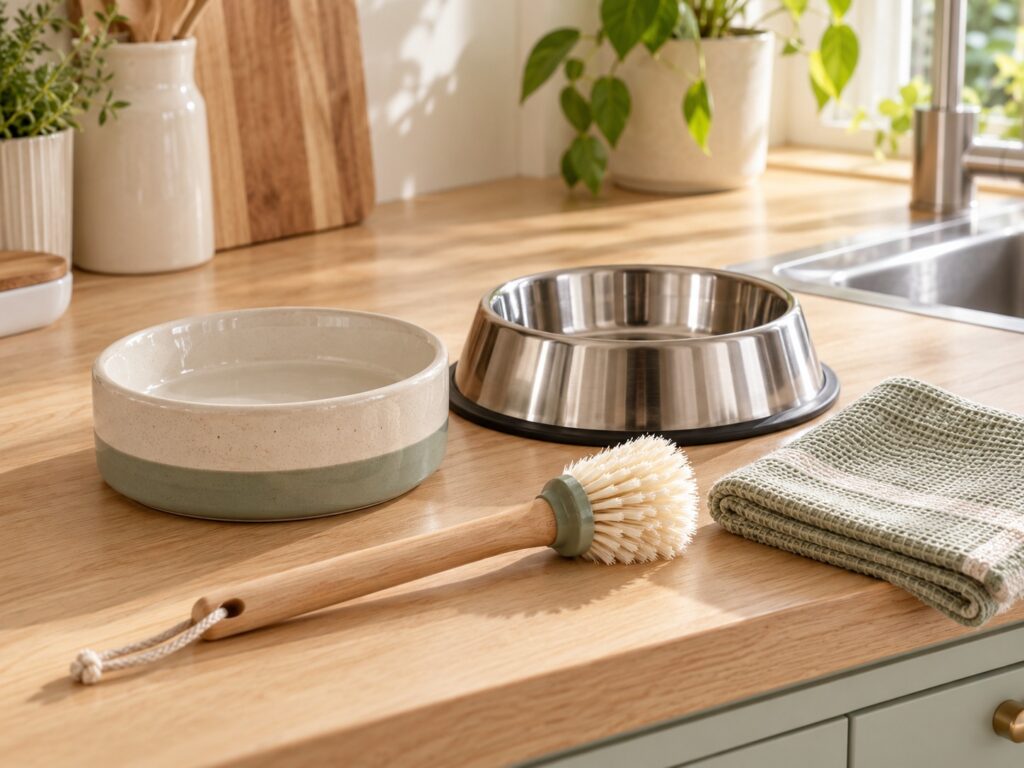
Fresh water and good food are only part of a clean feeding routine. The bowls, reservoirs, pumps, and food containers your pet uses need attention too.
A water bowl may look clear while its sides feel slippery. A fountain can keep running even when hair collects around the pump. An automatic feeder may dispense meals normally while crumbs and food oils build up inside.
This guide explains how to clean pet food and water bowls, maintain two different types of water fountains, and care for an automatic feeder without damaging its parts.
At a Glance: A Practical Cleaning Schedule
| Item | Routine care | Additional maintenance |
|---|---|---|
| Water bowl | Wash daily and refill with fresh drinking water | Clean immediately if food, debris, or slime appears |
| Wet food bowl | Wash after every meal | Check grooves, edges, and removable bases |
| Dry food bowl | Wash daily at minimum; washing after each meal is a useful habit | Remove oily residue rather than simply topping up food |
| Recirculating water fountain | Check water and the drinking tray daily | Start with a weekly full clean, adjusting to the manual and actual buildup |
| Fresh-water and wastewater-separated fountain | Inspect the tray and both tanks daily | Wash removable parts and maintain the water path according to the model’s instructions |
| Automatic feeder | Clean the serving bowl on the same schedule as a regular food bowl | Inspect the hopper and outlet weekly; deep-clean according to the manual and sooner if dirty |
These are starting points for a household routine. Visible residue, unusual smells, warm conditions, or several pets sharing equipment may mean cleaning sooner.
Top Picks: Five Feeding and Drinking Products to Consider
These products cover five different feeding and drinking setups. Choose based on your pet’s preferences and the maintenance routine you can comfortably manage.
| Category | Product | Key Features | Maintenance Consideration |
|---|---|---|---|
| Ceramic Water Bowl | Yedio Elevated Ceramic Water Bowl | 15 oz capacity, measurement marks, non-slip ring | Check the glaze and clean around the silicone ring |
| Recirculating Water Fountain | Veken Stainless Steel Cat Water Fountain | 108 oz / 3.2 L capacity, water-level window, multi-stage filtration | Clean the fountain and pump weekly; follow its filter replacement schedule |
| Fresh-Water and Wastewater-Separated Fountain | FEELNEEDY Filter-Free Water Fountain | Separate water tanks, 3.5 L clean-water capacity, rechargeable operation | Clean the drinking bowl, tanks, and accessible drainage components |
| Everyday Food Bowl | Necoichi Extra-Wide Elevated Cat Food Bowl | Wide porcelain bowl, raised base, removable silicone ring | Wash the bowl and check underneath the ring |
| Automatic Cat Feeder | VOLUAS 4L Automatic Cat Feeder | Scheduled dry-food meals, portion settings, wired or battery power | Maintain the serving bowl, hopper, and food outlet separately |
Ceramic Water Bowl: Yedio Elevated Ceramic Water Bowl
Best for:
Cat owners who want a simple raised water bowl without filters or electrical components.
Key Features:
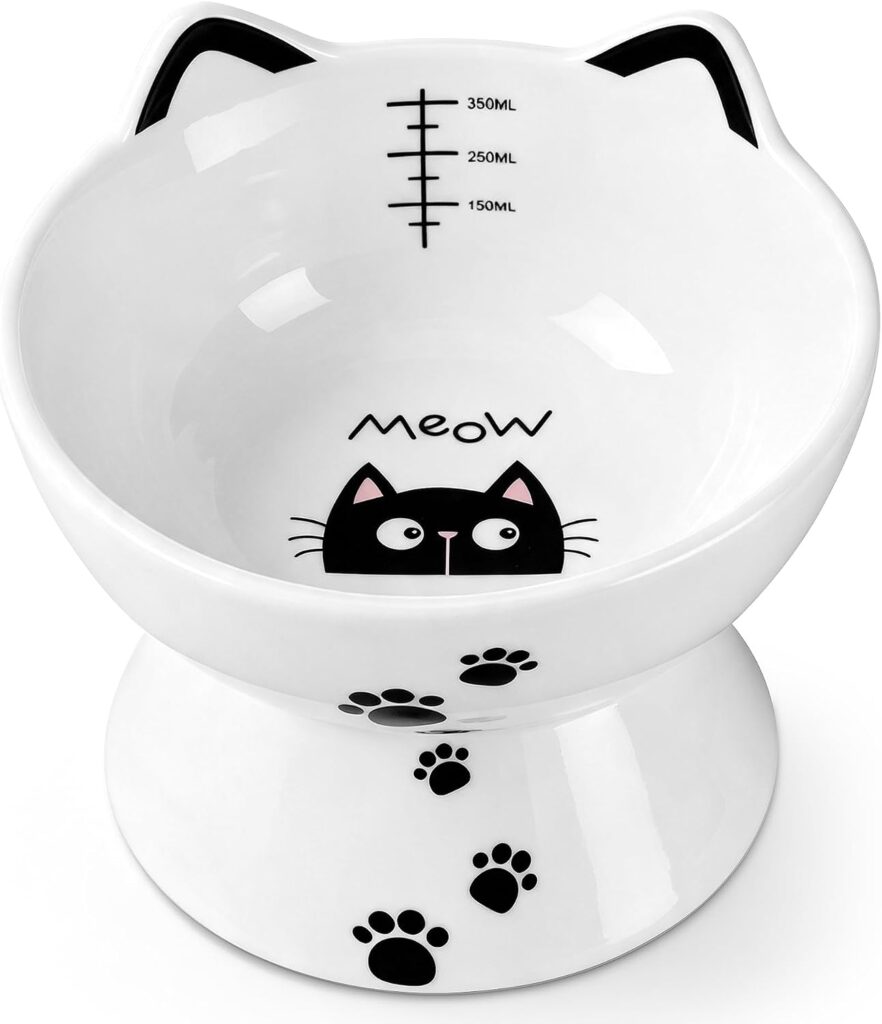
- 15 oz maximum capacity.
- Porcelain construction.
- Interior measurement marks.
- Approximately 4-inch overall height.
- Non-slip silicone ring.
Product Overview:
The Yedio Elevated Ceramic Water Bowl offers a straightforward alternative to an electric fountain. Its open interior is accessible for washing, while the measurement marks make changes in the water level easier to notice.
Those marks are useful for general observation, but they do not measure exact water intake: spills, evaporation, and other pets drinking from the bowl can affect the reading.
Why It Fits This Guide:
This bowl keeps the daily routine simple. There is no pump to maintain or filter to replace, and its ceramic surface can be inspected during washing.
Cleaning and Care:
Clean around the rim, base, and silicone ring. Check the glaze for chips or cracks, and follow the care instructions before using high-temperature cleaning methods.
Things to Consider:
A raised bowl is a preference rather than a requirement for every cat. Watch whether your cat drinks comfortably from this height.
Recirculating Water Fountain: Veken Stainless Steel Cat Water Fountain
Best for:
Owners looking for a larger fountain with moving water and a visible water level.
Key Features:
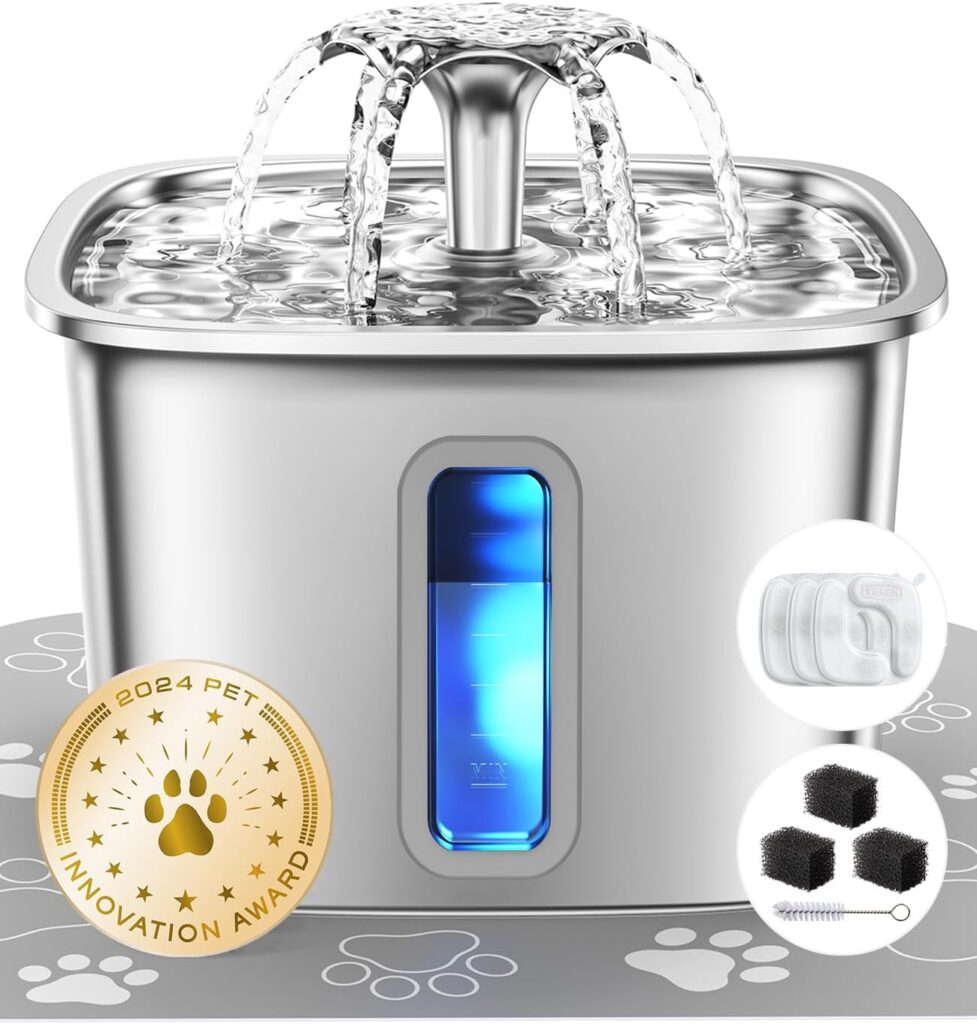
- 108 oz / 3.2 L capacity.
- Stainless steel construction.
- Water-level viewing window.
- Optional blue LED light.
- Multi-stage filtration.
- Suspended pump design.
Product Overview:
The Veken Stainless Steel Cat Water Fountain provides a recirculating drinking setup with a window that makes the remaining water easier to check.
Its capacity can reduce refill frequency, but it does not extend the time you should leave dirty water-contact surfaces unwashed.
Why It Fits This Guide:
This model illustrates the maintenance needs of a filtered fountain: the reservoir, tray, pump, filter, and pre-filter sponge all need attention.
Cleaning and Care:
The product listing recommends cleaning the fountain and pump weekly and replacing the filter and pre-filter sponge every two weeks. Inspect them sooner if several pets share the fountain or debris builds up.
Check the supplied manual to identify which components can go in the dishwasher. Keep the power adapter and other non-washable electrical parts dry.
Things to Consider:
Budget for replacement filters and sponges. Filtration does not replace washing, and a water-level window does not indicate whether the water-contact surfaces are clean.
Fresh-Water and Wastewater-Separated Fountain: FEELNEEDY Filter-Free Water Fountain
Best for:
Owners who prefer automatic water changes and a design that does not require disposable fountain filters.
Key Features:
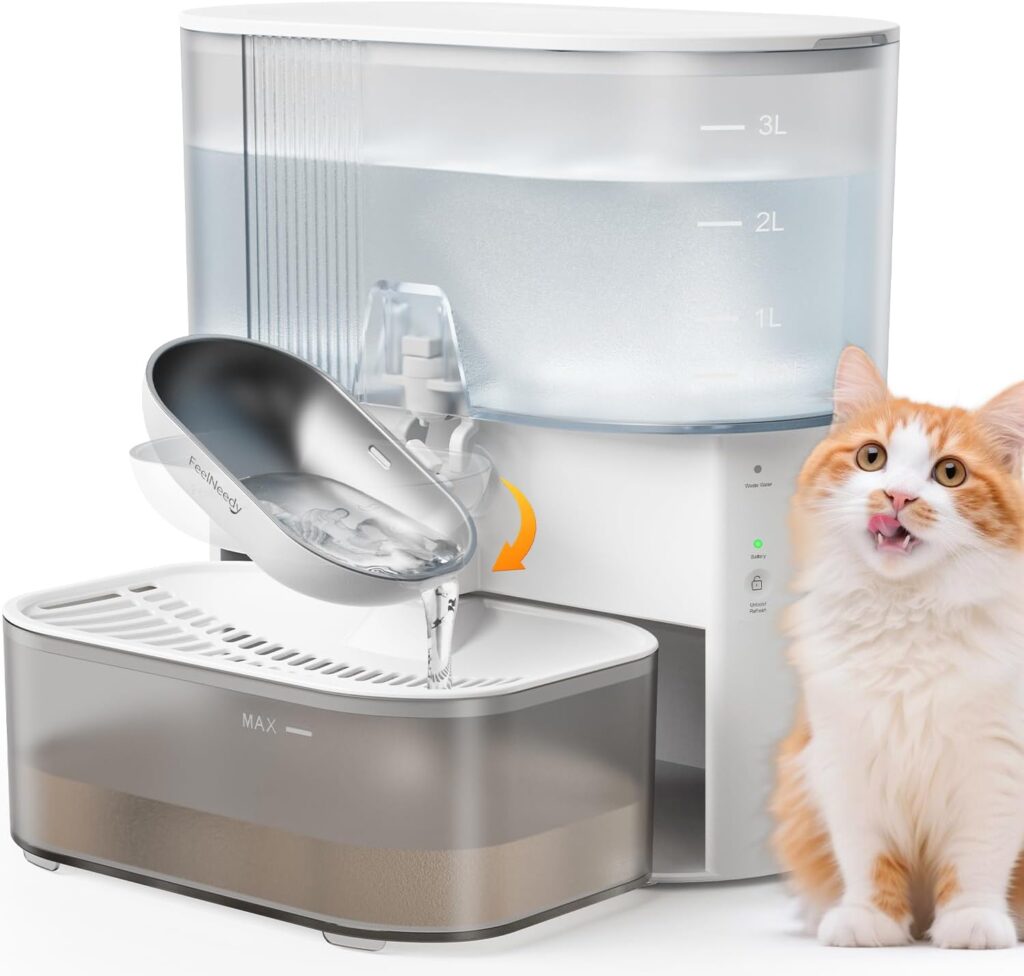
- Separate clean-water and wastewater tanks.
- 3.5 L clean-water tank.
- Automatic draining and refilling.
- 304 stainless steel drinking bowl.
- Plastic water tanks.
- USB-C rechargeable battery.
- Designed for operation without disposable filters.
Product Overview:
The FEELNEEDY Filter-Free Water Fountain drains used drinking water into a separate wastewater tank and supplies replacement water from its clean-water tank.
Unlike a conventional recirculating fountain, this model is designed around water separation. Its filter-free operation is a feature of the equipment—not a reason to remove filters from other fountains.
Why It Fits This Guide:
It provides a different approach to fountain maintenance. Instead of buying disposable filters, owners need to pay attention to the drinking bowl, both tanks, and the parts involved in draining and refilling.
Cleaning and Care:
Inspect the bowl and tank levels daily. Empty the wastewater tank before it reaches its limit, and wash accessible components according to the manual.
Disconnect charging power and switch the unit off before manual disassembly. Do not assume the battery-containing body is washable.
Things to Consider:
Automatic water changes still use water and fill the wastewater tank. Battery runtime and refill frequency depend on settings and use. Filter-free does not mean maintenance-free.
Everyday Food Bowl: Necoichi Extra-Wide Elevated Cat Food Bowl
Best for:
Cats that comfortably use a wide, raised feeding surface.
Key Features:
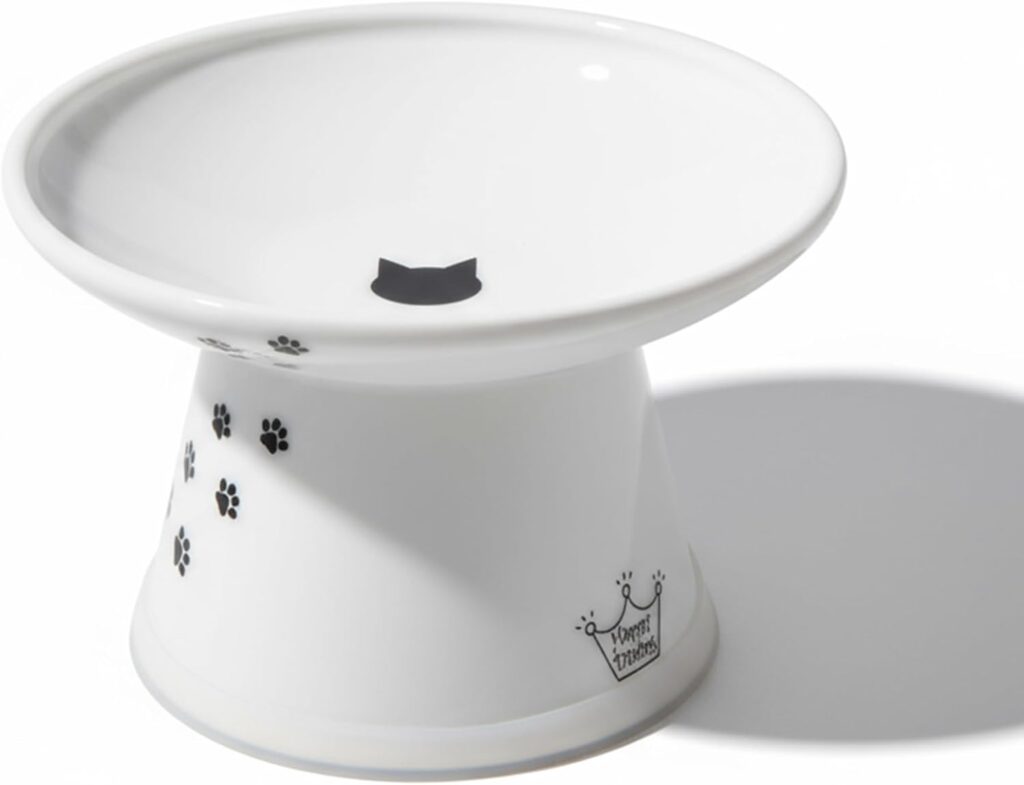
- Extra-wide porcelain bowl.
- Approximately 6.1-inch width.
- Raised base.
- Removable non-slip silicone ring.
- Porcelain bowl listed as dishwasher- and microwave-safe.
Product Overview:
The Necoichi Extra-Wide Elevated Cat Food Bowl combines a broad eating surface with a raised base. Its open shape offers access for both serving food and cleaning away leftovers.
The removable silicone ring helps keep the bowl in place and lets you check an area where moisture or crumbs could otherwise remain unnoticed.
Why It Fits This Guide:
A simple bowl shape makes residue easier to see and reach. This is useful for owners who want a ceramic feeding bowl without complicated grooves.
Cleaning and Care:
Wash after wet-food meals and at least daily for dry food. Remove the silicone ring as directed and clean underneath it. Follow separate care instructions for the ring rather than assuming it has the same heat tolerance as the porcelain.
Things to Consider:
Check whether the height and size suit your cat. An elevated bowl should not be presented as a treatment for vomiting or other medical problems.
For another material option, compare our best stainless steel cat bowls.
Automatic Cat Feeder: VOLUAS 4L Automatic Cat Feeder
Best for:
Owners who want scheduled dry-food meals with adjustable portion settings.
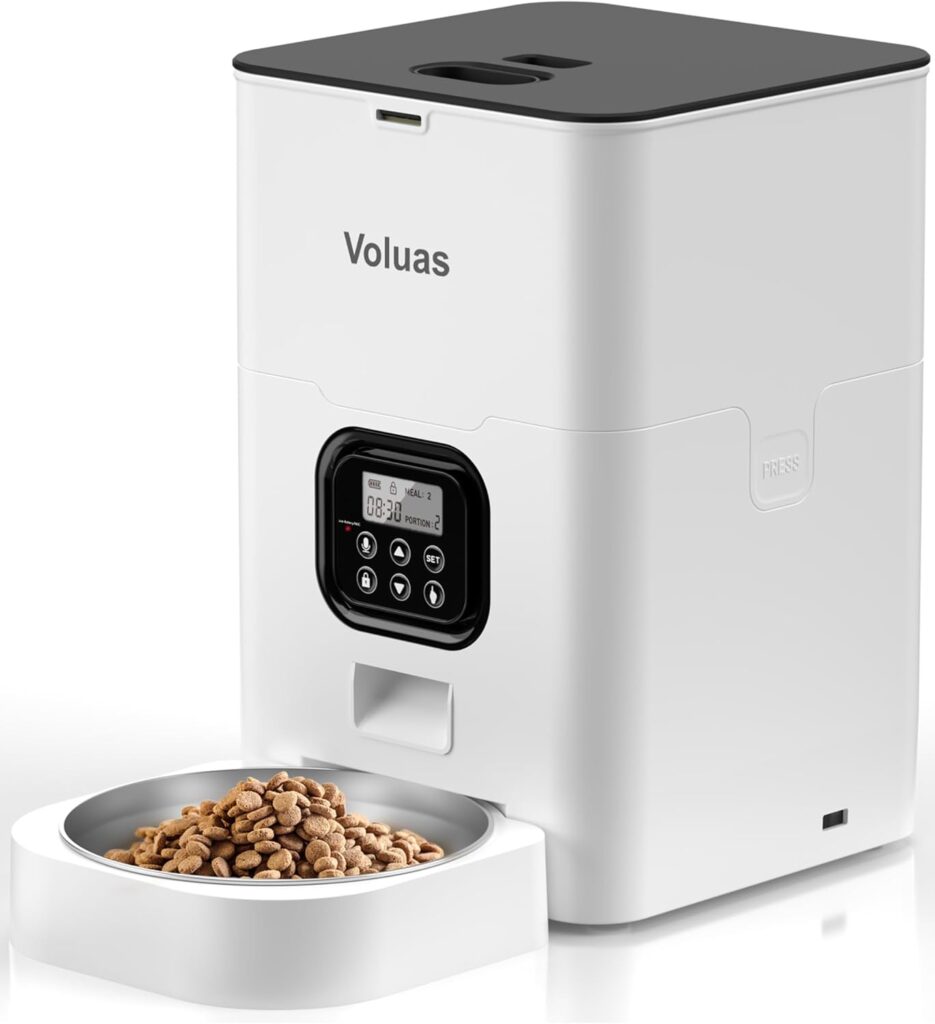
Key Features:
- 4 L dry-food storage capacity.
- Up to four scheduled meals per day.
- Adjustable portion settings.
- LCD control panel.
- Up to 10 seconds of recorded audio.
- USB adapter or three D-cell batteries; batteries are not included.
- Removable components for cleaning.
Product Overview:
The VOLUAS 4L Automatic Cat Feeder dispenses dry food at programmed times. Its controls allow you to set a meal schedule and adjust the number of portions delivered.
Weigh several test servings with your own kibble before relying on the settings. A programmed portion is a dispensing unit, and its weight can vary with food size and shape.
Why It Fits This Guide:
An automatic feeder has more cleaning areas than a regular bowl. The serving dish, storage container, and outlet need separate attention even when meals dispense normally.
Cleaning and Care:
Disconnect the adapter and remove batteries before taking the feeder apart. Remove any desiccant pack before washing approved components, and keep the electronic base dry.
Allow the hopper and other washed food-storage parts to dry completely before refilling. Check the outlet for crumbs and stuck kibble.
Things to Consider:
This is a dry-food feeder. Do not add wet food, water, or moistened kibble. Scheduled dispensing also does not replace daily checks on your cat, food supply, and water.
1. How to Clean a Pet Water Bowl
Empty the bowl instead of continually adding fresh water over old water.
Wash the inside, rim, outside, and base with dish soap and warm water. Use a soft brush or sponge to reach the curved area where the walls meet the bottom. Rinse thoroughly before refilling.
Check underneath removable rings or holders, and wipe up water trapped beneath the bowl.
1.1 What Is the Slippery Layer Inside a Water Bowl?
A slippery coating can indicate biofilm: a community of microorganisms attached to a surface within a protective layer.
Saliva and other organic material can contribute to buildup. Clear-looking water does not tell you whether the bowl surface is clean.
A quick rinse may leave residue behind. Pay attention to how the surface feels after washing, and repeat the cleaning if a slippery layer remains.
Avoid abrasive tools that could damage the bowl’s finish.
1.2 What Water Should You Give Your Pet?
Use fresh water from a safe drinking-water source. Where tap water is safe to drink, it can be a practical option; plain bottled drinking water is another option.
Avoid untreated water from ponds, puddles, or other potentially contaminated sources.
Do not assume that all mineral water causes kidney problems or that purified water prevents urinary disease. Pets with kidney disease, urinary stones, or other relevant conditions may need individualized advice from their veterinarian.
Purified water also does not keep a bowl permanently clean. Once served, water is exposed to your pet and the surrounding environment.
2. How to Clean a Recirculating Pet Water Fountain
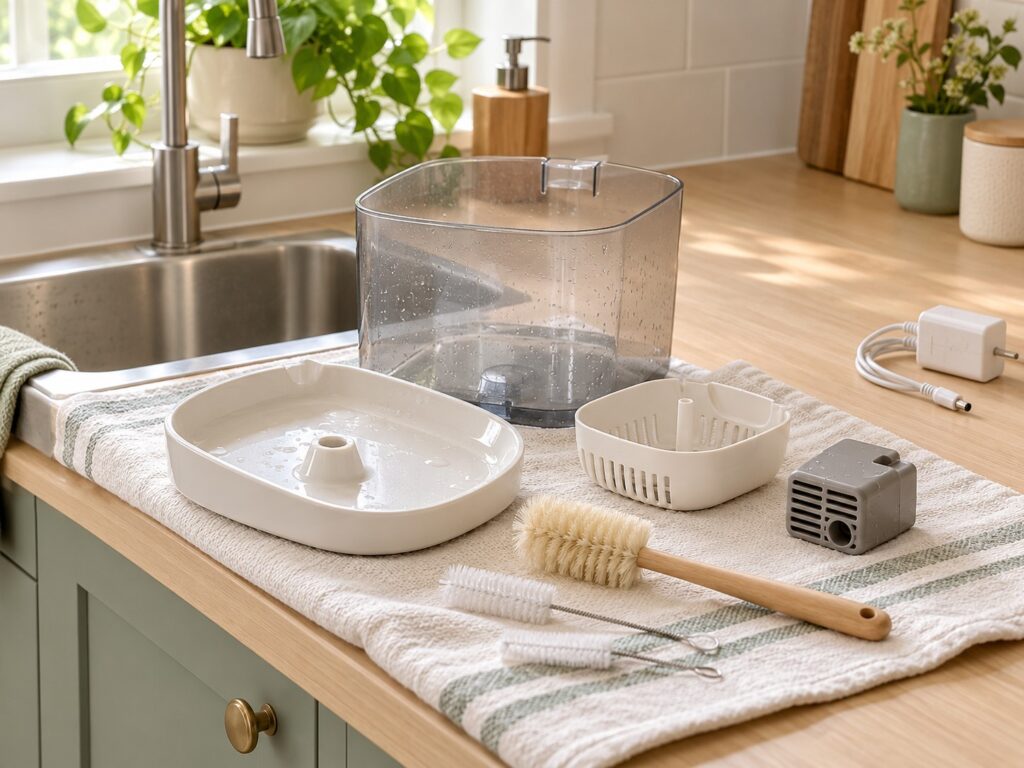
Moving water still needs maintenance.
A useful starting routine is a full clean once a week, with earlier cleaning when needed. In a warm home or a household with several pets, checking whether the fountain needs cleaning every three to four days can be helpful.
Always follow the model’s instructions for safe disassembly and compatible cleaning products. If you are comparing fountain designs, our guide on how to choose a cat water fountain explains what to consider before buying. You can also explore our best cat water fountains for fresh drinking water to compare options for your cat’s drinking setup.
2.1 Step-by-Step Cleaning
- Unplug the fountain and disconnect its power supply before taking it apart.
- Empty the reservoir and remove the tray, cover, filter holder, and other parts designated as removable.
- Set disposable filters aside according to the manufacturer’s instructions. Do not wash carbon filters with soap.
- Wash approved water-contact parts, reaching seams, corners, outlets, and narrow channels.
- Clean the pump intake and any user-serviceable pump components.
- Rinse thoroughly and reassemble correctly.
- Refill with fresh water before restarting. Check the water level, flow, and any connections for leaks.
Keep the adapter and non-washable electronics dry. A waterproof pump does not mean the entire fountain is washable.
2.2 Do Not Forget the Pump
Hair and debris may collect around the intake or impeller chamber.
Where the manual permits it, remove the pump cover and impeller for cleaning with an appropriately sized brush. Do not force open a sealed housing or remove parts that are not intended for user maintenance.
If you find green discoloration or unusual residue, clean the fountain promptly. Color alone cannot identify the organism or tell you whether it is harmful.
2.3 How Often Should You Replace the Filter?
Follow the instructions for your exact fountain.
For the Veken 108 oz / 3.2 L fountain featured above, the product listing recommends replacing the filter and pre-filter sponge every two weeks and cleaning the fountain and pump weekly.
Check the components sooner if several pets share the fountain or debris builds up. Do not wait for a reminder if the filter is visibly contaminated or water flow is reduced.
The FEELNEEDY fountain featured in this guide uses a different design with separate clean-water and wastewater tanks. It is designed to operate without disposable filters; that does not mean filters can be removed from a conventional recirculating fountain.
2.4 Can You Skip the Filter If You Use Purified Water?
Only if the manufacturer allows the fountain to operate that way.
Filters may catch hair and particles introduced after you fill the reservoir, and some are part of the equipment’s intended flow or pump-protection system.
If avoiding disposable filters is important to you, choose a fountain specifically designed for that purpose.
3. How to Clean a Fresh-Water and Wastewater-Separated Fountain
This section covers fountains that drain used water and refill the drinking tray from a separate clean-water supply. It does not describe a simple gravity-fed water bottle.
Automatic draining can reduce the amount of old tray water retained in the system, but it does not remove every deposit from surfaces.
3.1 Daily Checks
Check the drinking tray for food, hair, or residue. Inspect the clean-water supply and waste-water level, and empty the waste tank before it reaches its limit.
As a cautious home routine, wash an accessible drinking tray daily when the design allows. Empty and clean the waste tank sooner if it smells or develops residue.
Follow the manufacturer’s instructions if removing the tray requires a specific shutdown or drain sequence.
3.2 Cleaning the Tanks and Water Path
Before manual disassembly, disconnect power.
Remove and wash the components identified as washable, including accessible tank lids, seals, strainers, outlets, and drainage parts. Keep clean-water components separate from dirty wastewater while washing them.
Maintain inaccessible water paths only with the manufacturer’s approved procedure. Some devices have a powered cleaning cycle; use that function exactly as directed rather than improvising a chemical flush.
Check the tanks and accessible water path at least weekly as part of your routine, but do not treat that inspection interval as permission to leave visible contamination in place.
3.3 Removing Limescale
Limescale and biofilm are different problems.
If the manual permits white vinegar or citric acid, use the specified dilution and contact time for descaling. Rinse and flush the approved parts thoroughly afterward.
Do not assume that a descaling treatment disinfects the fountain. Never mix vinegar or citric acid with bleach.
4. How to Clean Pet Food Bowls
Food bowls collect both visible leftovers and less obvious food oils.
Remove uneaten food before washing. Soak stubborn residue briefly if the material allows, then clean the bowl’s interior, rim, exterior, and base. Rinse thoroughly.
For wet food, use a clean bowl for each meal. For dry food, wash at least daily; washing after each meal is a straightforward habit when feeding scheduled portions.
Avoid adding fresh food repeatedly over old crumbs. If you are choosing a new food bowl, start with our guide on how to choose the right cat bowl to compare materials, shapes, and feeding heights. For cats that scatter food or push bowls around, explore our best cat food bowls for messy eaters for options with practical features such as stable bases and feeding mats.
4.1 Slow Feeders and Lick Mats
Work a soft brush into grooves and around raised patterns. Check the underside and suction cups too.
Choose designs you can clean completely. If you are comparing different shapes, our best slow feeder bowls for cats guide includes options for different feeding routines.
4.2 Stands, Mats, and Scoops
Lift bowls out of stands and check underneath. Clean feeding mats when food or water collects on them, and allow the area beneath them to dry.
Wash food scoops regularly and keep them dry. Use a dedicated scoop rather than dipping a used serving bowl into stored food.
5. How to Clean an Automatic Cat Feeder
Separate the feeder into two maintenance areas: the serving bowl your cat eats from and the food-storage and dispensing system.
If you are choosing a feeder for scheduled meals, explore our best automatic cat feeders for busy cat parents. As you compare models, check how easily the serving bowl, hopper, and food outlet can be accessed for routine cleaning.
5.1 The Serving Bowl
Remove and wash the bowl daily for dry food, and after each use for wet food. Clean the bowl holder whenever residue collects.
A convenient schedule should not leave food-contact surfaces dirty between meals.
5.2 The Hopper and Dispensing System
- Disconnect external power and switch off battery power if applicable.
- Empty the hopper and remove desiccant packs before washing.
- Disassemble only the parts listed as removable in the manual.
- Clean approved washable parts and remove crumbs from the outlet and accessible dispensing mechanism.
- Wipe the motor base, sensors, and other non-washable components as instructed.
- Let every washed food-storage component dry completely.
- Reassemble, refill, and check that a test portion dispenses correctly.
Inspect the hopper and outlet weekly for food powder, oily residue, moisture, and stuck kibble. Deep-clean on the manufacturer’s schedule and sooner if buildup appears.
Avoid continuously topping up old food. Use refills as an opportunity to inspect the container, and retain the original packaging information, including the batch number and best-before date.
5.3 Desiccant Packs and Wet Food Feeders
Replace desiccant packs according to the model’s instructions. Do not wash disposable packs or leave them where your pet can chew them.
For a feeder designed for wet food, follow its refrigeration or cooling requirements and the food manufacturer’s storage instructions. A timer alone does not keep food at a safe temperature.
Discard questionable leftovers rather than returning them to the original food container.
Cleaning Products, Disinfection, and Washing Tools
For routine washing, use dish detergent suitable for food-contact utensils and rinse thoroughly. A lightly scented or fragrance-free option can make it easier to avoid a lingering smell.
A separate pet-bowl brush is a practical way to organize handwashing. Clean the brush itself and let it dry between uses.
Dishwasher-safe pet bowls can share a dishwasher load with household dishes. For disinfection, use an appropriate sanitizing or high-temperature cycle with heated drying, provided the item tolerates it.
Routine cleaning is usually sufficient for healthy pets. Illness or a medically vulnerable household may require additional disinfection advice.
If using a disinfectant, choose one suitable for the intended surface and follow its dilution, contact time, and food-contact rinsing instructions. Keep pets away during use.
What About Boiling Water or a Sterilizer Cabinet?
A brief pour of boiling water is not a dependable, universal disinfection method.
Check both the material and the product instructions. Sudden temperature changes can damage ceramic, and excessive heat can affect plastic parts or seals.
Use a sterilizer cabinet only when its instructions and the item’s care guidance support that use. Do not place electronic bases, pumps, or adapters inside unless explicitly permitted.
When Should You Replace a Bowl or Component?
Check for:
- Chips or cracks in ceramic.
- Rough, peeling, or damaged food-contact surfaces.
- Deep scratches that make cleaning difficult.
- Rust, sharp edges, or damaged seams.
- Split seals or tubing.
- Persistent residue in an area you cannot safely access.
Replace damaged parts rather than trying to hide the problem with more frequent rinsing.
Frequently Asked Questions
Is rinsing a pet bowl with water enough?
Rinsing can remove loose debris, but it may leave food oils and attached residue. Include detergent and physical cleaning in the routine.
Does a fountain filter sterilize water?
Do not assume it does. Ordinary pet fountain filters are not a substitute for washing the equipment and supplying safe drinking water.
Does a large reservoir mean I can leave the fountain alone for several days?
Reservoir capacity describes how much water it holds. You still need to check the water, tray, and operation regularly.
Do filterless fountains need maintenance?
Yes. Filterless designs still have water-contact surfaces, and some have other required components or replacement supplies.
Can I clean every fountain pump the same way?
No. Some pumps have a removable cover and impeller; others are sealed. Follow the instructions for the exact model.
How can I make daily cleaning easier?
Keep a spare bowl ready, store a dedicated brush nearby, and choose equipment with accessible parts. A simple routine is easier to maintain when washing does not require complicated disassembly.
Related HavenTails Guides
- Best Stainless Steel Cat Bowls
- Best Slow Feeder Bowls for Cats
- Best Cat Food Bowls for Messy Eaters
- Best Cat Water Fountains for Fresh Drinking Water
- Best Automatic Cat Feeders for Busy Cat Parents
- How to Choose a Cat Water Fountain
- How to Choose the Right Cat Bowl