Affiliate Disclosure: As an Amazon Associate, we earn from qualifying purchases. This post contains affiliate links, which means we may earn a small commission if you buy through our links, at no extra cost to you.
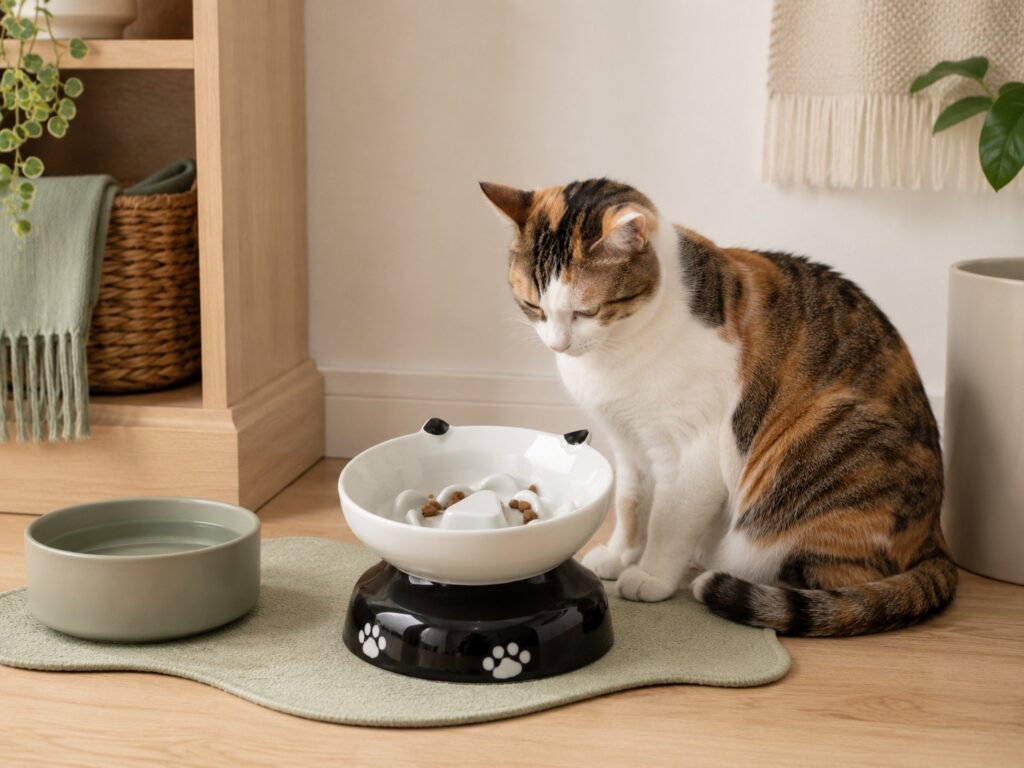
Some cats eat slowly. Others seem to inhale their food in seconds.
If your cat eats too fast, mealtime can become messy, stressful, or uncomfortable. Fast eating may lead to food scattered around the bowl, regurgitation soon after meals, begging for more food, or competition in multi-cat homes.
A slow feeder bowl can help turn meals into a calmer routine. Instead of giving your cat open access to a flat bowl of food, a slow feeder uses ridges, grooves, raised patterns, mats, or puzzle-style designs to make your cat work around the food more slowly.
The goal is not to frustrate your cat. The goal is to slow the pace, add gentle enrichment, and make meals feel more natural and engaging.
In this guide, we’ll compare the best slow feeder bowls for cats, including options for dry food, wet food, ceramic and stainless steel designs, elevated feeding, and lick mats.
Quick Picks
| Pick | Product | Type / Material | Best For |
|---|---|---|---|
| Best Overall | Outward Hound Fun Feeder Slo Bowl | Shallow plastic | Most fast eaters |
| Best Budget | Zonopy Slow Feeder | Silicone | Trying slow feeding |
| Best Dry Food | MateeyLife | Puzzle bowl | Fast kibble eaters |
| Best Wet Food | Bifeaw | Shallow silicone | Wet food |
| Best Ceramic | LE TAUCI | Ceramic | Stability |
| Best Stainless Steel | Novery | Stainless steel | Easy cleaning |
| Best Elevated | Y YHY | Elevated ceramic | Raised feeding |
| Best Lick Mat | ChefAide | Silicone mat | Wet food & toppers |
Best Overall Slow Feeder Bowl for Cats: Outward Hound Fun Feeder Slo Bowl
A good overall slow feeder bowl should be easy for your cat to use, simple to clean, stable on the floor, and effective enough to slow down fast eating without making mealtime frustrating.
For most cats, the best starting point is a shallow slow feeder bowl with low ridges or gentle grooves. Cats have sensitive whiskers, so a deep or narrow dog-style slow feeder may not be comfortable for every cat.
Best for:
Most cats that eat too fast and need a simple, shallow slow feeder bowl for daily meals.
Key Features:
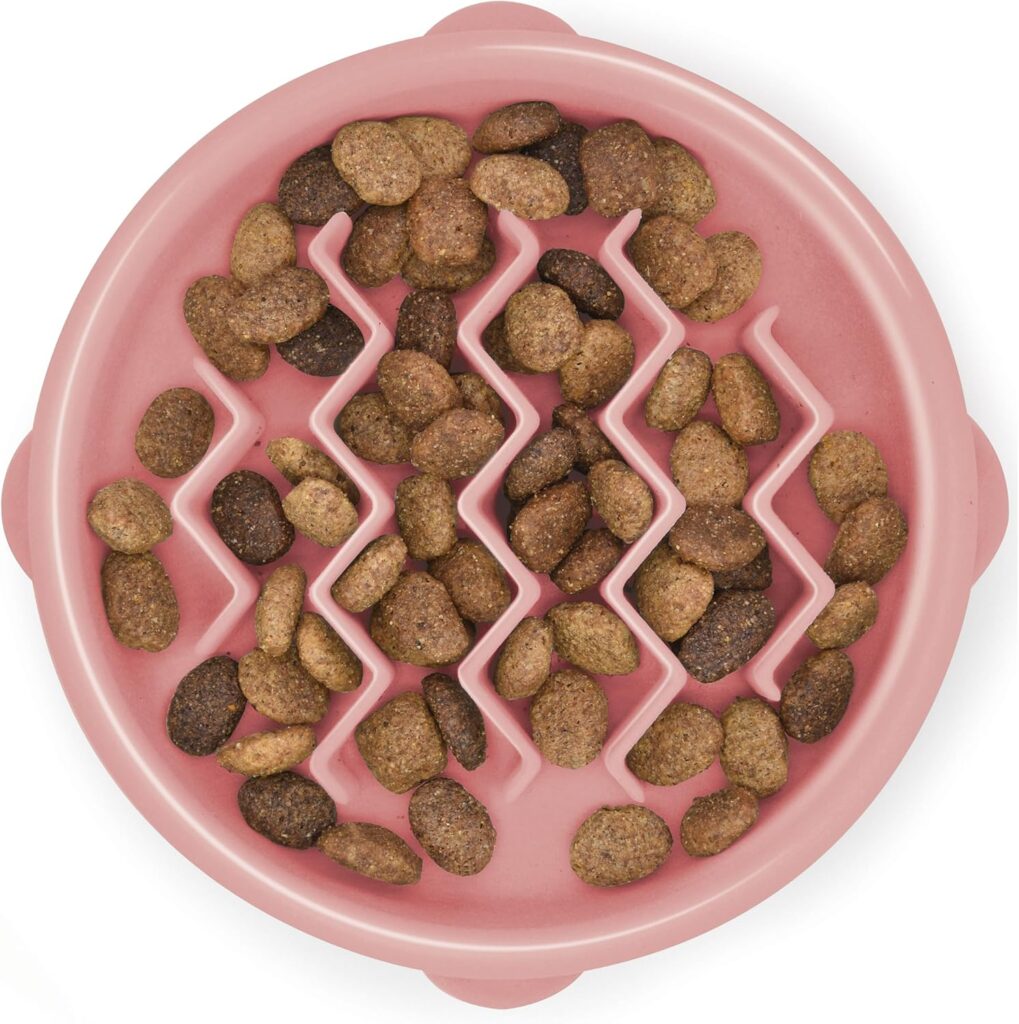
- Small 3/4-cup capacity
- Shallow slow feeder design
- Wave pattern
- Non-slip base
- Plastic material
- Works with dry or wet food
- Top-rack dishwasher-safe
- Made without BPA, PVC, lead, or phthalates according to the product page
- Designed for small dogs, puppies, and cats
Product Overview:
The Outward Hound Fun Feeder is a practical cat slow feeder bowl for fast eaters because its shallow 3/4-cup design is more manageable for cats than many deep dog-style slow feeders.
This bowl works well for cats that eat too quickly from a regular flat bowl. It can be used with dry or wet food, and the non-slip base helps keep the bowl steadier during meals.
Why It Fits This Pick:
This fits the overall category because it has a cat-friendly shallow shape, a manageable capacity, and a simple slow-feeding pattern. It is a good first slow feeder for most indoor cats.
Things to Consider:
It is still a plastic bowl, so check it regularly for scratches and replace it if the surface becomes damaged. For cats with very sensitive whiskers, start with a small amount of food and watch whether they eat comfortably.
Best Budget Slow Feeder Bowl: Zonopy Silicone Slow Feeder Bowl
A budget slow feeder bowl is a good choice if you are not sure whether your cat will accept slow feeding.
Not every cat likes puzzle-style feeding right away. Some cats need time to learn how to eat around ridges or patterns, so starting with a lower-cost option can make sense.
Best for:
Cat parents who want an affordable silicone slow feeder bowl to test whether their cat accepts slow feeding.
Key Features:
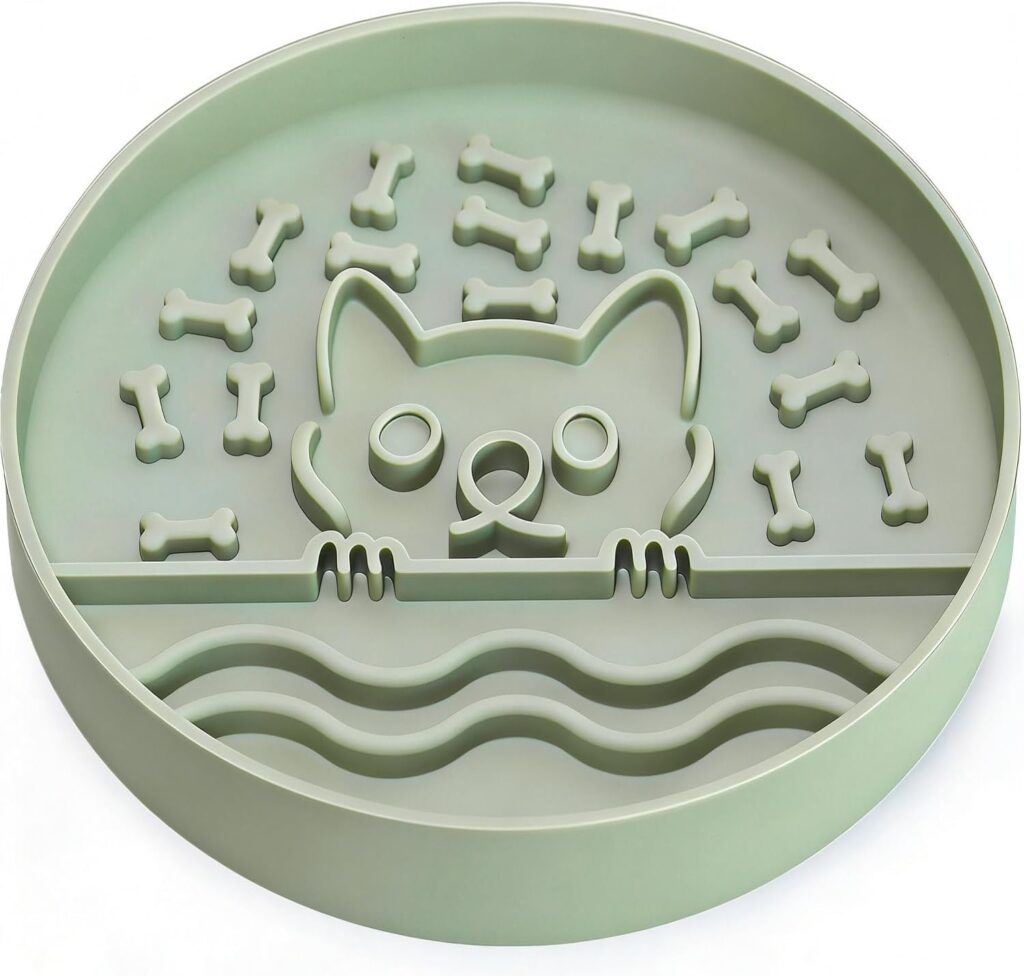
- 7.5-inch slow feeder bowl
- Silicone material
- Food-grade and BPA-free according to the product page
- 37 suction cups on the bottom
- Non-slip design
- Maze-style raised pattern
- Works with dry food, wet food, or raw-style meals
- Dishwasher-safe, top rack
- Shallow 7.5 × 7.5 × 1.2 inch size
Product Overview:
The Zonopy Silicone Slow Feeder Bowl is a practical budget-style option because it gives you a soft silicone design, suction-cup base, and shallow feeding surface in one product. The 37 suction cups help keep the bowl from sliding around, which is useful for cats that push their bowl while eating.
Because it can be used with kibble or wet food, it is a flexible starter option if you are still testing what kind of slow feeding your cat prefers.
Why It Fits This Pick:
This fits the budget category because it gives cat parents a simple way to try slow feeding before moving to a heavier ceramic or stainless steel bowl.
Things to Consider:
Silicone can be chewed by some pets. Supervise your cat at first and replace the bowl if it becomes damaged.
Best Slow Feeder Bowl for Dry Food: MateeyLife Small Slow Feeder Cat Bowls
Dry food is one of the easiest food types to use in a slow feeder bowl. Kibble can be spread between ridges, grooves, or puzzle sections to make your cat eat more slowly.
A slow feeder bowl for dry cat food works best when the ridges separate kibble without making individual pieces too difficult to reach.
Best for:
Cats that eat kibble too quickly and need a dry-food-friendly puzzle bowl.
Key Features:
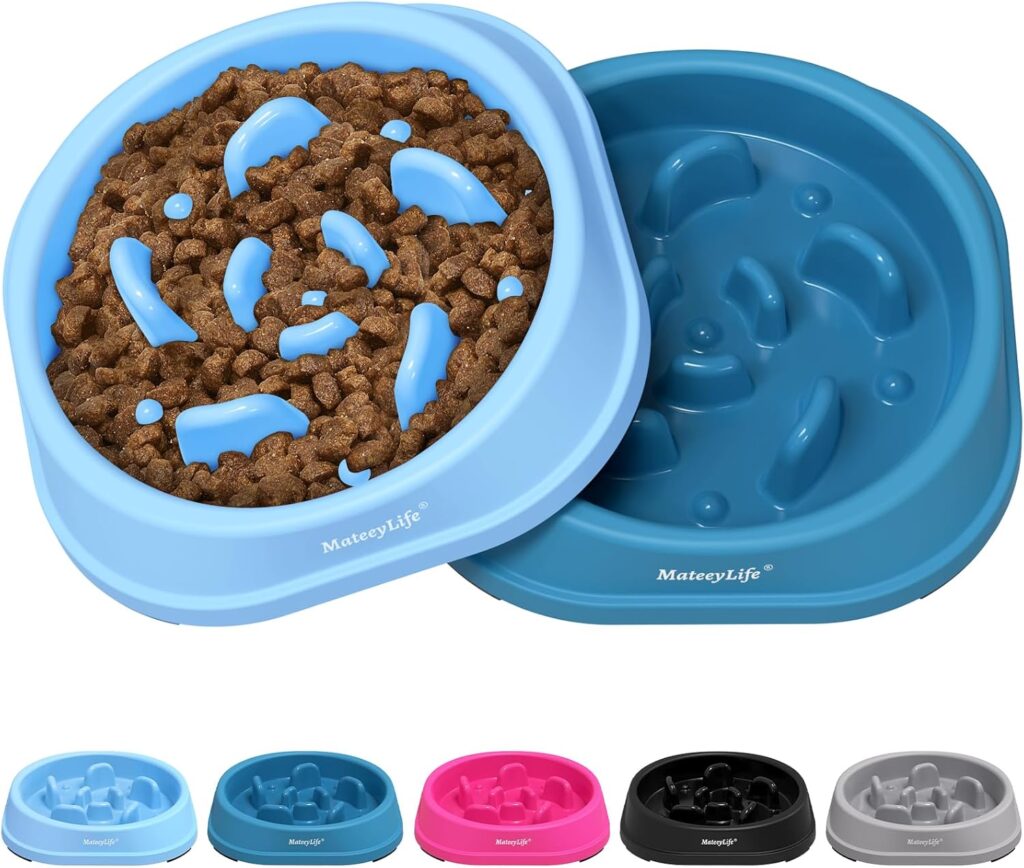
- 2-piece slow feeder bowl set
- 1-cup capacity
- Puzzle maze design
- Low raised ridges
- Wide gaps for small pets
- Non-slip base
- Made with polypropylene material
- Top-rack dishwasher-safe
- Designed for small pets
- Works with dry, wet, or raw-style food according to the product page
Product Overview:
The MateeyLife Small Slow Feeder Cat Bowls are a good dry food pick because the maze-style design can spread kibble across different ridges and channels. This makes it harder for fast eaters to gulp large mouthfuls at once.
The 2-pack format is also useful if you want one bowl in use and one clean bowl ready, or if you have more than one cat eating separately.
Why It Fits This Pick:
This fits the dry food category because kibble works well with a maze-style slow feeder. The bowl gives dry food enough separation to slow eating without requiring a complicated puzzle.
Things to Consider:
Although the product page says it can work with wet food too, this style is more convenient for dry food because wet food can get stuck in maze grooves and require more careful cleaning.
Best Slow Feeder Bowl for Wet Food: Bifeaw Silicone Slow Feeder Cat Bowl
Wet food needs a different kind of slow feeder. For cats that gulp pâté or mousse, a slow feeder bowl for wet cat food should usually have shallow grooves rather than deep maze-style channels.
This helps spread wet food out so your cat licks it more slowly.
Best for:
Cats that eat wet food too quickly and need a shallow, flexible, easy-clean feeding surface.
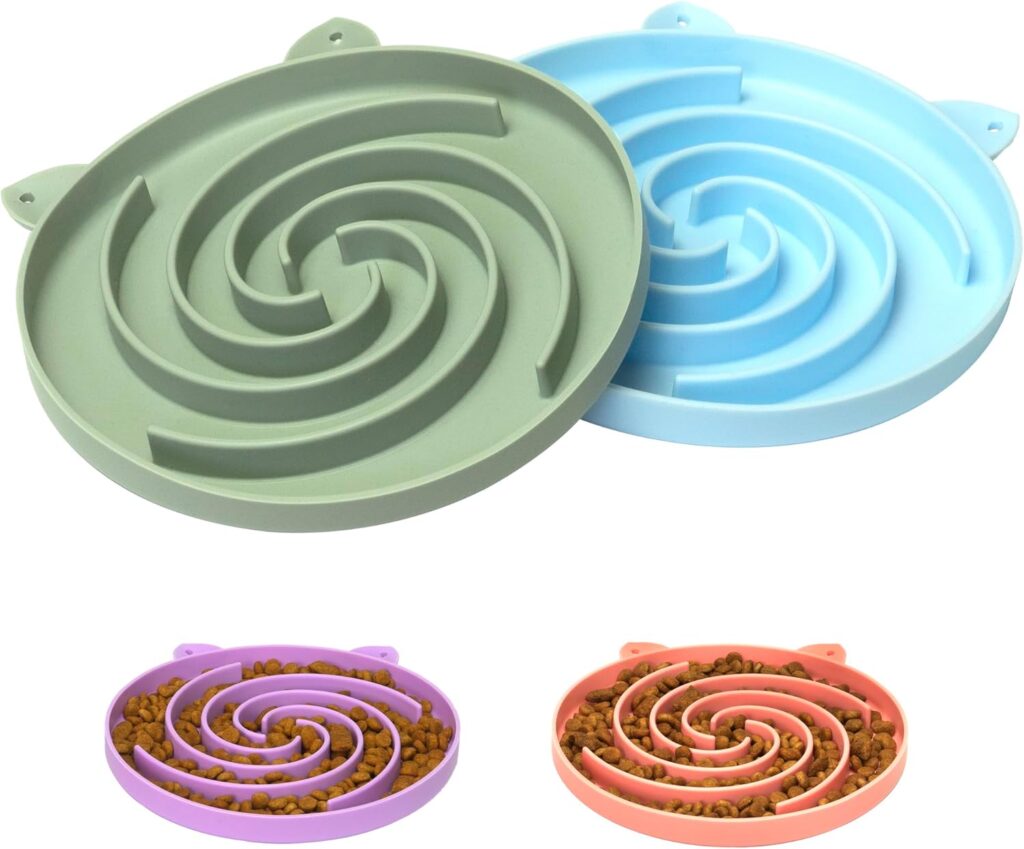
Key Features:
- Silicone slow feeder cat bowl
- Spiral pattern
- Green and blue color option
- Made for cats
- Works with dry food and wet food
- Non-slip base
- Plastic-free, BPA-free, and phthalate-free according to the product page
- Refrigerator-safe and microwave-safe according to the product page
- Designed to be easy to clean
Product Overview:
The Bifeaw Slow Feeder Cat Bowl is a better fit for wet food because it uses a shallow silicone design with a spiral pattern. Wet food can be spread across the curved channels so your cat licks and works around the pattern instead of gulping from one open bowl.
This style is also softer and more flexible than a hard maze bowl, which can make it easier to rinse after wet meals.
Why It Fits This Pick:
This fits the wet food category because it is specifically positioned for both dry and wet food, and the shallow silicone pattern is easier to use with pâté, mousse, or soft food than deeper plastic maze bowls.
Things to Consider:
Wet food should be cleaned out after every meal. Check the grooves carefully so no food residue stays trapped.
Best Ceramic Slow Feeder Bowl: LE TAUCI Ceramic Slow Feeder Bowl
A ceramic slow feeder bowl can be a good option for cat parents who want something heavier, stable, and more home-friendly.
A ceramic slow feeder bowl for cats can be useful when stability is a priority because the heavier material is less likely to slide during meals.
Best for:
Cat parents who want a heavier, more stable slow feeder bowl with a home-friendly ceramic look.
Key Features:
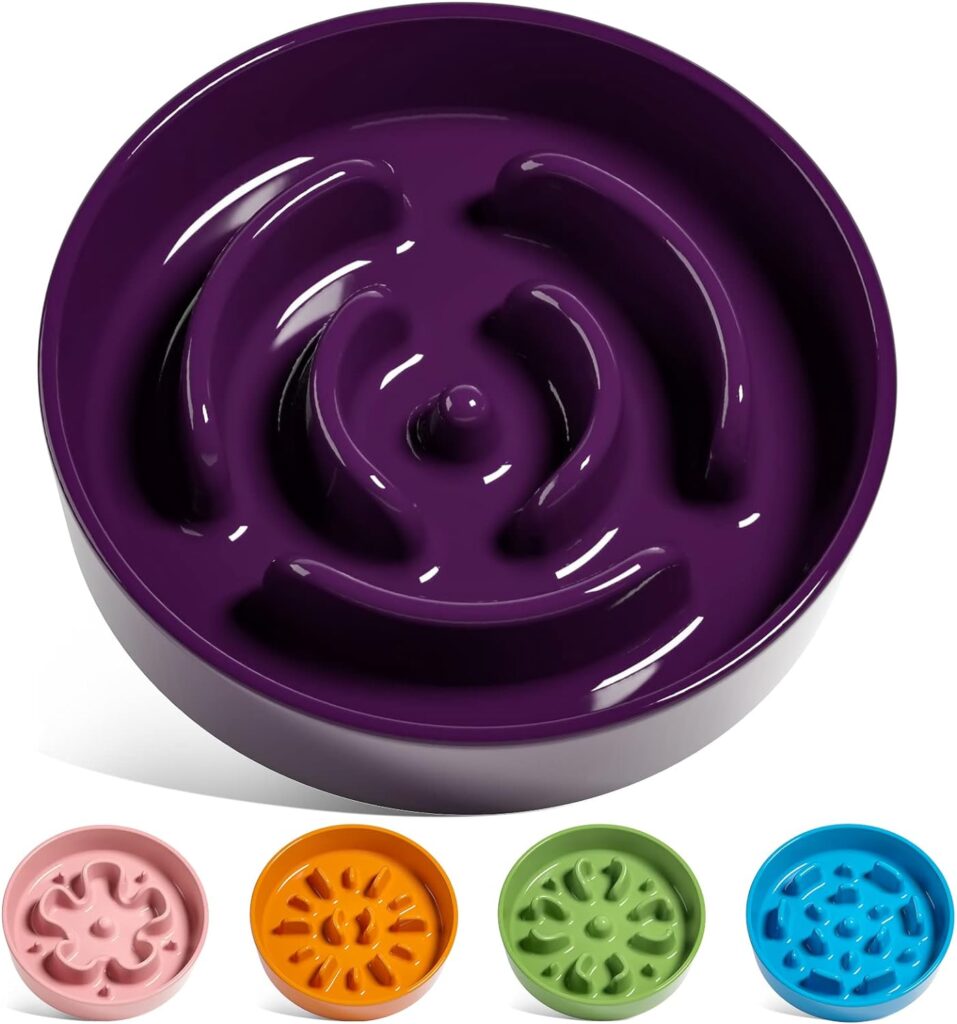
- Ceramic slow feeder bowl
- 0.6-cup capacity
- Maze-style puzzle design
- Made for small dogs and cats
- Heavy, stable bowl body
- Non-slip base
- Smooth surface for easier cleaning
- Dishwasher-safe according to product page
- Microwave-safe according to product page
- Purple color option
Product Overview:
The LE TAUCI Ceramic Slow Feeder Bowl is a good ceramic option because it is heavier and more stable than many lightweight plastic bowls. The product page lists a 0.6-cup capacity, which makes it better suited for small pets and controlled portions.
The ceramic surface also fits better visually in a cozy home feeding corner, especially if you want something that feels more like a real dish than a plastic puzzle bowl.
Why It Fits This Pick:
This fits the ceramic category because it combines slow-feeding function with a heavier, more home-friendly material. It is a good option for cats that push lighter bowls around.
Things to Consider:
The product is also marketed for small dogs, so check whether the ridge height feels comfortable for your cat. Replace ceramic bowls if they chip or crack.
Best Stainless Steel Slow Feeder Bowl: Novery Stainless Steel Slow Feeder Bowl
A stainless steel slow feeder bowl for cats is worth considering if you prefer a durable, easy-to-wash alternative to plastic.
For slow feeding, a stainless steel bowl can be a good choice if the design is still cat-friendly and not too deep.
Best for:
Cat parents who want a durable, easy-clean, non-plastic slow feeder bowl.
Key Features:
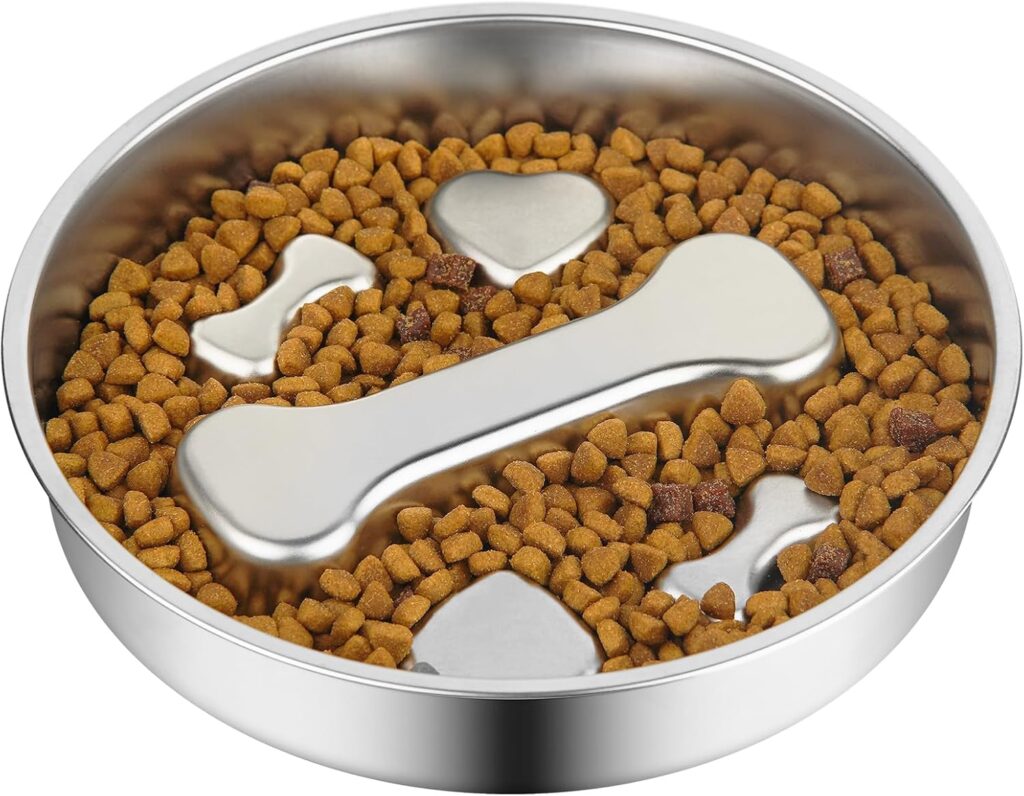
- Stainless steel slow feeder bowl
- 2-cup capacity
- Raised bone-shaped ridge
- Metal non-slip lick plate style
- Works with dry food and wet food
- Rust-resistant stainless steel surface
- Easy to clean
- Designed for dogs, cats, and puppies
- Suitable for indoor use and multiple pets according to the product page
Product Overview:
The Novery Stainless Steel Slow Feeder Bowl is a good choice for cat parents who want to avoid plastic and prefer a more durable material. Stainless steel is practical for daily feeding because it is easy to wash and less likely to hold odor than some plastic bowls. If you prefer this material for everyday feeding, compare our best stainless steel cat bowls for more shallow and easy-clean options.
The raised center design slows eating without creating lots of tiny grooves, which can make cleanup easier than more complicated maze bowls.
Why It Fits This Pick:
This fits the stainless steel category because the main advantage is material: durable, smooth, rust-resistant, and easier to maintain for regular feeding.
Things to Consider:
The 2-cup capacity may be more than many cats need for one meal. Use smaller portions and check whether the bowl size feels comfortable for your cat.
Best Elevated Slow Feeder Bowl: Y YHY Ceramic Cat Slow Feeder
An elevated slow feeder bowl for cats combines a raised eating position with a patterned surface designed to slow the pace of meals. Some cats may prefer eating from a slightly raised bowl, especially if they dislike bending too far down or if the feeding area feels more comfortable at a higher level.
Best for:
Cats that prefer a raised feeding position and need a slower eating surface for dry or wet food.
Key Features:
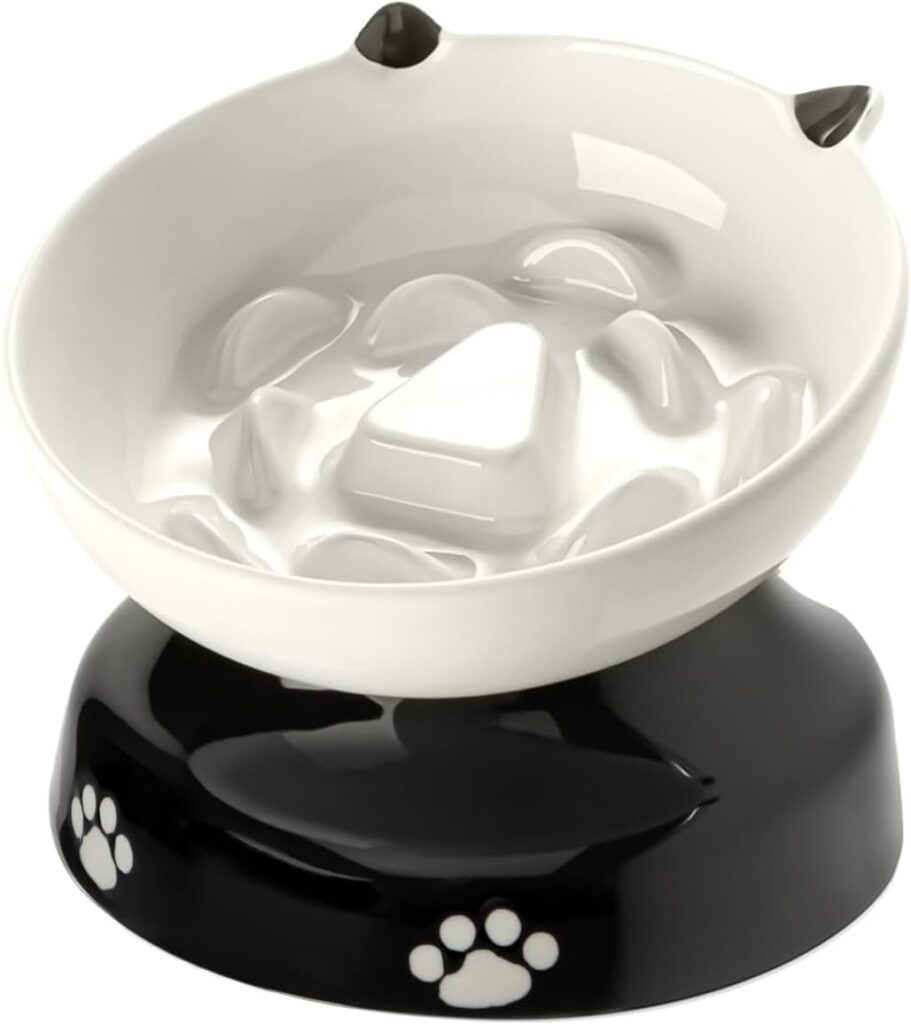
- Ceramic elevated cat slow feeder
- Tilted design
- Cat-shaped bowl design
- Raised flower column pattern
- Works with dry and wet food
- Anti-vomiting positioning claim on product page
- 1-pound ceramic weight
- Designed to reduce sliding and tipping
- Made for cats
- Suitable for multiple pets according to product page
Product Overview:
The Y YHY Ceramic Cat Slow Feeder is a strong elevated pick because it is specifically designed for cats, not just small dogs. The raised and tilted design may feel more comfortable for cats that already prefer elevated bowls, while the flower-column surface helps spread food out and slow the eating pace.
This is also one of the better-looking options for a home feeding corner because the ceramic cat-shaped design feels more intentional than a standard plastic slow feeder.
Why It Fits This Pick:
This fits the elevated category because it combines three useful features: raised height, tilted feeding angle, and a slow feeder pattern. It works especially well for readers looking for a cleaner, more cat-specific feeding station.
Things to Consider:
Do not choose elevated bowls only because they look nice. Watch whether your cat eats comfortably from the height and angle.
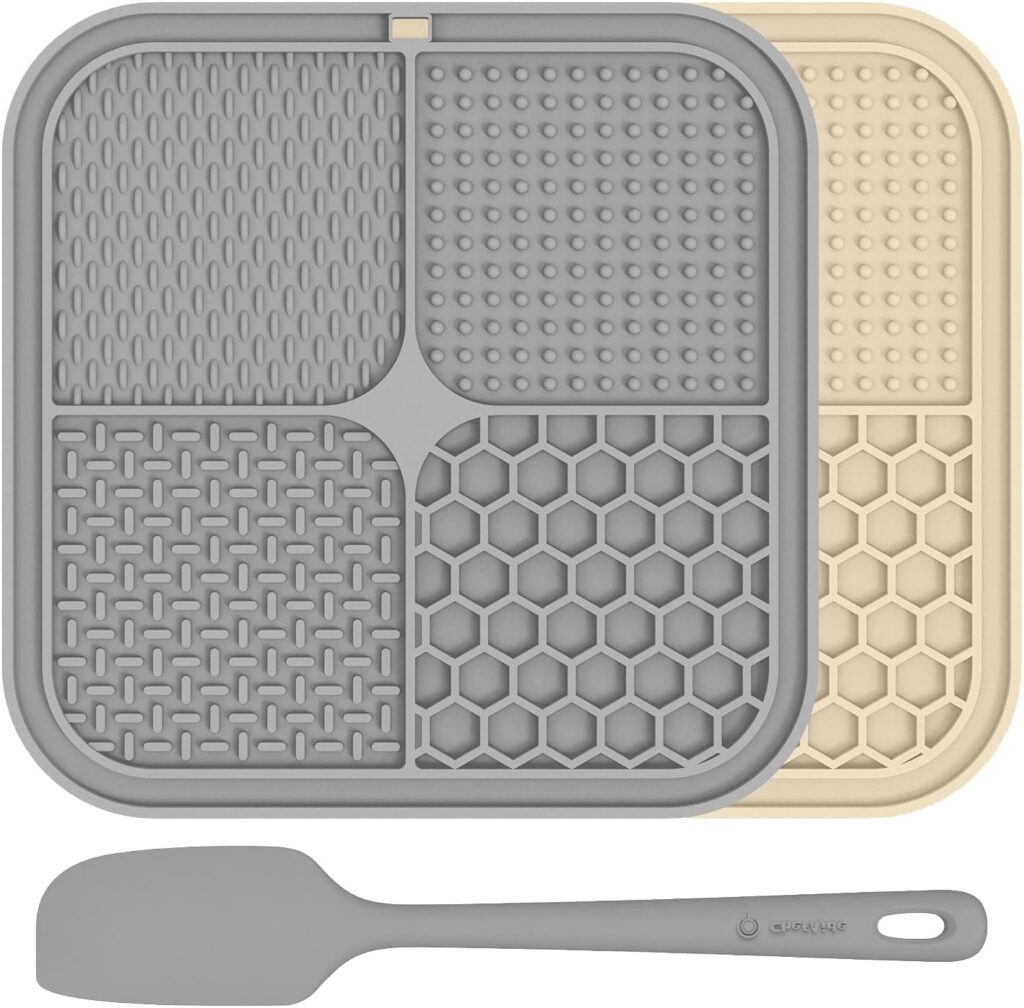
Best Lick Mat for Slow Feeding: ChefAide 2 Pack Lick Mat
A lick mat for cats can work especially well with wet food, mousse, soft toppers, and lickable treats. It spreads food across a textured surface, encouraging your cat to lick slowly instead of gulping.
Best for:
Wet food, lickable treats, toppers, and cats that need gentle feeding enrichment.
Key Features:
- 2-pack lick mat set
- 8.5 × 8.5 inch size
- Silicone material
- BPA-free and non-toxic according to the product page
- 4 textured surface designs
- 49 suction cups on the back
- Dishwasher-safe
- Freezer-safe and microwave-safe according to product page
- Designed for spreadable treats and soft foods
- Works for dogs and cats
Product Overview:
The ChefAide Lick Mat is not a bowl, but it is one of the most useful slow-feeding tools for wet food. You can spread wet food, mousse, puree, or a lickable treat across the textured surface so your cat has to lick slowly instead of gulping.
The suction cups help keep the mat steady on smooth surfaces, and the 2-pack format makes it practical for rotation and cleaning.
Why It Fits This Pick:
This fits the lick mat category because it is better for wet food and soft treats than most deep slow feeder bowls. It also adds enrichment without making the meal feel too difficult.
Things to Consider:
Some cats may chew silicone mats. Supervise the first few uses and clean the mat after every wet food session.
Why Use a Slow Feeder Bowl for Cats?
A slow feeder bowl can help with more than just eating speed.
It may support:
- Slower meals
- Less food gulping
- More mental stimulation
- Better portion awareness
- Reduced boredom
- A calmer feeding routine
- More natural hunting-style engagement
- Less food scatter for some cats
For indoor cats, mealtime can also be a chance for enrichment. A slow feeder bowl gives your cat a small challenge instead of a simple open bowl. If food scatter and spills are a bigger problem than eating speed, our guide to cat food bowls for messy eaters compares shallow, stable, and easy-to-clean options for tidier meals.
Signs Your Cat May Benefit From a Slow Feeder
A slow feeder may be helpful if your cat:
- Finishes meals extremely quickly
- Regurgitates soon after eating
- Pushes food out of the bowl
- Begs immediately after meals
- Eats too fast in multi-cat homes
- Acts bored between meals
- Needs more enrichment
- Eats dry food too quickly
- Gulps wet food in large bites
However, if your cat vomits often, loses weight, refuses food, or suddenly changes eating habits, talk to your veterinarian. A slow feeder is not a substitute for medical care.
How to Choose a Slow Feeder Bowl for Your Cat
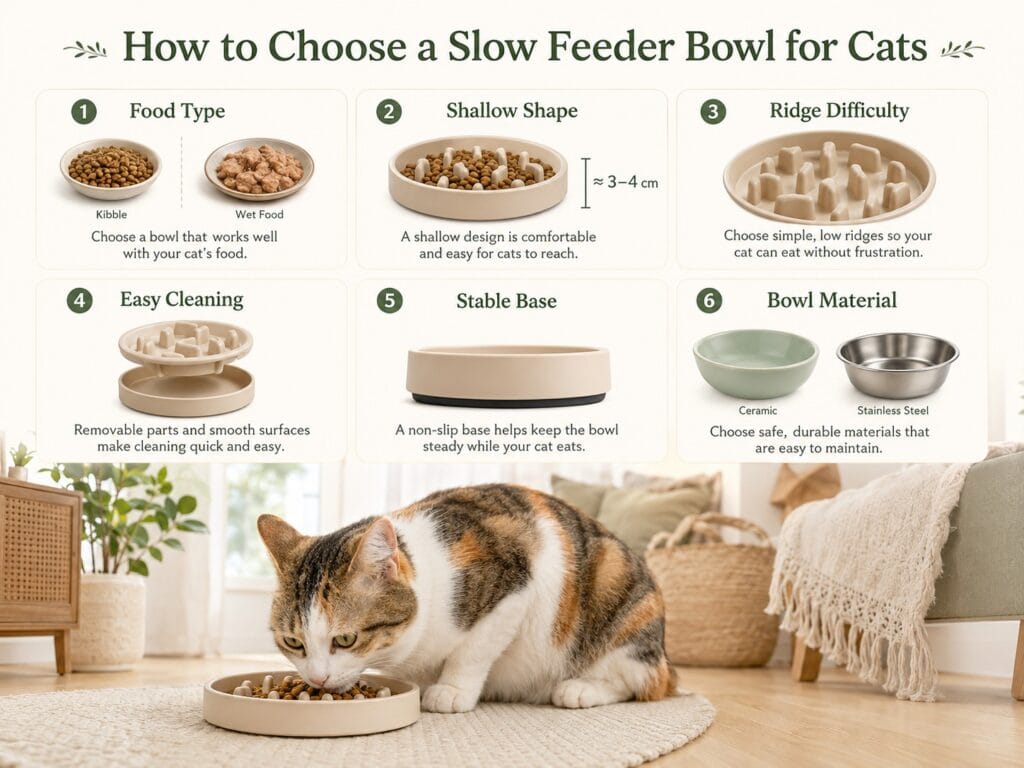
1. Match the Bowl to the Food Type
Dry food works well with ridge-style bowls and puzzle bowls. Wet food works better with shallow grooves, lick mats, or textured plates.
Do not use a dry-food puzzle bowl for wet food if it is hard to clean.
2. Choose a Cat-Friendly Shape
Cats usually prefer shallow, wide feeding surfaces. Very deep bowls can press against whiskers or make eating uncomfortable.
Look for a design that lets your cat reach the food without struggling. If you are also comparing bowl width, material, and feeding height, our guide on how to choose the right cat bowl explains the basics in more detail.
3. Make Cleaning Easy
Slow feeder bowls have more ridges and grooves than regular bowls, so cleaning matters.
Choose a bowl that is:
- Dishwasher-safe if possible
- Easy to rinse
- Smooth enough to clean fully
- Not full of tiny unreachable corners
For wet food, cleaning is especially important.
4. Use a Stable Base
A slow feeder should not slide around the floor while your cat eats.
Look for:
- Non-slip feet
- Silicone base
- Heavy ceramic design
- Wide bottom
- Feeding mat underneath
5. Start With an Easy Pattern
Some slow feeders are too difficult for cats. Start with low ridges or simple grooves before trying a more complicated puzzle pattern.
Your cat should slow down, not give up.
6. Consider Material
Common slow feeder materials include:
Plastic:
Affordable and lightweight, but may scratch over time.
Silicone:
Good for lick mats and wet food, but should be monitored if your cat chews.
Ceramic:
Heavy, stylish, and stable, but can chip if dropped.
Stainless steel:
Durable and easy to clean, but make sure the design is shallow enough for cats.
How to Introduce a Slow Feeder Bowl
Do not switch suddenly if your cat is sensitive about food.
Try this:
- Put a small amount of food in the slow feeder.
- Keep the old bowl nearby at first if needed.
- Use an easy pattern.
- Let your cat explore without pressure.
- Praise calm eating.
- Increase use gradually.
- Watch for frustration.
If your cat refuses the bowl, try an easier design or use it only for part of the meal.
Slow Feeder vs Puzzle Feeder vs Lick Mat
These tools are similar but not exactly the same.
Slow feeder bowl:
Designed to slow eating during regular meals.
Puzzle feeder:
Usually more challenging and enrichment-focused.
Lick mat:
Best for wet food, soft treats, and calming licking activity.
For fast eaters, a slow feeder bowl is usually the easiest starting point. For bored indoor cats, a puzzle feeder or lick mat can add more enrichment.
Common Mistakes to Avoid
Avoid these slow feeder mistakes:
- Choosing a dog bowl that is too deep for a cat
- Using a pattern that is too difficult
- Not cleaning grooves properly
- Using wet food in a hard-to-clean bowl
- Ignoring whisker comfort
- Letting the bowl slide around
- Switching too suddenly
- Forcing a nervous cat
- Using slow feeders to replace vet care
- Assuming one bowl fits every cat
A good slow feeder should make meals calmer, not more stressful.
Simple Slow Feeding Routine
For an easy routine:
Morning:
Use a slow feeder bowl for dry food or a small portion of breakfast.
Evening:
Use a lick mat for wet food or a soft topper.
Multi-cat homes:
Feed cats separately so one cat does not steal from another.
Fast eaters:
Split meals into smaller portions if needed. If smaller scheduled meals work better for your cat, our automatic cat feeders guide includes portion-control options that can help spread meals throughout the day.
Sensitive cats:
Start with a shallow, easy pattern.
Final Thoughts
A slow feeder bowl can be a simple way to make mealtime calmer and more enriching for indoor cats.
The best option depends on your cat’s food type and personality. Dry food eaters may do well with a ridge-style slow feeder bowl. Wet food eaters may prefer a lick mat or shallow textured plate. Cats that need a cleaner setup may benefit from ceramic, stainless steel, or elevated designs.
Start with an easy pattern, keep the bowl clean, and watch your cat’s comfort. A good slow feeder should help your cat slow down without making food feel stressful.
If your cat vomits frequently, loses weight, refuses food, or suddenly changes eating habits, ask your veterinarian before assuming the problem is only fast eating.
Related HavenTails Guides
How to Choose the Right Cat Bowl
Learn how to choose a cat bowl based on material, shape, height, and comfort.
Best Cat Food Bowls for Messy Eaters
Compare bowl styles for cats that spill food, push bowls, or make messy feeding corners.
Find feeding tools for scheduled meals, portion control, and busy cat parents.
Best Stainless Steel Cat Bowls
Compare durable, easy-to-clean stainless steel bowls for everyday feeding, including shallow and non-slip options.
How to Calm an Anxious Cat at Home
Create a calmer home routine for cats that eat quickly because of stress or competition.
FAQs
Are slow feeder bowls good for cats?
Slow feeder bowls can be helpful for cats that eat too quickly. They may slow meals down, add enrichment, and make feeding more engaging.
Can slow feeder bowls help with vomiting?
A slow feeder may help some cats that regurgitate from eating too fast, but frequent vomiting should be checked by a veterinarian.
What type of slow feeder is best for wet cat food?
For wet food, a shallow slow feeder plate or lick mat is usually better than a deep puzzle bowl because it is easier to spread food and clean.
Can kittens use slow feeder bowls?
Some kittens can use simple slow feeders, but the design should be shallow and easy. Do not make mealtime too difficult for a growing kitten.
Are dog slow feeder bowls okay for cats?
Some dog slow feeders are too deep or difficult for cats. Choose a cat-friendly shallow design whenever possible.
How do I clean a slow feeder bowl?
Wash it after meals, especially if using wet food. Check grooves and ridges carefully so food does not get trapped.