Affiliate Disclosure: As an Amazon Associate, we earn from qualifying purchases. This post contains affiliate links, which means we may earn a small commission if you buy through our links, at no extra cost to you.
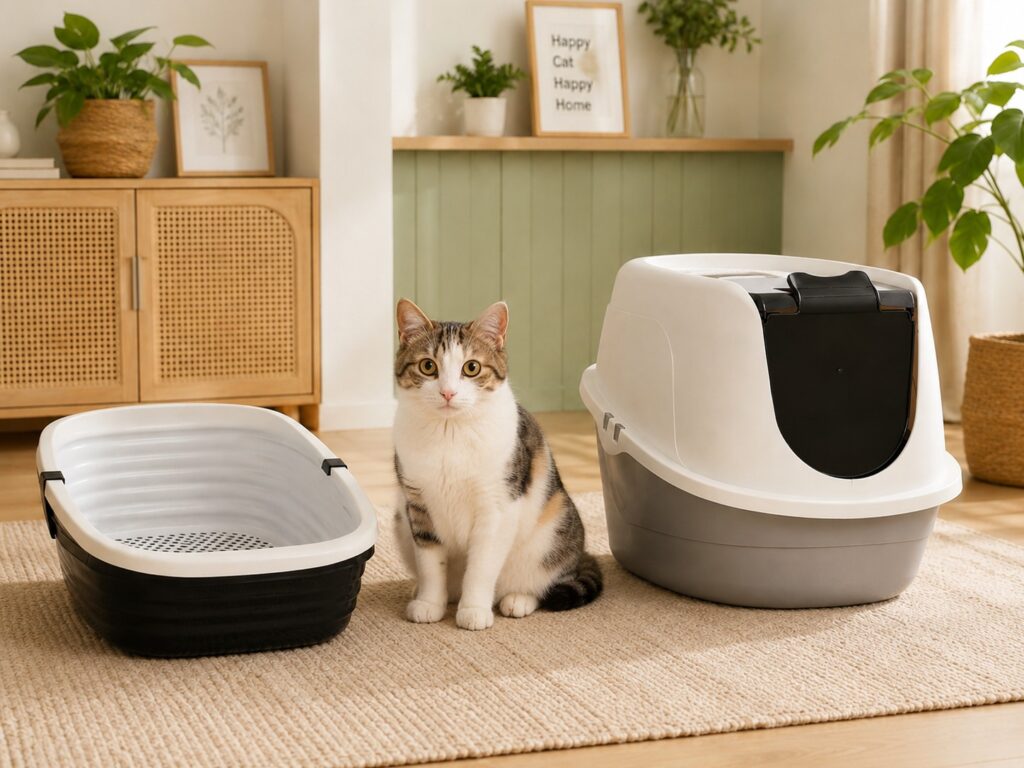
Choosing between a covered litter box and an open litter box sounds simple, but it can make a big difference in your cat’s daily routine.
Some cat parents prefer covered litter boxes because they look cleaner, hide litter mess, and help keep the litter area more private. Other cat parents prefer open litter boxes because they are easier for cats to enter, easier to clean, and usually offer better airflow.
The truth is that neither option is perfect for every cat.
The best litter box is the one your cat uses consistently, comfortably, and without stress. If you are still comparing basic litter box features like size, entry height, and cleaning style, you may also want to read our guide on how to choose the right litter box for your cat.
In this guide, we’ll compare covered vs open litter boxes, the pros and cons of each style, and how to choose the right option for your cat, your home, and your cleaning routine.
Quick Answer: Covered or Open Litter Box?
If your cat is nervous, older, large, newly adopted, or picky about litter box access, an open litter box is usually the safer starting choice.
If your cat already uses a covered box comfortably and you need better privacy, less visible mess, or a more home-friendly setup, a covered litter box can work well.
For many homes, the best solution is not about choosing the prettiest box. It is about matching the litter box to your cat’s comfort. For small homes where the litter box also needs to fit the room, our guide to best cat litter boxes for small apartments can help you compare more space-friendly options.
What Is an Open Litter Box?
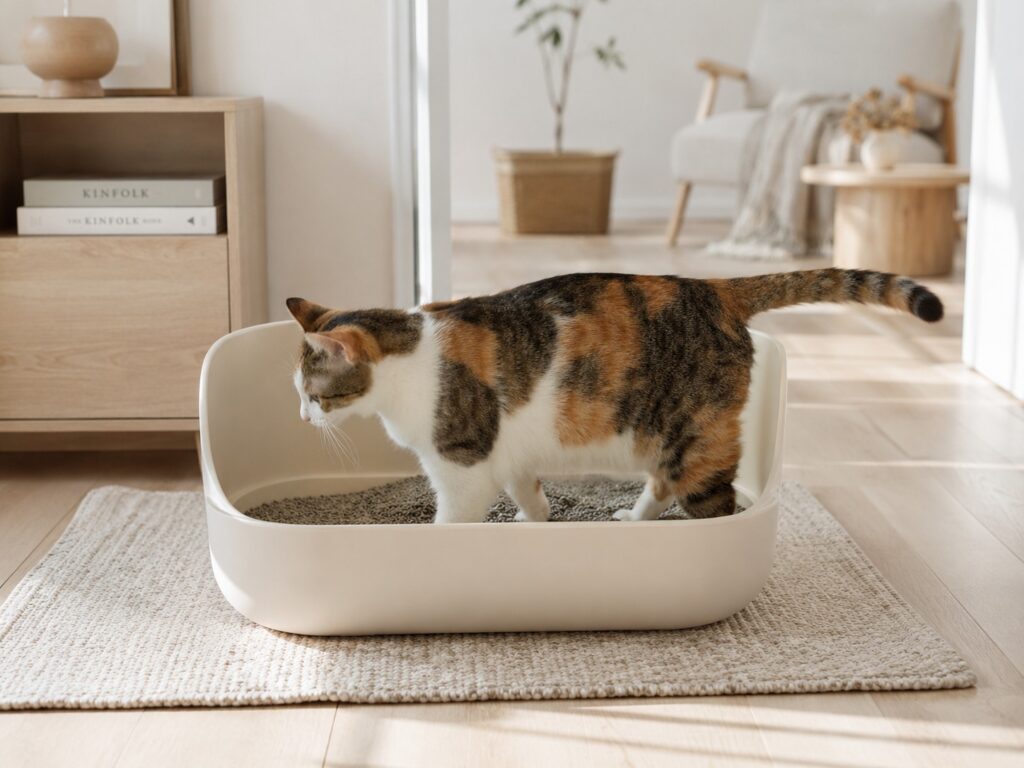
An open litter box is a basic litter pan without a lid or enclosed top. It may have low sides, high sides, or an open-top design.
Open litter boxes are usually simple, easy to clean, and easy for cats to enter and exit.
They are one of the most cat-friendly choices because your cat can see around the room, step in easily, and leave quickly if they feel uncomfortable.
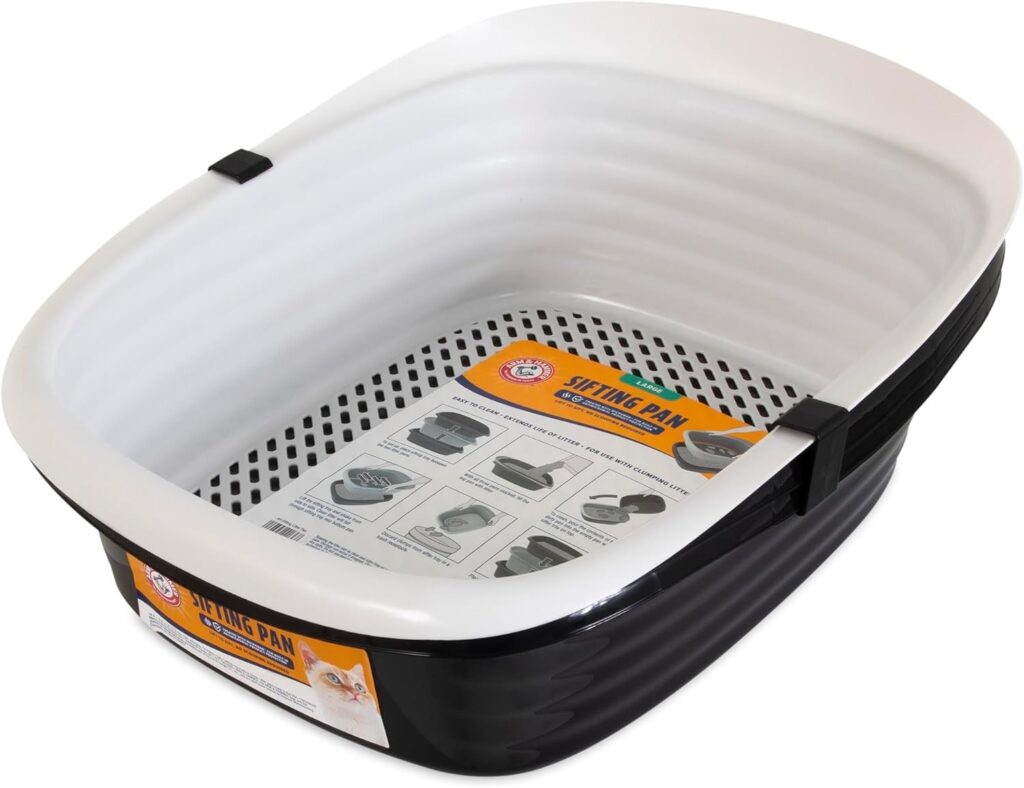
Example pick:Arm & Hammer Large Sifting Litter Box
Why We Like It:
The Arm & Hammer Large Sifting Litter Box is a practical overall pick because it keeps the setup simple while making litter maintenance easier. Instead of scooping through the litter every time, the sifting tray helps separate clean litter from waste, which can be helpful for apartment cat parents who want a quicker daily routine.
We also like that it has a straightforward open design. In a small apartment, simple often works better than bulky or complicated. It is easier to place, easier to empty, and easier to understand for cats who may not like enclosed boxes.
1. Easier for Cats to Enter and Exit
Open litter boxes are usually easier for cats to use because there is no lid, door flap, or narrow entrance.
This is especially helpful for:
- Kittens
- Senior cats
- Large cats
- Cats with mobility issues
- Nervous cats
- Newly adopted cats
- Cats that dislike enclosed spaces
If your cat is still building confidence at home, an open box may feel safer and less restrictive.
2. Better Airflow
Open litter boxes usually have better ventilation than covered boxes.
This can help reduce trapped odors inside the box. While covered boxes may hide smells from people for a while, odors can stay concentrated inside the box where your cat has to enter.
For sensitive cats, better airflow can make the litter box more comfortable.
3. Easier to Clean
Open boxes are usually easier to scoop because you can see the litter surface right away.
You do not need to remove a lid, unlock clips, or open a door to check the box. This makes daily cleaning simpler and faster.
A litter box that is easy to clean is more likely to stay clean. For a simple cleaning routine, see our guide on how to clean a cat litter box.
4. Easier to Monitor Your Cat’s Habits
Open boxes make it easier to notice changes in your cat’s litter box behavior.
You can more easily see:
- How often your cat uses the box
- Whether they are straining
- Whether clumps look different
- Whether they are avoiding the box
- Whether litter tracking is increasing
- Whether the box needs cleaning
This can be helpful because changes in litter box habits may be one of the first signs that something is wrong.
5. Less Trapped Heat and Odor
Some covered boxes can feel stuffy, especially if they are small or not cleaned often enough.
An open box avoids that enclosed feeling. For cats that are sensitive to smell, this can make the box more appealing.
Cons of Open Litter Boxes
1. More Visible Mess
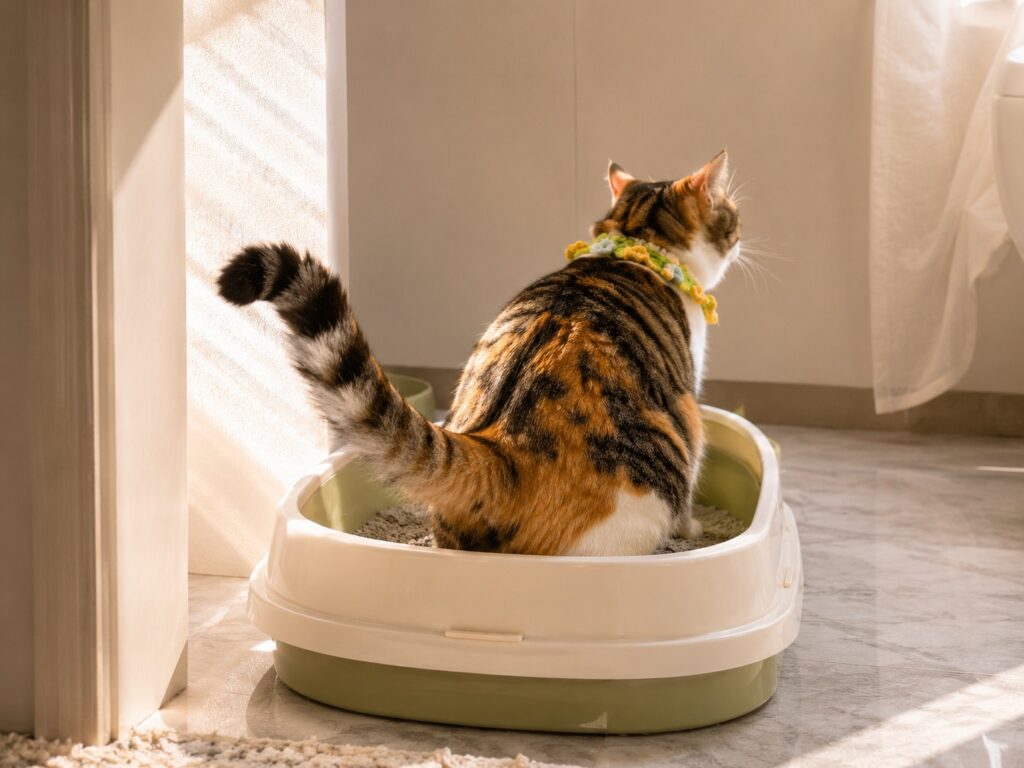
Open litter boxes do not hide the litter area. If the box is in a bathroom, laundry room, or small apartment corner, it may look messier than a covered box.
You may see:
- Scattered litter
- Clumps before scooping
- Litter dust
- Scratched-up litter
- Liner edges
- Box stains over time
For cat parents who care about home design, this can be a downside. Regardless of whether you choose a covered or open box, using a low-tracking cat litter can help reduce litter scatter around the setup.
2. Less Privacy
Some cats do not care about privacy. Others prefer a quieter, more protected space.
An open box may feel too exposed if it is placed in a busy hallway, near a door, or beside loud appliances.
Placement matters a lot. A calm corner can make an open box feel much better.
3. More Litter Scatter
If your cat digs strongly or kicks litter backward, an open box may allow more litter to scatter outside.
A high-sided open box or litter mat can help reduce this problem.
4. Odors Spread More Quickly
Open boxes do not hide smells. This can be a good thing for your cat because odors do not get trapped inside, but it also means people may notice the smell faster if the box is not scooped daily.
Open boxes need a consistent cleaning routine.
What Is a Covered Litter Box?
A covered litter box has a lid, hood, or enclosed top. Some have a front entrance, door flap, handle, filter, pull-out drawer, or top-entry design.
Covered boxes are popular because they make the litter area look more contained. They can also help reduce visible mess and make the box feel more private. If odor control is your main reason for considering a covered design, compare more options in our guide to best covered litter boxes for odor control.
However, covered boxes need to be chosen carefully because some cats dislike enclosed litter spaces.
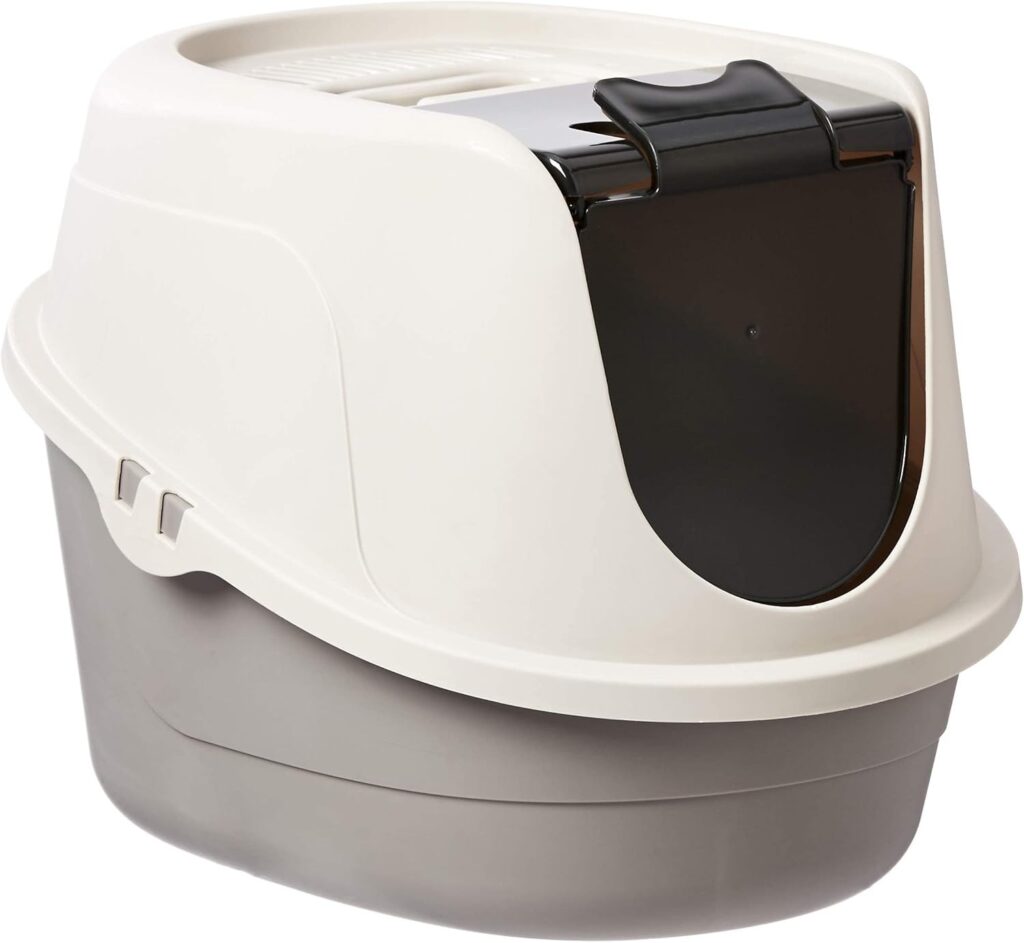
Example pick:Amazon Basics No-Mess Hooded Enclosed Cat Litter Box with Swinging Door
Why We Like It:
The door-flap design gives this box better containment than an open-front hooded box. It helps hide mess, adds privacy, and can reduce how directly odor escapes from the front opening.
Pros of Covered Litter Boxes
1. Hides the Litter Area
A covered litter box can make the litter setup look cleaner in the home.
This is one of the biggest reasons cat parents choose them, especially in:
- Small apartments
- Bathrooms
- Laundry rooms
- Shared living spaces
- Open-plan homes
- Guest areas
A covered box can make the litter area feel less visually distracting.
2. Helps Contain Litter Scatter
Covered boxes can help keep some litter inside the box, especially if your cat digs or kicks after using it.
High sides, a hooded top, or a top-entry design can reduce how much litter lands outside the box.
This does not eliminate tracking completely, but it can help keep the surrounding floor cleaner.
3. Gives Some Cats More Privacy
Some cats prefer a quiet, enclosed space for using the litter box.
A covered box may work well for cats that already enjoy hiding spots, covered beds, or calm corners.
Privacy can be helpful if the box is placed in a home where people or other pets pass by often.
4. More Home-Friendly Appearance
Covered litter boxes often look more polished than basic litter pans.
Some designs are neutral, modern, or furniture-style, which can fit better in a cozy indoor home.
For a site like HavenTails, this matters because many cat parents want a litter setup that works for both the cat and the room.
5. Can Help With Short-Term Odor Control for People
Covered boxes may help keep odors less noticeable to people for a short time. Some designs also include charcoal filters or odor-control features.
However, this does not mean the box is cleaner. Odor can still build up inside the box if it is not scooped often.
Cons of Covered Litter Boxes
1. Odor Can Get Trapped Inside
This is one of the biggest problems with covered litter boxes.
A covered box may hide odors from the room, but the smell can become stronger inside the box. Your cat has to enter that space every time they use it.
If the box is not scooped daily, some cats may begin avoiding it.
2. Some Cats Feel Trapped
Covered boxes can make some cats feel enclosed or vulnerable.
This is especially true if:
- The entrance is narrow
- There is only one exit
- Another pet can block the doorway
- The cat is nervous
- The cat is newly adopted
- The cat has had bad litter box experiences
Cats generally like to have escape options. If a covered box feels like a trap, they may choose another place to go.
3. Harder to Clean
Covered boxes usually take more effort to clean.
You may need to:
- Remove the lid
- Unlock side clips
- Wipe the inside hood
- Clean door flaps
- Empty pull-out drawers
- Wash filters or vents
- Check hidden corners
If cleaning feels annoying, the box may not get cleaned often enough.
4. May Be Too Small
Many covered boxes look roomy from the outside but feel cramped inside.
Your cat needs enough space to enter, turn around, dig, squat, and exit comfortably.
Large cats especially may dislike covered boxes that are too narrow or too low.
5. Door Flaps Can Be a Problem
Some covered boxes come with a swinging door flap. While this can hide the inside of the box, many cats dislike pushing through a flap.
Door flaps can also trap odor more strongly inside.
If your cat is unsure about a covered box, removing the flap can make it easier to accept.
Covered vs Open Litter Box: Side-by-Side Comparison
| Feature | Open Litter Box | Covered Litter Box |
|---|---|---|
| Cat access | Usually easier | May be harder for some cats |
| Airflow | Better | Can trap odor |
| Cleaning | Easier | More parts to clean |
| Privacy | Less private | More private |
| Litter scatter | More visible | Better contained |
| Home appearance | More exposed | Cleaner-looking |
| Good for nervous cats | Usually better | Depends on cat |
| Good for small spaces | Can work, but visible | Often looks neater |
| Best starting choice | Yes | Only if cat accepts it |
Which Litter Box Is Better for Odor Control?
This depends on what you mean by odor control.
For people, a covered box may hide odor better at first. But for cats, a covered box may trap smell inside, making it less pleasant to use.
For true odor control, the most important factors are:
- Daily scooping
- Enough litter depth
- Good litter choice
- Proper box size
- Regular full cleaning
- Good ventilation
- Enough boxes for the number of cats
A covered box is not a replacement for cleaning.
If odor is your main concern, you may also want to read:
Best Covered Litter Boxes for Odor Control
Which Litter Box Is Better for Small Apartments?
Both can work in small apartments.
A covered box may look better because it hides the litter area. It can also help contain litter scatter in tight spaces.
But an open box may be better if your cat is picky, nervous, older, or large.
For small apartments, the best setup is often:
- A large enough box
- Quiet placement
- Litter mat
- Daily scooping
- Good ventilation
- High-sided open box or roomy covered box
Related guide:
Best Cat Litter Boxes for Small Apartments
Which Litter Box Is Better for Kittens?
Open litter boxes are usually better for kittens.
Kittens need easy access and should not have to push through a door flap or climb into a complicated box.
Choose a low-entry open litter box until the kitten is confident and consistent with litter box use.
Which Litter Box Is Better for Senior Cats?
Open boxes are usually better for senior cats, especially if they have stiffness, arthritis, or mobility changes.
Look for:
- Low entry
- Wide opening
- Stable base
- Easy access
- Enough room to turn around
A covered box may be too difficult if the entrance is high, narrow, or awkward.
Which Litter Box Is Better for Large Cats?
Large cats need space.
A large open box is often the easiest choice, but a roomy covered box can work if it has enough interior space.
Your cat should be able to:
- Walk in easily
- Turn around
- Dig comfortably
- Squat without touching the lid
- Exit without squeezing
If your cat’s back touches the lid or they cannot turn comfortably, the covered box is too small.
Which Litter Box Is Better for Nervous Cats?
For nervous cats, open boxes are often better because they allow the cat to see the room and exit quickly.
Covered boxes may feel too closed-in, especially in multi-pet homes.
If you want to try a covered box for a nervous cat, start with the lid off first. Then add the lid later only if your cat seems comfortable.
What About Top-Entry Litter Boxes?
Top-entry litter boxes are a type of covered box where the cat enters from the top.
They can be helpful for reducing litter scatter, but they are not right for every cat.
Top-entry boxes may not be ideal for:
- Kittens
- Senior cats
- Large cats
- Cats with mobility issues
- Cats that dislike jumping into boxes
- Newly adopted cats
They may work better for young, agile cats that already use them comfortably.
How to Transition From Open to Covered
If your cat currently uses an open litter box and you want to try a covered one, transition slowly.
Try this:
- Place the new covered box near the old box.
- Keep the lid off at first.
- Use the same litter your cat already likes.
- Let your cat explore without pressure.
- Add the lid later if your cat uses the box comfortably.
- Remove the door flap at first.
- Keep the old box available during the transition.
Do not suddenly replace the only litter box with a covered one.
How to Transition From Covered to Open
If your cat avoids a covered box, switching to open can be easier.
Try this:
- Remove the door flap first.
- If your cat still avoids it, remove the lid.
- Keep the same litter.
- Keep the box in a calm location.
- Clean it well.
- Watch whether your cat uses it more comfortably.
Sometimes simply removing the lid fixes the problem.
Litter Box Placement Matters More Than Style
A great litter box can fail if it is placed in the wrong spot.
Avoid placing the box:
- Beside loud appliances
- In a busy hallway
- Beside a dog’s resting area
- In a blocked corner
- Too close to food and water
- Somewhere hard to access
- Behind a door that may close
Choose a calm, accessible location with enough privacy and easy exit routes.
How Many Litter Boxes Do You Need?
For multi-cat homes, one box is rarely enough.
A common starting point is one litter box per cat, plus one extra if possible. Even in small homes, separate litter box areas can reduce competition and stress.
If one cat blocks another cat from using the box, a covered box with one entrance may make the problem worse.
Common Mistakes to Avoid
Avoid these common litter box mistakes:
- Choosing a box only because it looks nice
- Buying a covered box that is too small
- Using a door flap before your cat is comfortable
- Not scooping daily
- Placing the box in a stressful area
- Using strong scented litter
- Switching box style too suddenly
- Ignoring litter box avoidance
- Using only one box in a multi-cat home
- Assuming covered means cleaner
The best litter box setup should feel clean for you and safe for your cat.
Quick Decision Guide
Choose an open litter box if your cat is:
- New to your home
- Nervous
- Senior
- Large
- A kitten
- Avoiding the covered box
- Sensitive to smells
- In a multi-cat home with tension
Choose a covered litter box if your cat:
- Already uses covered boxes comfortably
- Likes private spaces
- Is not bothered by enclosed areas
- Needs better litter scatter control
- Lives in a small apartment where appearance matters
- Has a roomy, well-ventilated box
Choose a high-sided open box if you want:
- Easier access than a covered box
- Better litter scatter control than a low open pan
- Better airflow
- Easier cleaning
Related HavenTails Guides
How to Choose the Right Litter Box for Your Cat
Learn how to compare litter box size, entry height, covered designs, cleaning needs, and your cat’s habits.
Best Covered Litter Boxes for Odor Control
Compare covered litter box styles for odor control, privacy, and cleaner home setups.
Best Cat Litter Boxes for Small Apartments
Find space-saving litter box ideas for small homes and indoor cats.
Best Low-Tracking Cat Litters
Choose litter that helps reduce tracking and scattered litter around the box.
How to Clean a Cat Litter Box
Build a cleaner routine for scooping, washing, and keeping the litter area fresher.
Final Thoughts
Covered and open litter boxes both have advantages.
Open litter boxes are usually easier for cats to use, easier to clean, and better for airflow. They are often the safer choice for kittens, senior cats, nervous cats, and large cats.
Covered litter boxes can look cleaner, offer more privacy, and help contain litter scatter. They can work well if the box is large enough, cleaned often, and accepted by your cat.
The best choice is the one your cat uses comfortably every day. If your cat avoids a covered box, remove the lid or switch to an open box. If your cat uses a covered box happily, keep it clean, roomy, and well-ventilated.
A good litter box setup should support both your cat’s comfort and your home’s cleanliness.
FAQs
Are covered litter boxes bad for cats?
Covered litter boxes are not automatically bad, but some cats dislike them because they can feel enclosed, trap odors, or have limited exits. A covered box should be roomy, clean, and easy for your cat to enter.
Do cats prefer covered or open litter boxes?
It depends on the cat. Many cats do well with open boxes because they are easier to access and ventilate better. Some cats prefer the privacy of covered boxes.
Do covered litter boxes control odor better?
Covered boxes may hide odor from people temporarily, but they can trap smell inside the box. Daily scooping and good ventilation are more important for odor control.
Are open litter boxes better for kittens?
Yes, open litter boxes are usually better for kittens because they are easier to enter and exit.
What if my cat stops using a covered litter box?
Try removing the door flap or lid, cleaning the box thoroughly, and making sure the box is large enough. If litter box avoidance continues, talk to your veterinarian.
What is the best litter box for a small apartment?
For small apartments, choose a box that balances cat comfort and home cleanliness. A roomy covered box, high-sided open box, or well-placed open box with a litter mat can all work.