Affiliate Disclosure: As an Amazon Associate, we earn from qualifying purchases. This post contains affiliate links, which means we may earn a small commission if you buy through our links, at no extra cost to you.
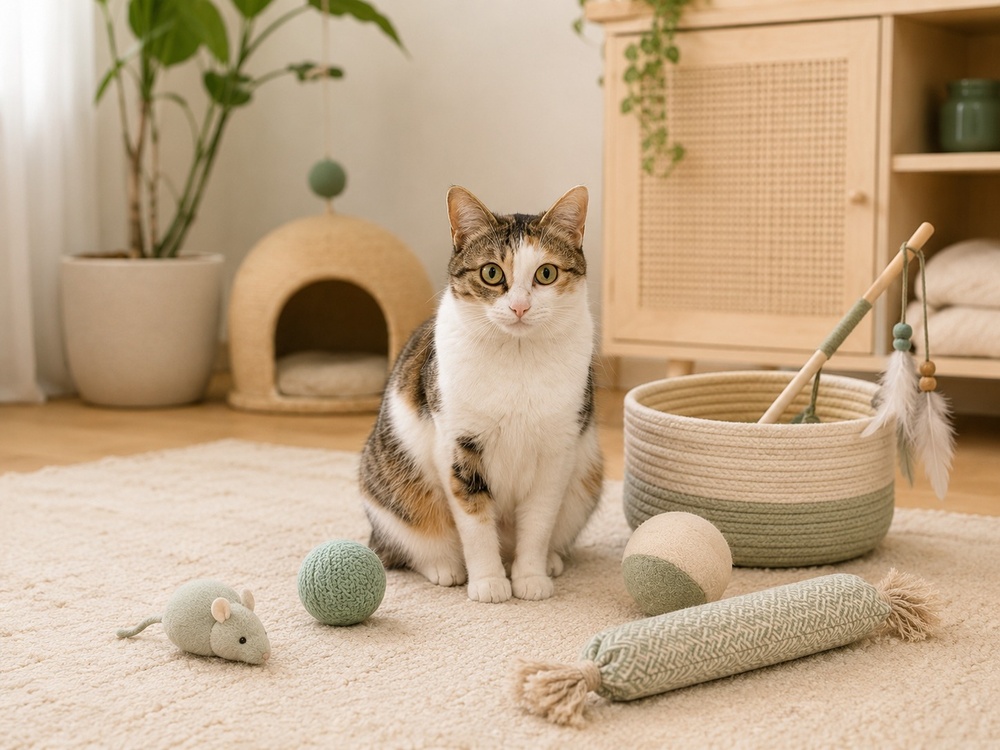
Cat toys can make indoor life more fun, active, and enriching. A good toy can encourage your cat to chase, pounce, kick, scratch, and use their natural hunting instincts in a healthy way.
But not every toy is a good fit for every cat.
Some toys are better for supervised play. Some are safer for solo play. Some may look cute but have loose feathers, small parts, long strings, bells, plastic pieces, or textures that are not ideal for every cat.
If you are building a toy basket for your cat, you may also want to compare our favorite picks in Best Cat Toys for Indoor Cats after reading this safety guide.
The goal is not to avoid all fun toys. The goal is to choose toys that match your cat’s play style, size, energy level, chewing habits, and supervision needs.
In this guide, we’ll walk through how to choose safe cat toys, what features to check before buying, which toys need supervision, and when to replace worn-out toys.
Quick Answer:
What Makes a Cat Toy Safe
A safer cat toy is usually:
- Large enough that your cat cannot swallow it
- Made from sturdy, pet-safe materials
- Free from loose parts that can easily fall off
- Not sharp, cracked, or breaking apart
- Appropriate for your cat’s size and play style
- Easy to clean or replace
- Used with supervision when it includes string, feathers, elastic, or small attachments
- Removed when damaged
No toy is completely risk-free. The safest choice depends on how your cat plays.
For interactive toys with strings or feathers, see our guide to Best Wand Toys for Bonding with Your Cat and use those toys during supervised play instead of leaving them out all day.
Why Cat Toy Safety Matters
Cats play with their teeth, claws, paws, and full body. They may bite, chew, kick, carry, shake, or hide toys under furniture.
That means toys can wear out over time.
A toy that looked fine when you bought it may become unsafe if:
- Feathers come loose
- String starts to unravel
- Plastic cracks
- Bells detach
- Stuffing comes out
- Seams open
- Small parts become chewable
- The toy becomes dirty or sticky
Checking toys regularly is a simple habit that can help keep playtime safer.
Start With Your Cat’s Play Style
Before choosing toys, think about how your cat likes to play.
Some cats love chasing flying toys. Some prefer batting balls across the floor. Some like kicking soft toys with their back legs. Others enjoy puzzle feeders, crinkle toys, tunnels, or quiet plush toys.
Your cat may prefer:
- Chasing
- Pouncing
- Batting
- Kicking
- Carrying
- Hiding
- Scratching
- Climbing
- Puzzle solving
- Gentle solo play
If you are preparing for a new cat and are not sure what they like yet, start with a small variety of simple toys. Our New Cat Checklist can help you prepare basic supplies without buying too much at once.
1. Choose the Right Size
A cat toy should be small enough to be fun, but not so small that your cat can swallow it.
Avoid toys that are tiny enough to fit fully inside your cat’s mouth, especially if your cat is a strong chewer or likes to destroy toys.
Good toy sizes often include:
- Soft mice that are not too tiny
- Larger plush kicker toys
- Medium balls that cannot be swallowed
- Puzzle toys with secure parts
- Wand attachments used only with supervision
Be extra careful with kittens because they may chew more and have less predictable play habits.
2. Check for Loose Parts
Cute details can become a problem if they fall off.
Before buying a toy, look closely at:
- Glued-on eyes
- Plastic noses
- Bells
- Beads
- Buttons
- Sequins
- Loose feathers
- Thin ribbons
- Small pom-poms
- Weak seams
- Dangling strings
A toy does not need to be complicated to be fun. Simple, sturdy toys are often better for daily use.
3. Be Careful With String, Ribbon, and Elastic
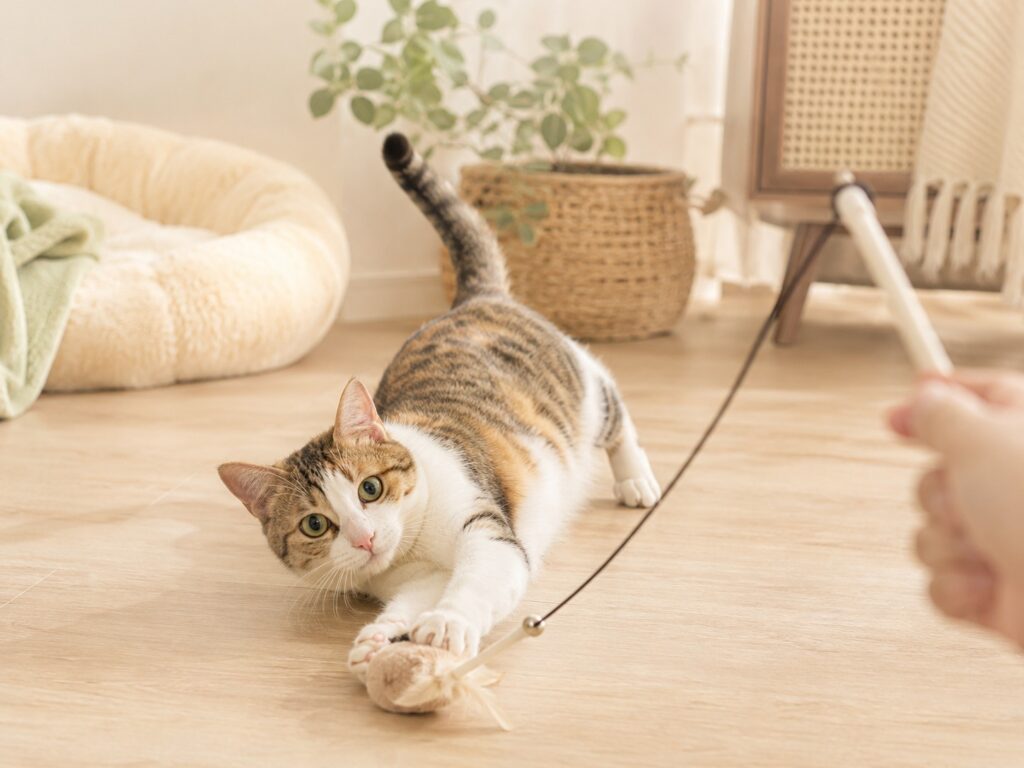
String toys can be exciting because they move like prey. But string, ribbon, yarn, and elastic should not be left out for unsupervised play.
These toys are better for interactive sessions where you are holding the toy and watching your cat.
After playtime, put wand toys and string toys away in a drawer, closet, or covered toy basket.
This is especially important for:
- Wand toys
- Ribbon teasers
- Elastic cord toys
- Feather strings
- Yarn-like toys
- Hanging door toys
String-style toys can be great for bonding, but they should be treated as supervised toys.
4. Match the Material to Your Cat
Cat toys come in many materials, including fabric, felt, sisal, cardboard, wool, silicone, plastic, rubber, feathers, and wood.
Look for materials that feel sturdy and appropriate for your cat’s play habits.
For cats that chew hard, avoid thin plastic pieces or toys that easily break apart. For cats that love soft toys, check seams and stuffing. For cats that like scratching and kicking, choose stronger fabric or sisal textures.
If a toy has a strong chemical smell, sticky coating, rough edges, or shedding fibers, skip it.
5. Choose Solo Toys and Supervised Toys Separately
Not every toy should be available all day.
It helps to divide toys into two groups.
Safer for Solo Play
These are usually better for independent play, as long as they are the right size and not damaged:
- Sturdy plush toys
- Kicker toys
- Larger toy balls
- Crinkle balls without loose foil pieces
- Soft tunnels
- Puzzle feeders
- Cardboard scratchers
- Durable catnip toys
- Track ball toys with enclosed balls
Best for Supervised Play
These should usually be put away after play:
- Wand toys
- Feather teasers
- Ribbon toys
- Elastic string toys
- Hanging toys
- Toys with bells that may detach
- Toys with small attachments
- Toys your cat tries to chew apart
This simple separation makes your cat’s toy area safer and easier to manage.
6. Watch the Noise Level
Some cats love noisy toys. Others get scared by bells, crinkles, rattles, or electronic sounds.
If your cat is nervous, newly adopted, or easily startled, start with quieter toys.
Quiet options include:
- Soft plush toys
- Fabric kicker toys
- Gentle wand toys without bells
- Slow rolling balls
- Cardboard scratchers
- Low-noise tunnels
- Simple puzzle toys
For anxious cats, a calm play routine can be more helpful than loud stimulation. You can also read How to Calm an Anxious Cat at Home for more home setup ideas.
7. Be Careful With Feather Toys
Many cats love feather toys because they move like birds. They can be great for supervised play.
But feathers can come loose, break, or be chewed off.
Before and after play, check:
- Whether feathers are still attached
- Whether the string is fraying
- Whether the clasp is secure
- Whether your cat is chewing the feather instead of chasing it
- Whether small pieces are falling off
If the toy starts shedding parts, replace it.
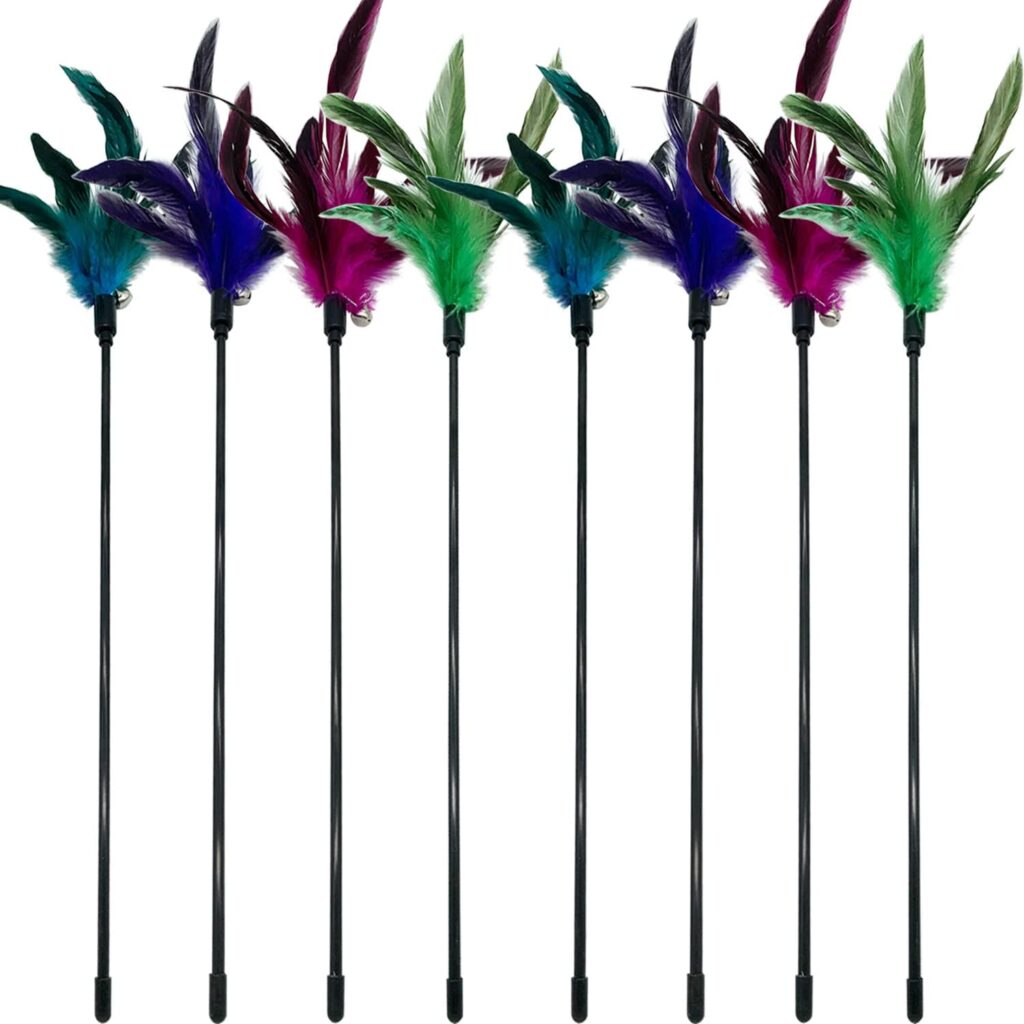
Example pick: CATENESS Feather Stick Cat Toys
Product Overview:
The CATENESS Feather Stick Cat Toys set is a simple feather-wand option for cats that respond strongly to feathers. The product page describes it as an 8-piece feather wand set, with a feather stick length of about 19.3 inches and sound details like a bell and rustling effect.
This style is easy to use for short play sessions. You can flutter the feather, pause, let your cat stalk, and then move it again to encourage chasing and pouncing.
Why It Fits This Pick:
This fits the feather wand category because the main appeal is the feather movement. It is better for cats that enjoy jumping or tracking toys in the air, rather than cats that only like slow ground-level play.
8. Use Laser Toys Carefully
Laser pointers can get cats moving, but they should be used thoughtfully.
Do not shine a laser directly into your cat’s eyes.
It is also better to end a laser session with something your cat can physically catch, such as a plush toy, treat, or wand attachment. This helps the play session feel more complete.
Laser toys should not be the only form of play. Cats usually benefit from toys they can actually grab, bite, kick, or chase.
9. Think About Your Cat’s Age
Different ages need different toy choices.
Kittens
Kittens often need soft, simple toys. Avoid tiny pieces, long strings, and toys that can be chewed apart.
Good choices include:
- Soft plush toys
- Larger balls
- Short supervised wand play
- Small tunnels
- Lightweight kicker toys
Adult Cats
Adult cats usually enjoy a wider range of toys. Choose based on energy level and play style.
Good choices include:
- Wand toys
- Kicker toys
- Puzzle toys
- Balls
- Catnip toys
- Tunnels
- Scratchers
Senior Cats
Senior cats may prefer lower-impact toys and slower play.
Good choices include:
- Soft plush toys
- Gentle wand movement
- Puzzle feeders
- Low-noise toys
- Easy-to-reach toys
- Comfortable floor play
Avoid forcing senior cats to jump too high or twist suddenly.
10. Consider Multi-Cat Homes
In multi-cat homes, toys can sometimes create competition.
To keep play safer:
- Use multiple toys
- Give each cat space
- Supervise high-energy play
- Avoid letting one cat block another
- Put away string toys after use
- Offer solo toys in different rooms
- Watch for resource guarding
Interactive play can help reduce boredom, but it should not create stress between cats.
11. Inspect Toys Regularly
Make toy inspection part of your routine.
Once a week, check your cat’s toys for:
- Loose seams
- Exposed stuffing
- Sharp plastic edges
- Detached bells
- Fraying string
- Broken feathers
- Cracked pieces
- Sticky or dirty surfaces
- Missing parts
- Chew marks
Throw away toys that are falling apart.
A damaged toy is not worth keeping just because your cat likes it.
12. Keep Toys Clean
Cat toys touch floors, saliva, food crumbs, litter dust, and furniture.
Cleaning depends on the material.
For fabric toys, check whether they can be hand-washed or machine-washed. For plastic or silicone toys, wipe or rinse them according to the product instructions. For cardboard scratchers, replace them when they are dirty, shredded, or worn down.
Avoid using strong-smelling cleaners on toys because cats may dislike the scent.
13. Rotate Toys Instead of Leaving Everything Out
Toy rotation can make old toys feel new again.
Instead of leaving every toy on the floor, keep a small selection available and store the rest.
Try this routine:
- Keep 3–5 safe solo toys out
- Put wand toys away after play
- Rotate toys every few days
- Remove damaged toys
- Refresh puzzle toys or kicker toys
- Watch which toys your cat actually uses
Rotation also helps you notice worn-out toys more easily.
14. Avoid Toys That Encourage Bad Habits
Some toys may accidentally teach cats to attack hands or feet.
Avoid using your fingers, toes, or hands as toys. Instead, use a wand toy, kicker toy, or plush toy to create distance between your body and your cat’s claws.
This is especially important for kittens because early habits can continue into adulthood.
15. Choose Enrichment, Not Just Excitement
A toy does not need to be loud or flashy to be good.
The best cat toys often support natural behaviors:
- Chasing
- Pouncing
- Stalking
- Kicking
- Scratching
- Climbing
- Hiding
- Searching
- Problem solving
For indoor cats, toys are not just entertainment. They help create a more active and interesting home environment.
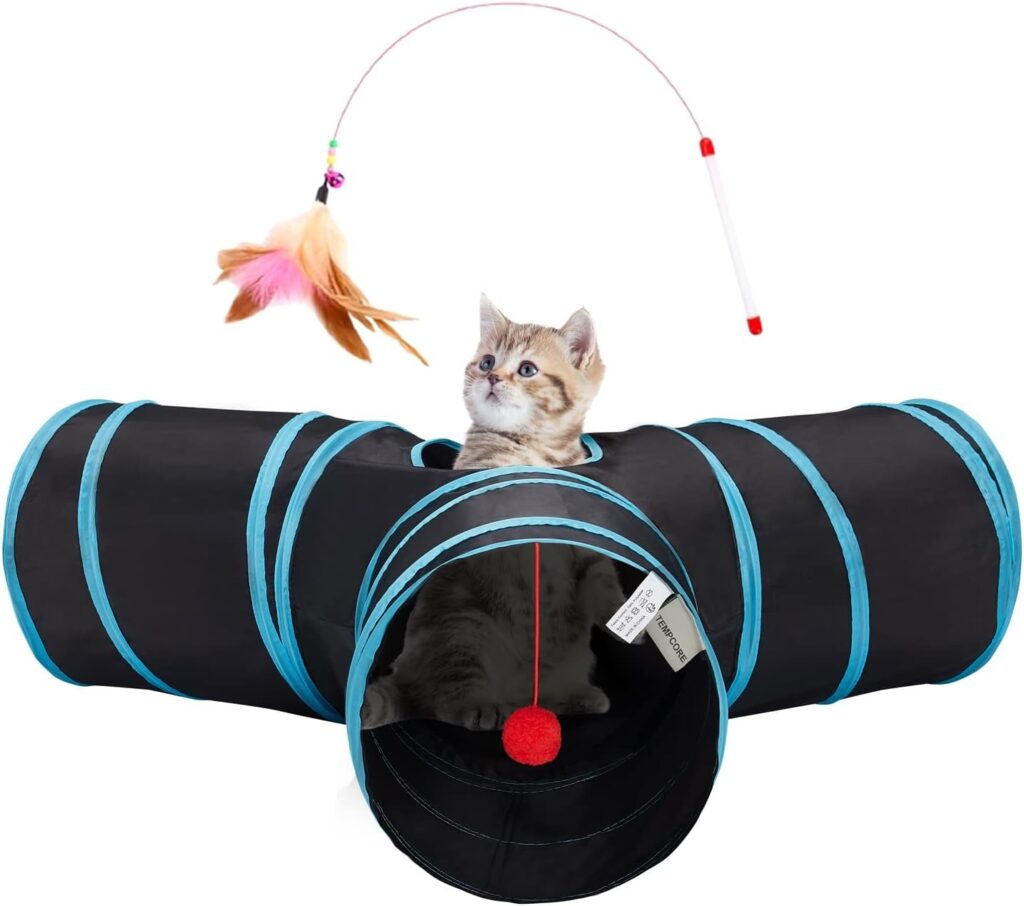
Example pick: Automatic Interactive Cat Toy
Why We Like It:
An interactive cat toy is helpful for indoor cats because it adds movement and unpredictability to playtime. This can make the toy feel more exciting than something that stays still on the floor.
It is a good option for busy cat parents who want to give their cat more stimulation throughout the day. When used as part of a toy rotation, it can help keep indoor play fresh and reduce boredom.
Simple Toy Basket Setup
A balanced toy basket might include:
- 1–2 soft plush toys
- 1 kicker toy
- 1–2 balls
- 1 wand toy for supervised play
- 1 puzzle toy
- 1 cardboard scratcher
- 1 tunnel or hideout
- A few rotating catnip or silvervine toys
Keep supervised toys separate from everyday toys.
Red Flags: When to Throw a Toy Away
Throw away or replace a toy if:
- It is falling apart
- Stuffing is coming out
- A bell or plastic piece is loose
- Feathers are breaking off
- String is fraying
- Your cat has chewed off pieces
- The toy smells bad
- It cannot be cleaned
- It has sharp edges
- Your cat tries to swallow parts
When in doubt, replace it.
Related HavenTails Guides
Best Cat Toys for Indoor Cats
Find fun toy ideas for play, exercise, and enrichment.
Best Wand Toys for Bonding with Your Cat
Compare interactive wand toys for supervised play and bonding.
New Cat Checklist: What to Prepare Before Bringing Your Cat Home
Prepare the basic supplies before your new cat arrives.
How to Calm an Anxious Cat at Home
Create a calmer home setup for nervous or easily startled cats.
Pinterest-Inspired Cat Spaces for Cozy Homes
Create a cozy, enriching indoor space for your cat.
Final Thoughts
Choosing safe cat toys is not about buying the most expensive toy or the cutest design.
It is about matching the toy to your cat’s size, age, play style, chewing habits, and supervision needs.
For daily solo play, choose sturdy toys without loose parts. For string, feather, ribbon, and wand toys, supervise play and put them away afterward. Check toys regularly, clean them when needed, and replace anything that starts to break.
A safe toy should make your cat’s life more fun, active, and enriching without adding unnecessary risk.
FAQs
What toys are safest for cats?
The safest toys are usually sturdy, size-appropriate, and free from loose parts. Soft plush toys, kicker toys, larger balls, enclosed track toys, and puzzle feeders can be good options when used properly.
Are wand toys safe for cats?
Wand toys can be safe and fun when used with supervision. Put them away after play, especially if they include string, feathers, ribbon, or elastic.
Can cats play with toys alone?
Some toys are better for solo play than others. Sturdy plush toys, larger balls, tunnels, scratchers, and enclosed track toys are usually better than string or feather toys.
Are feather toys safe for cats?
Feather toys should usually be supervised. Check them often because feathers can loosen, break, or be chewed off.
Are laser pointers safe for cats?
Laser toys should be used carefully. Do not shine the light in your cat’s eyes, and end the session with a toy or treat your cat can physically catch.
When should I throw away a cat toy?
Throw away a toy when it has loose parts, exposed stuffing, fraying string, broken feathers, sharp edges, or pieces your cat may chew off or swallow.